
Tree Removal Permit Dayton Ohio: Do You Need One to Remove a Tree?
TL;DR: Tree Removal Permits in Dayton Ohio
- On your own private property in Dayton, you generally do not need a city permit to remove a tree. Most residential removals go ahead without any paperwork from the city.
- Street trees on the tree lawn, the strip between your sidewalk and the curb, or anywhere in the public right of way usually belong to the City of Dayton. Removing one without city permission can lead to fines.
- Historic districts, HOA covenants, and active development or zoning cases can add rules on top of the city’s. Check all three before you cut.
- For a suspected street tree, call the City of Dayton first and get permission in writing before any work starts. A reputable tree company will help you confirm which rules apply.
- Tree Removal Dayton Ohio handles removals across the Miami Valley every week and can tell you whether your tree needs a permit. Call (937) 969-1334.
You have a tree that needs to come down, and before the chainsaw starts you want to know one thing: do you need a permit? It is a smart question. Cut the wrong tree in Dayton without permission and you can face a fine, a stop work order, or a bill for replacing a tree you thought was yours.
The good news is that for most Dayton homeowners, the answer is simple and reassuring. This guide walks through when a permit is required, when it is not, and the exact steps to get one when you do need it.
Not sure whether your tree needs a permit? Call (937) 969-1334. We confirm the rules for your property before any work begins, so you never face a surprise fine.
Do You Need a Tree Removal Permit in Dayton Ohio? The Short Answer
For a tree standing on your own private property, no. The City of Dayton does not generally require homeowners to get a permit before removing a tree from their own yard. You can hire a tree service, schedule the job, and have the tree removed without filing anything with the city.
That changes the moment the tree stands in the public right of way or on other regulated ground. Street trees, trees on the tree lawn, trees on city park land, and trees in certain protected areas are a different story. For those, removing a tree without the city’s permission is illegal and can cost you real money in fines and replacement costs.
So the permit question is really a location question: whose tree is it, and where exactly does it stand? Get those two answers right and the rest of the process is straightforward.
Street Trees Belong to the City, Not You
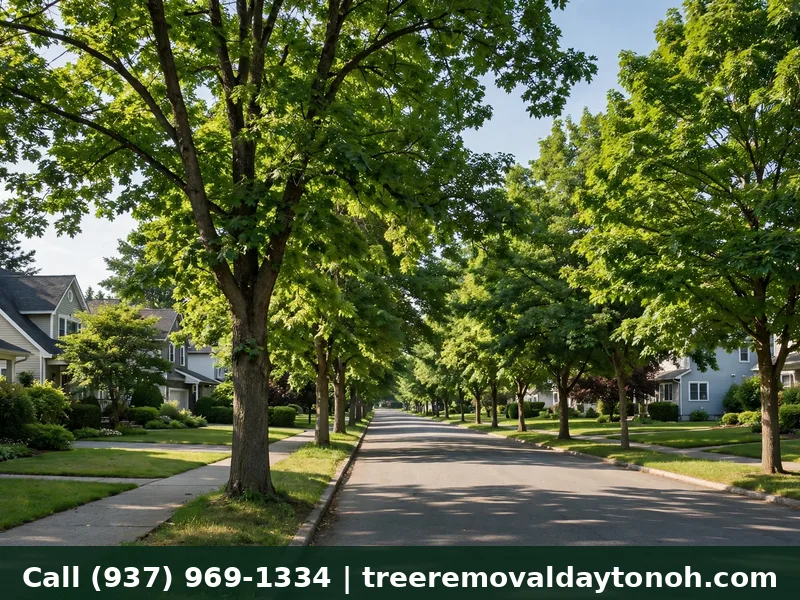
The most common permit trap in Dayton is the tree lawn, that grassy strip between the sidewalk and the curb. Many homeowners assume those trees are theirs because they mow the grass around them. In most of Dayton, street trees in the right of way are city property, planted and maintained by the City of Dayton.
If the tree you want gone stands between the sidewalk and the street, on a corner easement, or anywhere that looks like public ground, treat it as regulated until the city tells you otherwise. Cutting down a city street tree on your own can result in a fine plus the cost of planting a replacement, and the city takes this seriously because street trees provide shade, stormwater control, and neighborhood value.
There is one wrinkle: in some neighborhoods the right of way line is not obvious, and a tree you think of as “yours” may legally stand on city ground. When in doubt, check before you cut.
Trees on Your Own Property: Usually No City Permit
A tree fully inside your property lines, planted by you or a previous owner, is yours to manage. The city does not ask you to justify a private removal, get an inspection, or wait for approval. This covers the large majority of residential removals in Dayton: the dead maple by the garage, the leaning pine near the fence, the overgrown silver maple lifting the driveway.
There are a few exceptions worth knowing. If your home sits in a Dayton historic district or is itself a designated historic property, exterior changes can face review, and tree removal sometimes falls under that review. Check your district’s guidelines before scheduling work. If you live in a neighborhood with an HOA, the covenants may require architectural committee approval for tree removal, especially for front yard trees. And if your property is part of an active development, zoning variance, or site plan case, the city may have attached tree preservation conditions.
None of these are the norm, but they are exactly the situations where homeowners get surprised. A five minute check beats a fine.
How to Tell If a Tree Is Regulated Before You Cut
Walk through these checks in order and you will have your answer:
- Find the right of way line. Stand at the curb and look at where the sidewalk sits. Trees growing between the sidewalk and the street, or between the street and an unmarked public strip, are almost always street trees.
- Check your property survey. Your closing paperwork or a survey plat shows your property lines. If the tree sits inside your lines, it is almost certainly yours to manage.
- Ask the City of Dayton. For any tree you cannot place with confidence, call the city and describe the location. They can tell you whether it is a street tree or a private tree, and what permission you need.
- Check your HOA and historic district. Read your covenants or call your district contact. Get any required approval in writing before the crew arrives.
- Ask your tree company. An experienced local company has seen these situations hundreds of times and knows the questions to ask. If a company tells you permits never matter anywhere, that is a red flag, not expertise.
We check the rules as part of every estimate. Call (937) 969-1334 and we will confirm whether your tree needs a permit before we quote the job.
How to Get a Tree Removal Permit in Dayton Ohio
If your tree turns out to be regulated, here is how the process normally works:
- Contact the City of Dayton. Call or visit the city’s forestry or public works office and describe the tree and its exact location. They will confirm whether it is a city tree and what the process requires.
- Explain why removal is needed. Be ready to describe the reason: disease, structural damage, sidewalk heave, storm damage, or safety risk. Cities are more receptive to safety and health reasons than convenience reasons.
- Get an arborist evaluation if asked. The city may want a professional assessment of the tree’s condition. Our hazard tree assessment guide explains what a proper evaluation covers.
- Submit the application. Fill out whatever form the city provides, with the location, the reason, and any supporting documentation. Keep copies of everything.
- Wait for written permission. Do not schedule the removal until you have approval in writing. Verbal assurances are not protection if there is a dispute later.
- Follow any conditions. The permit may require a replacement planting, specific timing, or protection of nearby trees. Follow them exactly.
Timelines vary. A straightforward approval for a dead or hazardous street tree can move quickly; a healthy tree removed for construction reasons takes longer and may be denied. Start early if your project depends on it.
Emergency Tree Removal: When a Permit Can Wait
Emergencies are the one situation where process bends. If a storm splits a street tree and it is hanging over the road, or a tree is actively failing onto a sidewalk, the city expects you to act for public safety first. Call the city, report the hazard, and document everything with photos before and after the work.
Documenting is the key word. In an emergency you are allowed to remove an immediate danger, but you are not allowed to use “emergency” as a cover for a removal you planned weeks ago. Photos with timestamps, a written note of when you called the city, and a contractor’s invoice describing the hazard all protect you if anyone questions the work later.
For the full picture on urgent situations, see our emergency tree removal guide. If a storm has left you with a dangerous tree right now, call (937) 969-1334 for same day emergency response.
Regulated vs Unregulated Trees: Quick Comparison
| Factor | Likely regulated | Likely unregulated |
|---|---|---|
| Location | Tree lawn, sidewalk strip, public right of way, park land | Fully inside your private property lines |
| Ownership | City of Dayton or other public entity | You, the homeowner |
| Permit needed | Yes, city permission before any work | Generally no city permit |
| Who decides | City forestry or public works | You, possibly with HOA or historic district approval |
| Cost of skipping | Fines plus replacement tree costs | None, unless HOA or district rules apply |
| Emergency handling | Act for safety, document, notify the city | Handle it; document for insurance if storm related |
Important Considerations
- Removing a street tree yourself is the most expensive mistake. The fine plus the cost of a city specified replacement tree will dwarf what a permitted, professional removal would have cost. Always confirm ownership first.
- Dead or hazardous trees are easier to get approved. If your tree is clearly dead, diseased, or structurally failing, say so and document it. Our dead tree removal guide explains how professionals evaluate trees that are past saving, which strengthens a permit application.
- Insurance claims need the same documentation. If storm damage is your reason for removal, photograph everything before cleanup. Our guide to filing an insurance claim for storm damaged tree removal walks through the paperwork.
- Budget for the real cost of removal. Permit fees are usually small compared to the job itself. See our tree removal cost guide for Dayton so the full project budget is realistic.
- Stump and roots are part of the plan. A permit covers the tree, but think about what stays behind. Stump grinding costs in Dayton are worth factoring in before you commit.
- Do not rely on a neighbor’s experience. Rules vary by exact location, district, and HOA. The fact that your neighbor removed a tree without a permit proves nothing about your tree. Check your own situation.
FAQs: Tree Removal Permits in Dayton Ohio
Do I need a permit to remove a tree in my backyard in Dayton Ohio?
Generally no. Trees fully on your private property do not require a city permit in Dayton. The exceptions are historic district review, HOA covenants, and active zoning or development conditions on your property.
Who owns the tree between the sidewalk and the street?
In most of Dayton, that tree is a city street tree, owned and maintained by the City of Dayton. You need the city’s permission before pruning or removing it, even though you mow the grass around it.
How long does a tree removal permit take in Dayton?
It depends on the situation. Approvals for dead or hazardous street trees can move quickly once the city confirms the condition. Healthy trees proposed for removal, especially for construction, take longer and may be denied. Start the process before you schedule contractors.
Can I remove a dangerous tree without a permit in an emergency?
For an immediate safety hazard, act first and document everything: photos before and after, a note of when you contacted the city, and a contractor invoice describing the hazard. Do not use emergencies as cover for planned removals.
What happens if I remove a street tree without permission?
You can face a municipal fine and be required to pay for a replacement tree planted to the city’s specifications. The combined cost is far higher than getting permission first.
Does Tree Removal Dayton Ohio handle the permit process?
Yes. We confirm ownership and permit requirements as part of every estimate, help document the tree’s condition, and will not start regulated work until the proper permission is in place. Call (937) 969-1334 to get started.
Permit question answered, tree still standing? Call (937) 969-1334 today for a free estimate. Tree Removal Dayton Ohio confirms the rules, handles the paperwork guidance, and removes the tree safely, all in one call.