

Dead Tree Removal in Dayton Ohio: How Long Can You Wait?
TLDR
- How long can you wait: There is no safe fixed timeline. A dead tree over a house, driveway, or sidewalk should be assessed within days. A dead tree in an open corner of a large lot can often wait a few weeks while you schedule the work.
- Why waiting gets expensive: Dead wood dries out and turns brittle, so the tree becomes unpredictable to climb and cut. The longer it stands, the more likely the job needs a crane or extra rigging, and the price climbs.
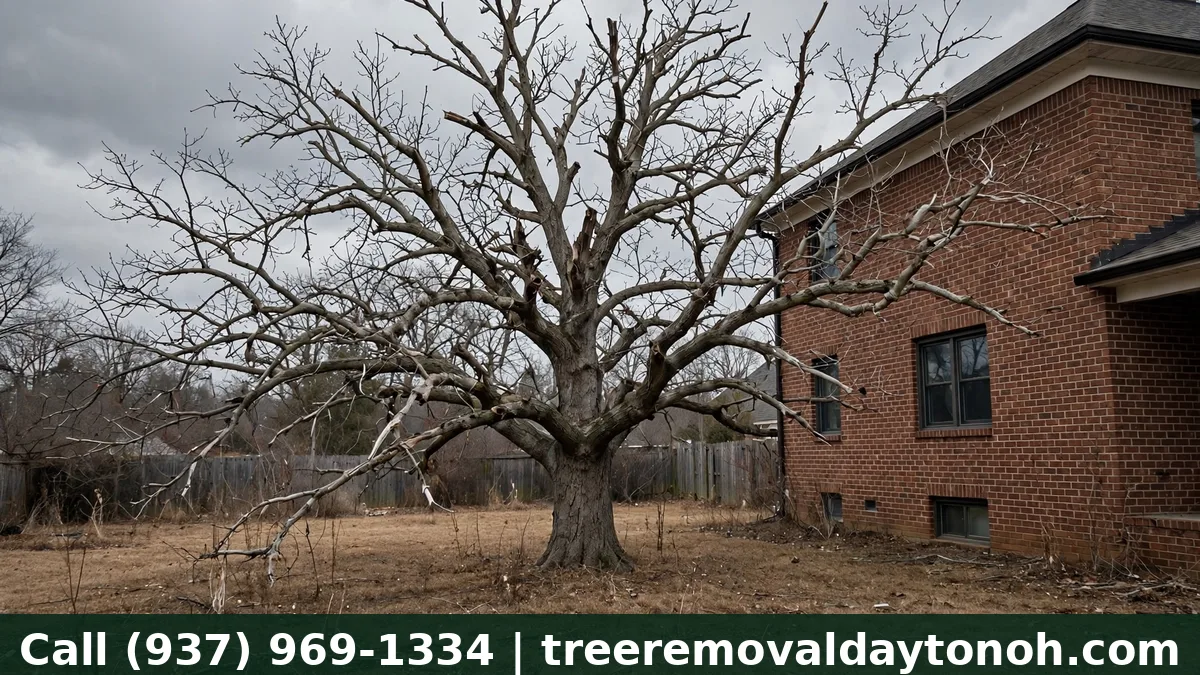
- How to confirm it is dead: No leaves well into spring, bark sloughing off in sheets, brittle twigs that snap with no green layer under the bark, and fungal growth at the base all point to a dead tree.
- The real risk: Dead trees drop limbs without wind and can fail at the roots in a storm. If the tree can reach a roof, car, or walkway, waiting is a gamble with your property and your liability.
- Who to call in Dayton: Tree Removal Dayton Ohio removes dead trees safely and can assess yours on site. Call (937) 969-1334.
How Long Can You Wait Before Removing a Dead Tree in Dayton Ohio?
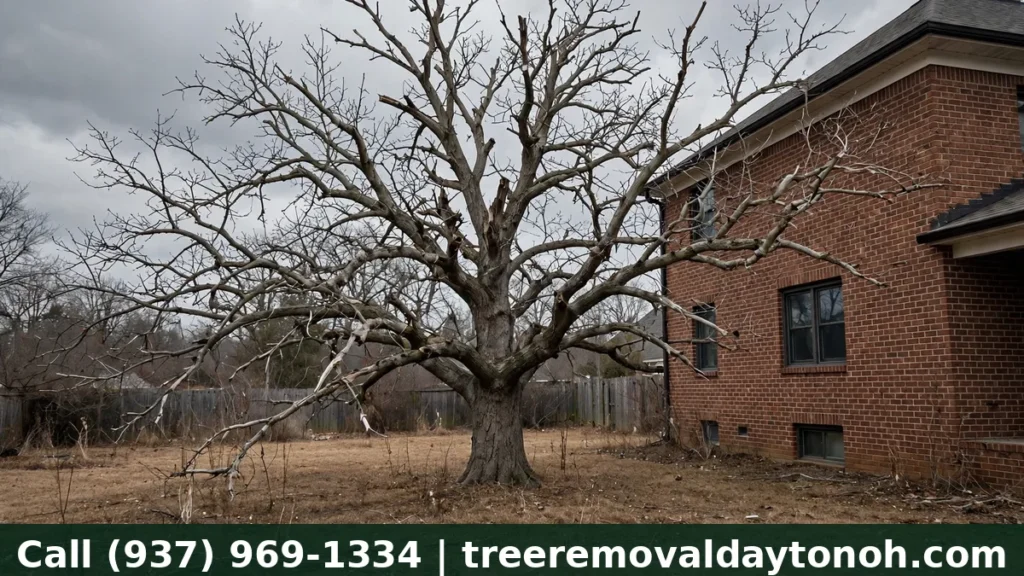
The honest answer is that a dead tree is already on borrowed time, and how long you can wait depends on what it can hit when it fails. A dead tree is not like a live tree that bends in the wind. Once a tree dies, it stops replacing the wood that holds it together, fungi move in, and every season of Ohio weather makes the trunk and limbs weaker and less predictable.
Location decides the urgency. If the dead tree stands over your roof, your driveway, a sidewalk, or a neighbor fence, treat it as a near term job and get an assessment within days. If it stands in the back corner of a large lot where nothing and nobody passes under it, you usually have a few weeks to schedule removal on your terms instead of after a storm does it for you.
Species matters too. Silver maples and Bradford pears, two of the most common yard trees in Dayton, Kettering, and Centerville, become brittle fast once they die. Oaks and hickories hold their structure longer, but their dead limbs still drop without warning on calm days. In every case, the tree will never get stronger. The clock only runs one direction.
Dead Tree Near Your House? Call Tree Removal Dayton Ohio at (937) 969-1334
How Can You Tell a Tree Is Dead and Not Just Dormant?
Every winter, Dayton homeowners worry about trees that are simply dormant. The difference shows itself by late spring. A living tree leafs out, pushes new growth at the branch tips, and shows a green layer just under the bark. A dead tree does none of that.
Start with the scratch test. Scrape a small patch of bark on a twig with your thumbnail. Living wood is green and moist underneath. Dead wood is brown and dry. Next, bend a few small twigs. Living twigs flex. Dead twigs snap cleanly like dry kindling. Then look at the canopy as a whole: a tree with no leaves by June, or with leaves on only one side, is telling you something is badly wrong.
Bark and trunk signs confirm it. Bark that peels away in long sheets, deep cracks running up the trunk, shelf fungi or mushrooms at the base, and piles of fine sawdust near the trunk from boring insects all signal a tree that is dead or far gone. Our guide to dangerous tree signs in Dayton walks through each of these warning signs in detail so you can compare them against your own tree.
| Sign You See | What It Usually Means | How Urgent It Is |
|---|---|---|
| No leaves by late spring, brittle twigs | Tree is dead or nearly dead | Schedule an assessment within days |
| Bark sloughing off, deep trunk cracks | Decay is advanced inside the trunk | Assessment this week, limit foot traffic below |
| Mushrooms or shelf fungi at the base | Root and butt rot are likely present | Assessment this week, do not park under it |
| Dead limbs over roof, drive, or sidewalk | Limb drop risk to people and property | Urgent, removal or hazard reduction promptly |
| Dead tree in open lot, no targets below | Lower immediate risk | Schedule within a few weeks and monitor |
What Happens If You Wait Too Long to Remove a Dead Tree?
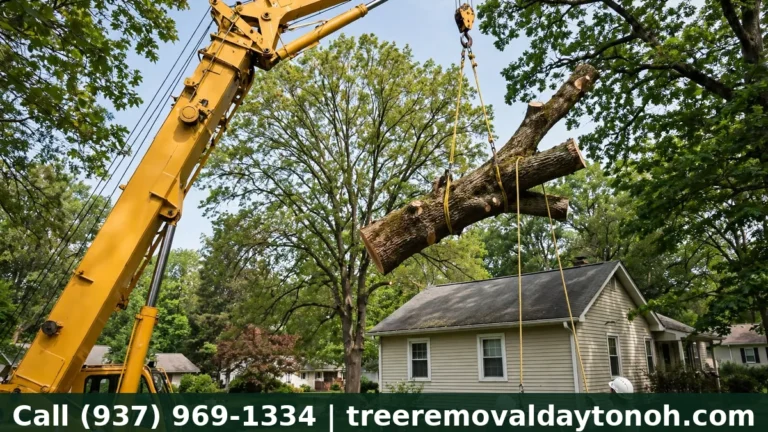
The first thing that happens is the job gets harder and more expensive. Fresh dead wood can still be climbed and rigged with some confidence. Wood that has stood dead for two or three Ohio winters dries out, checks, and loses its holding strength, so climbers cannot trust it. Crews then need a crane, a lift, or far more sectional rigging, and each of those adds cost.
The second thing is random limb drop. Dead branches do not need a storm. A dry, calm August afternoon in Huber Heights or Beavercreek is enough for a brittle limb to shear off and land on a roof, a car, or a patio. After a real storm, our emergency tree removal guide for Dayton storms explains the first steps to take, but a tree that was known to be dead rarely earns much sympathy from insurers or neighbors.
The third issue is liability. If you know a tree is dead, it leans toward a neighbor home or a public sidewalk, and it fails, Ohio property disputes get expensive quickly. Documented action, even a written assessment and a scheduled removal date, protects you far better than hoping the tree holds one more season.
How Much Does Dead Tree Removal Cost in Dayton Ohio?
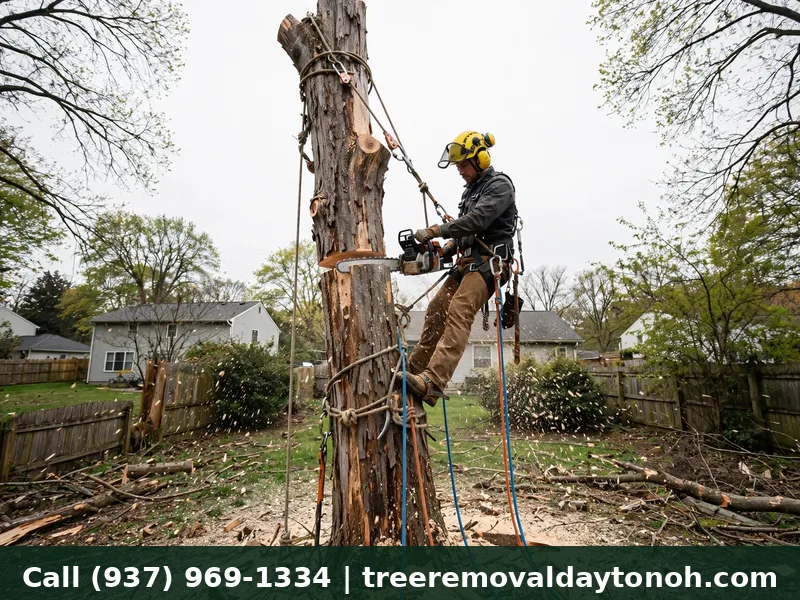
A straightforward dead tree removal in the Dayton area commonly runs from about $400 for a small tree in an open yard to $2,500 or more for a large tree over a house that needs crane work. Most suburban removals of medium hardwoods land between $800 and $1,800 including debris hauling, with stump grinding priced separately in most quotes.
Dead trees sit at the higher end of whatever range a living tree of the same size would cost, precisely because of the safety limits described above. The cheapest day to remove a dead tree is the first day you know it is dead. Our Dayton tree removal cost guide breaks down what drives quotes up or down so you can compare estimates line by line.
Get a Firm Price Before It Gets Worse, Call (937) 969-1334
Can a Dead Tree Be Removed in Winter in Ohio?
Yes, and winter is often the smartest season for it. Frozen ground in January and February supports equipment with far less lawn damage than soft spring soil. With the leaves gone from every tree, crews can see the full structure of the dead tree and rig each cut with a clear view of what is below.
Winter scheduling also works in your favor. Tree services across the Miami Valley are less booked in the dormant season than during the spring storm rush, so a planned winter removal is usually faster to schedule and sometimes easier on the budget than the same job quoted in May. The only real limits are ice storms and extreme cold snaps, which pause climbing work for safety.
What Should You Do This Week If You Have a Dead Tree?
Keep people, pets, and parked cars out from under the canopy until the tree is assessed. Photograph the tree from a few angles, noting any cracks, fungi, or leaning changes, and write down when you first noticed it was dead. Those notes help both your tree service and, if anything ever goes wrong, your insurer.
Then get a written assessment and quote. A proper quote for a dead tree states how the tree will be taken down, whether a crane or lift is needed, what happens to the wood, and whether stump grinding is included. Full method and cleanup details are on our tree removal services page.
Schedule Your Dead Tree Assessment Today, Call (937) 969-1334
Important Considerations
Never climb or cut a dead tree yourself. Dead wood breaks under loads that living wood would hold, and ladder work under brittle limbs is how homeowners get hurt. This is professional work with ropes, rigging, and often a lift or crane.
Check with your city and, if you have one, your homeowners association before removal. Dayton and several suburbs have rules about trees near the right of way, and some associations in Centerville, Springboro, and Oakwood require approval or a replacement tree.
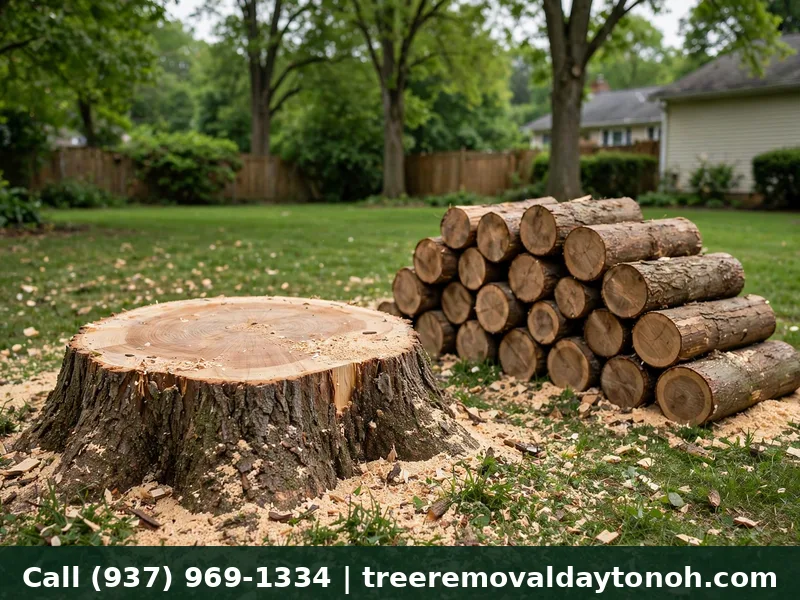
Decide what happens to the wood before the crew arrives. Logs can be stacked for firewood, chipped into mulch for your beds, or hauled away. Agreeing on the finish in writing prevents surprises on the final invoice.
If the dead tree stands near a power line, call before anyone touches it. Utility coordination is sometimes required, and no part of a dead tree near a line is a do it yourself project.
Frequently Asked Questions
How long can a dead tree stand before it falls?
It varies widely by species, size, and soil. Some dead trees stand for several years, while others drop major limbs within a single season. Silver maples and pines typically fail faster, and large oaks often stand longer but shed heavy limbs as they decay. Because no one can promise your tree a safe standing life, any dead tree within reach of a house, driveway, or walkway should be assessed promptly rather than watched for another year.
Is it cheaper to remove a dead tree than a live one?
Usually no. Dead trees are more dangerous to climb and less predictable to rig, so crews often add equipment or time, which raises the price. A small dead tree in an open yard can still be inexpensive, but a large dead hardwood over a roof is among the more costly residential removals. Getting the quote while the wood is still sound is the reliable way to keep the price down.
Will insurance pay to remove a dead tree?
Generally no, if the tree is simply dead and has damaged nothing. Homeowners policies in Ohio treat a long dead tree as a maintenance issue. If a storm brings the dead tree down onto your house, the structure repair is usually covered, but the tree removal portion may still be limited or disputed because the tree was already dead. Removing it on your own schedule is almost always cheaper than arguing a claim later.
Can a dead tree come back to life?
A truly dead tree cannot. Trees that look dead in winter are often just dormant, which is why the scratch test and the late spring leaf check matter. Occasionally a tree with a dead top still has living roots that push sprouts from the base, but those sprouts rarely become a sound shade tree again, and the dead trunk above them remains a hazard that still needs to come down.
Should I grind the stump after dead tree removal?
Most Dayton homeowners do, especially where the stump sits in lawn. Grinding removes the trip hazard, stops most sprouting, and lets you seed or sod the spot in the same season. If the area will be excavated for construction, full stump removal may be the better choice. Either way, combining stump work with the removal visit costs less than a return trip.
Does Tree Removal Dayton Ohio remove dead trees year round?
Yes. We assess and remove dead trees in every season, including winter, and we will tell you honestly how urgent your tree is and what method keeps your property safe. For urgent cases where a dead tree is already leaning or dropping limbs, see our emergency tree service page, then call (937) 969-1334 to schedule your assessment.

4 Comments