
Cottonwood Removal Dayton Ohio: Fast Growing Trees, Big Problems
TL;DR: Cottonwood Removal in the Dayton Area
- Cottonwoods (Populus deltoides) are native along the Great Miami River and the creeks around Miamisburg and Fairborn. They grow up to 6 feet a year, reach 80 to 100 feet tall, and live 70 to 100 years. Fast growth means weak wood.
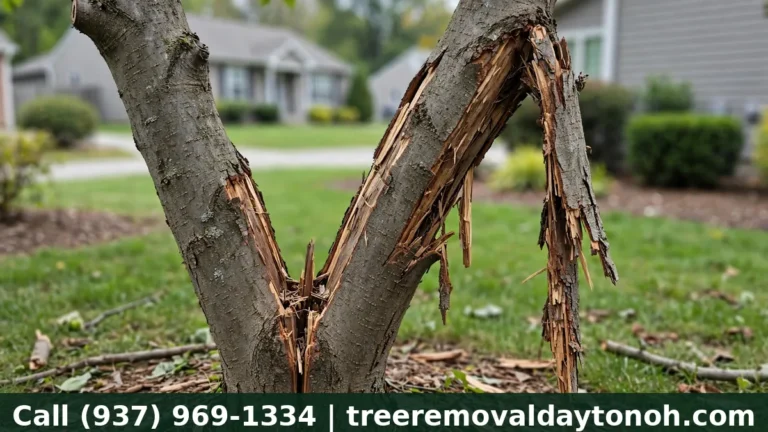
- Worry about the tree leaning toward the house, showing large dead limbs, mushrooms at the base, or cracks in the trunk. Two or more of these mean get it looked at before the next windy day.
- Female cottonwoods release clouds of white seed fluff in late spring. The fluff is messy, not dangerous, but it clogs gutters, pool filters, and air conditioner coils.
- Removal cost depends on size, yard access, cleanup volume, and stump grinding. See our Dayton tree removal cost guide and our Miamisburg and Fairborn service pages. Questions? Call (937) 969-1334.
Every spring in the Miami Valley, white fluff floats across patios and piles up against fences, and residents ask the same question: what is that tree, and should it still be standing?
That tree is the eastern cottonwood, one of the largest native trees in Ohio and a common reason homeowners in Miamisburg, Fairborn, and the Dayton suburbs call a tree crew. Planted everywhere in the 1970s through the 1990s as fast shade, those trees are now reaching the age when cottonwoods start to fail. This guide covers how to identify one, why the species fails, what fluff season means, and how to decide whether yours should come down.
Problem cottonwood in the Dayton area? Call (937) 969-1334. We will assess the tree, explain your options, and give you a straight answer on removal.
How to Identify a Cottonwood in Your Yard
The first three traits are enough for a confident ID.
- Big triangular leaves. Roughly triangle shaped, 3 to 6 inches wide, with toothed edges. They flutter in any breeze because the leaf stems are flat.
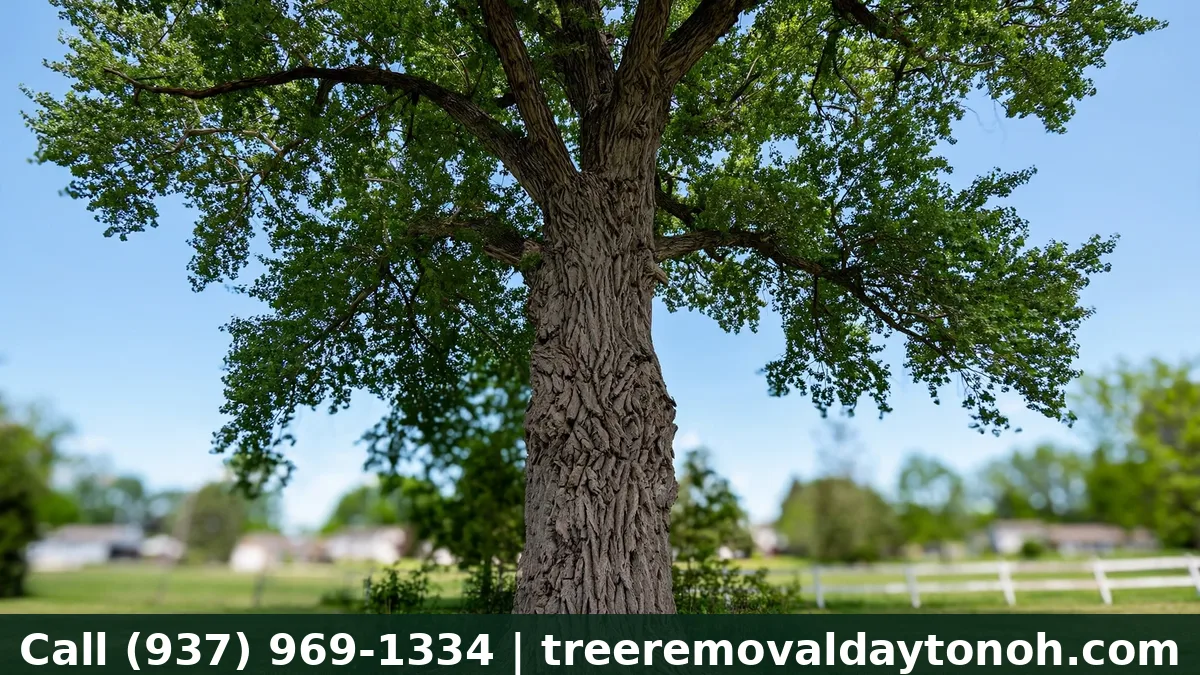
- Deeply furrowed bark. On a mature tree the bark is gray brown with deep vertical ridges. Young trees have smooth pale bark, so this clue only works on older specimens.
- Massive size. A mature cottonwood is often the biggest tree on the street, 80 to 100 feet tall with a trunk 3 to 4 feet across.
- Spring fluff on female trees. Only female cottonwoods produce the cottony seed fluff, released in late May and June in Ohio. If the tree snows in spring, it is a female cottonwood.
- River bottom address. In the wild, cottonwoods grow along rivers and creek bottoms. If your home sits near the Great Miami River or a creek corridor and the tree is huge, the odds are strong.
Why Cottonwoods Grow Fast and Fail Young
Cottonwoods are built for speed. In their native floodplains, the first tree to grab sunlight wins, so the species pours energy into upward growth and neglects strength: soft light wood, weak branch attachments, and a habit of dropping limbs it cannot support.
That strategy works in a forest and fails in a backyard. A tree adding 4 to 6 feet a year also adds 4 to 6 feet of leverage for wind. By age 40 it is enormous, and the weak branch unions start letting go of large limbs. Most residential cottonwoods turn hazardous between 50 and 80 years old, which is exactly where the subdivision trees planted in the 1970s and 1980s sit right now.
The roots tell the same story: aggressive water seekers that travel far beyond the canopy, lift sidewalks, and invade old clay sewer lines. Within 30 feet of the house? Read our guide on trees too close to houses.
Which Is Worse in Dayton: Cottonwood or Silver Maple?
Our silver maple removal guide covers the other fast growing weak wooded tree planted everywhere in the Miami Valley.
| Trait | Cottonwood | Silver maple |
|---|---|---|
| Mature height | 80 to 100 feet | 60 to 80 feet |
| Typical lifespan | 70 to 100 years | 80 to 130 years |
| Wood strength | Very soft and brittle, constantly drops limbs | Weak, splits at codominant stems and included bark unions |
| Most common failure | Large limb drop in wind, whole tree failure after 60 years | Stem splitting, trunk failure at weak unions |
| Seasonal mess | Spring seed fluff on female trees | Helicopter seeds in spring, twig litter year round |
| Removal complexity | High: huge size, soft wood tears instead of cutting cleanly | Moderate to high: wide canopy, often over structures |
| Main cost drivers | Size and access, cleanup volume, riverbank work | Canopy spread over roof, multi stem rigging |
Both earn their removal for different reasons: cottonwoods outgrow their own strength, silver maples split at weak unions.
Not sure whether yours is a cottonwood or a silver maple? Call (937) 969-1334. We identify the species on site and explain your risk.

The Fluff Season: Messy, but Is It Harmful?
For about 2 to 4 weeks each late spring, female cottonwoods release millions of cottony seeds. In Miamisburg neighborhoods near the river it can look like it snowed in June.
- It is not the allergy culprit people think it is. The fluff is seed fiber, not pollen, and is barely allergenic. It gets blamed because it coincides with grass pollen season, the real irritant.
- It is a maintenance nuisance. Fluff mats clog gutters, coat pool filters, and blanket air conditioner coils, raising cooling bills. A pre season gutter and coil cleaning pays for itself.
- It is flammable when dry. Dry fluff mats ignite easily, so sweep them away from grills and fire pits during the peak weeks.
- It means the tree is mature. Fluff signals a female tree of reproductive age, old enough to start showing the structural problems that lead to removal.
Fluff alone is never a reason to remove a tree. It is simply a reminder that the cottonwood in your yard is a large, fast growing species with a short working life.
What Cottonwood Removal Actually Involves
Removing a mature cottonwood is not a one person chainsaw job. The method depends on size, and the soft wood tears and splinters under the saw instead of cutting cleanly, which slows precision cuts and demands more rigging.
- Assessment and plan. The crew maps the lean, the dead limbs, the targets (house, garage, fences, lines), and the drop zones. Riverbank and slope lots make this step longer and more important.
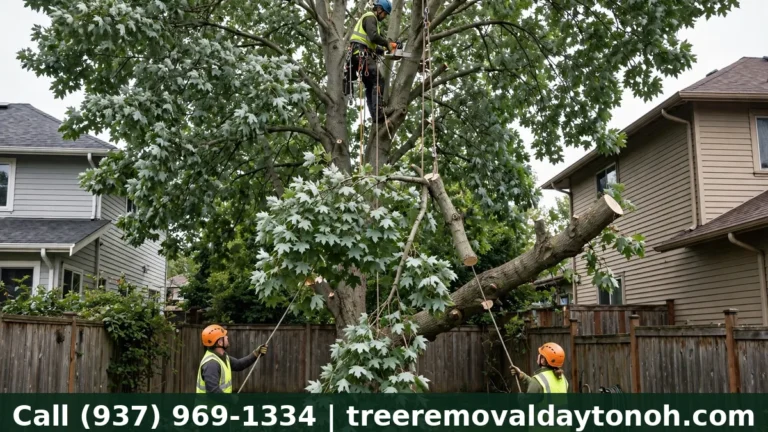
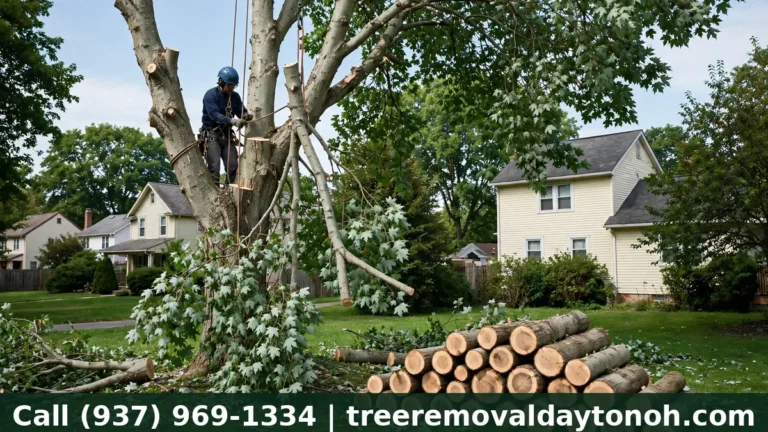
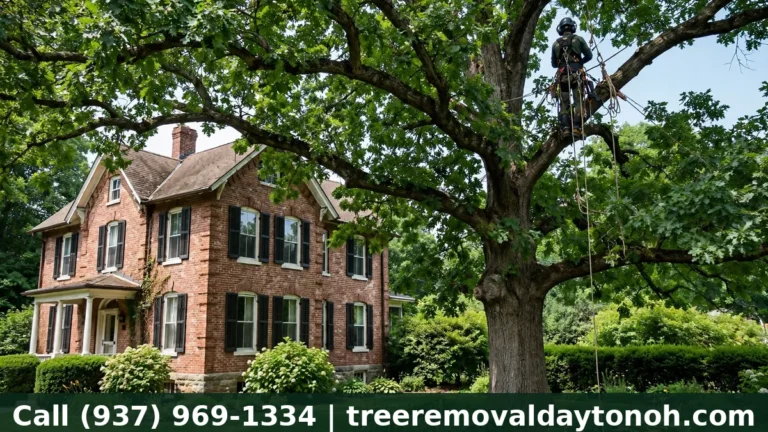
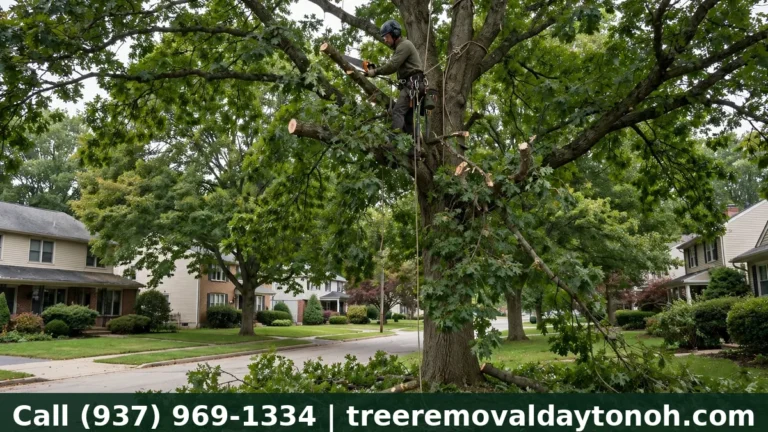
- Sectional takedown. Most residential cottonwoods cannot be felled whole. The crew climbs or uses a lift and removes the tree in sections.
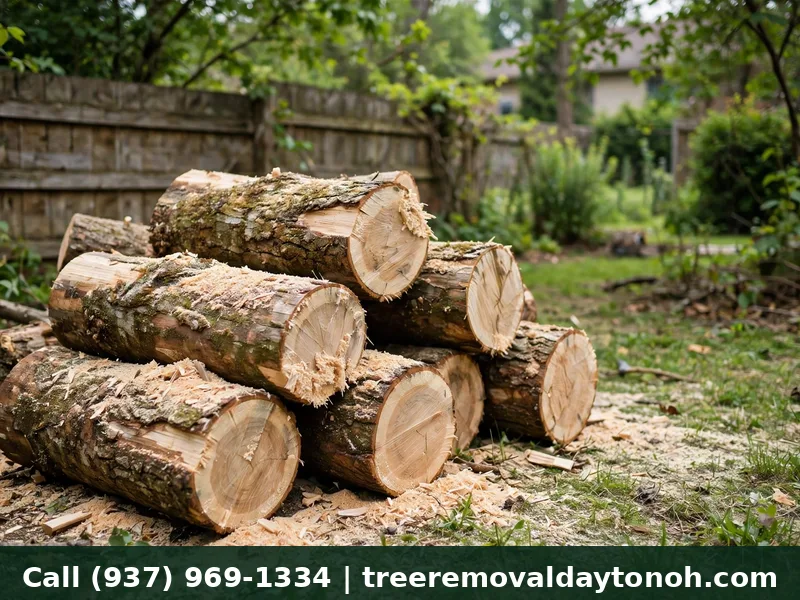
- Trunk processing. The trunk gets cut into rounds. Cottonwood makes poor firewood (it burns fast and leaves lots of ash), so most homeowners have it hauled away. Confirm hauling is in the quote.
- Stump handling. A cottonwood stump is wide and the root plate is aggressive. Grind it with the removal so the area can be regraded. See our stump grinding service.
- Cleanup. Cottonwood jobs produce enormous debris: limbs, twigs, fluff, and bark. A reputable crew leaves the yard raked and clean, not just log free.
Winter removal is often cheaper and cleaner: no leaves, frozen ground, easy to read branch structure. But a failing tree should not wait for a convenient season.
Miamisburg and Fairborn: Why Cottonwoods Cluster Along the Rivers
Cottonwoods are river trees, and the Miami Valley has rivers. Miamisburg sits on the Great Miami River, and the low ground near the river grew cottonwoods long before the subdivisions arrived. Builders in the 1970s and 1980s left the biggest ones standing as instant shade. Fairborn has the same pattern along its creek corridors.
The result: the cottonwoods now failing are the original lot trees, 40 to 60 years old, standing close to homes they were never meant to shade this long. If you recognize this story, our Miamisburg tree service page and Fairborn tree service page cover the local services we provide there.
How Much Does Cottonwood Removal Cost in Dayton
No honest flat price exists. A small 30 foot cottonwood in an open yard is a half day job; a 95 foot tree over a garage with tight access is a multi day project. These factors move the number.
- Height and trunk diameter. The biggest driver. A tree twice as tall is roughly four times the work, because every section must be rigged down.
- Access. Can the crew get equipment to the tree, or is every piece carried out by hand through a gate? Tight access is the most common reason quotes run higher than expected.
- Proximity to targets. The same tree leaning over the house, garage, and power drop requires slow, careful rigging of every piece.
- Cleanup and hauling. Cottonwoods generate a mountain of soft debris. Confirm hauling and raking are included, or the low quote is not the low price.
- Stump grinding. Almost always worth adding. A cottonwood stump left in place will sucker for years.
Want a real number for your tree? Call (937) 969-1334. We will assess the size, access, and targets, and give you a written quote with cleanup and stump grinding itemized.
Important Considerations
- Cottonwoods have a built in expiration date. Plan for 70 to 100 years. If yours was planted in the 1970s, it is in the failure window. A green canopy does not mean a sound tree.
- Dead limbs over targets are the top warning sign. A cottonwood dropping arm sized branches is telling you the structure is going. Call (937) 969-1334 at the first large drop, not the third.
- Never plant a cottonwood as a yard tree. Choose a stronger, longer lived species. Fast shade now means a removal bill later.
- Riverbank trees need a specialist eye. On slopes and riverbanks, decaying roots can undermine banks after the tree dies. Removal plus bank stabilization is sometimes the real job.
- Suckering is relentless. Leave the stump and the roots send up dozens of shoots for years. Grind the stump and treat the suckers.
- Fluff season is your inspection reminder. When the fluff flies each spring, spend ten minutes looking up: dead limbs, new lean, cracks, mushrooms at the base. That habit catches most failures early.
Cottonwood Removal FAQs
How do I know if my cottonwood needs to be removed?
Remove it if you see large dead limbs, a new or increasing lean, trunk cracks, mushrooms at the base (which signal internal rot), or major root damage from construction. One of these warrants an assessment; two or more usually mean removal. A hazard tree assessment gives the professional verdict.
Can you just trim a cottonwood instead of removing it?
Sometimes. Crown cleaning to remove dead wood can buy a healthy cottonwood several more years. But trimming does not fix a rotting base, a bad lean, or a trunk crack, and heavy pruning produces weak fast sprouts. If the problem is structural, trimming is a delay, not a cure.
When is the best time of year to remove a cottonwood in Ohio?
Winter is usually best: no leaves, frozen ground, clear branch structure, and often better pricing. But a hazardous tree should come down as soon as it is identified, whatever the season.
Will the cottonwood grow back after removal?
The stump will sucker aggressively if it is not ground out and treated. Grind it 6 to 12 inches below grade, remove the major surface roots, and treat any shoots that appear.
Is cottonwood fluff bad for allergies?
The fluff is seed fiber and barely allergenic. It gets the blame because it flies during grass pollen season, the real irritant for most people. The fluff is a maintenance nuisance (gutters, filters, coils), not a health hazard.
What should I plant instead of a cottonwood?
For the Miami Valley, consider oaks, disease resistant elms, or Kentucky coffeetree for large shade, and serviceberry or redbud for smaller yards. All are stronger wooded, longer lived, and far less messy. Plant the replacement the same season the cottonwood comes down.
Ready to deal with your cottonwood? Call (937) 969-1334. Tree Removal Dayton Ohio serves Miamisburg, Fairborn, and the whole Miami Valley.