

Silver Maple Removal Dayton Ohio: When to Trim vs Remove
TLDR
- Silver maples grow fast and break fast: they shoot up quickly in Dayton yards, but co-dominant stems, included bark, and brittle branch unions make them the tree most likely to shed limbs in a Miami Valley storm.
- Trim when the structure is sound: if the trunk is solid, there is no sudden lean, and the problems are deadwood, overextended limbs, or a crowded canopy, professional pruning can add many healthy years to the tree.
- Remove when the trunk fails: splitting co-dominant unions, mushrooms or fungal growth on the trunk, large cavities, a sudden lean with lifted soil, or roots heaving your driveway or foundation are removal signals.
- Typical Dayton cost: most silver maple removals in the Dayton area fall inside the local $350 to $2,800 range, with mature silver maples usually in the middle to upper band because of their size and brittle wood.
- Roots do not stop at the stump: silver maple surface roots keep causing trouble after the tree comes down, so plan for stump grinding and root management instead of just cutting and walking away.
- Get an honest answer first: Tree Removal Dayton Ohio assesses silver maples across the Miami Valley and will tell you straight whether pruning can save your tree. Call (937) 969-1334.
Can Your Silver Maple Be Saved by Trimming, or Is Removal the Safer Call?
This is the short version: a silver maple can usually be saved when its trunk and root flare are solid and the problems live in the canopy. Dead limbs, branches rubbing the roof, or a crown that catches too much wind are all jobs for a saw and a rope. Once the trouble is in the trunk itself, a split crotch, a hollow, fungus at the base, or the whole tree leaning after a storm, trimming will not make the tree safe. That is a removal decision, and waiting only raises the risk.
Silver maples (Acer saccharinum) are the fastest growing shade tree planted across Dayton, and they are also the one our crews get called about most. The same aggressive growth that made them a popular street and yard tree in the 1960s and 1970s produces weak branch attachments that fail earlier than almost any other common species. If your silver maple is over thirty years old, an honest assessment is worth more than guesswork. Our hazard tree assessment guide walks through exactly what a professional checks during that visit.
Not Sure If Your Silver Maple Can Be Saved? Get a Free On Site Assessment, Call (937) 969-1334
Silver Maple in Dayton: Trim or Remove?
| What You See | Trim It | Remove It |
|---|---|---|
| Dead or broken branches in the canopy | Yes, deadwood removal and crown cleaning | Not needed for this alone |
| Two trunks joined in a tight V shape | Yes, if bark is sound, bracing or cabling may help | Yes, if the union is splitting, decaying, or holding water |
| Limbs breaking off every storm | Yes, if the trunk is solid, crown reduction lowers wind sail | Yes, if trunk decay or root damage is behind the failures |
| Surface roots lifting sidewalk or driveway | No, trimming the canopy does not fix root damage | Usually, then manage the roots and grind the stump |
| Mushrooms on the trunk or base | No, pruning cannot stop internal decay | Yes, fungus means the wood is rotting from inside |
| Sudden lean after wind or rain | Only for a slight natural lean found stable on inspection | Yes, lean with lifted or cracked soil is an emergency |
| Big tree close to the house | Yes, clearance pruning keeps limbs off the roof | Yes, if the tree is too close and too big to keep safe |
The 5 Warning Signs a Silver Maple in Dayton Needs to Come Down
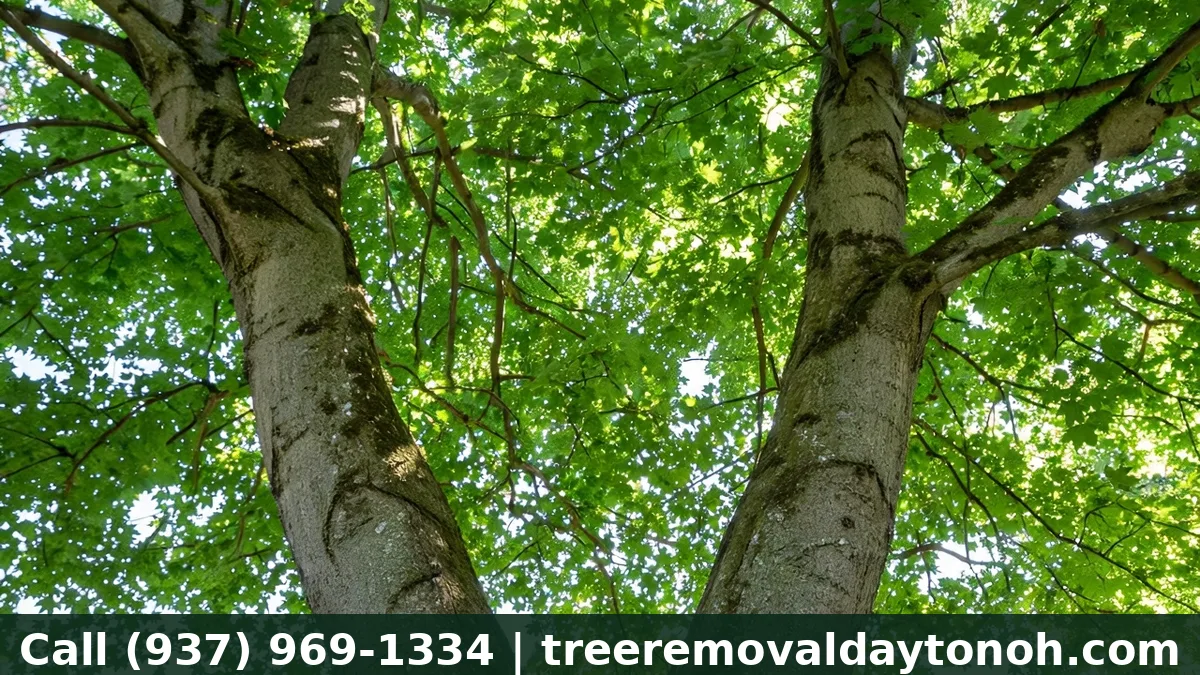
1. A splitting co-dominant union. Look where the two main trunks meet. A healthy union forms a U shape with bark ridges. A dangerous one forms a tight V with bark trapped inside, called included bark. Water collects there, decay moves in, and one day the union peels apart in a storm, often dropping half the tree onto the yard, the roof, or the fence. When the V is visibly opening or holding water, the tree is living on borrowed time.
2. Fungal fruiting bodies on the trunk or root flare. Mushrooms or shelf-like conks growing on the trunk mean decay fungi are eating the structural wood inside. The outside of the tree can look green and full while the inside is hollow. Once decay reaches the co-dominant union or the lower trunk, the tree can fail without any storm at all.
3. Big limbs breaking in ordinary storms. A healthy silver maple sheds some twigs in high wind. A failing one drops large limbs in moderate weather, or keeps losing the same branches year after year. Repeated limb loss means the attachment points are decayed or the canopy is too heavy for the trunk. Crown reduction can help when the trunk is sound, but when decay is the cause, pruning treats the symptom, not the disease.
4. Surface roots attacking hardscape and foundations. Silver maple roots run shallow and aggressive. They lift sidewalks and driveways, invade sewer lines, and push against foundation walls. Trimming the canopy does nothing for root damage. If the roots have reached your foundation or broken a sewer line, removal plus root management is usually the sensible call, especially before you pay for concrete work the roots will ruin again.
5. Sudden lean, soil lifting, or root plate movement. A tree that has always leaned a little is usually stable. A tree that leans more after a storm, with soil lifted or cracked on the opposite side of the lean, is partially uprooted. This is the one sign that should never wait for a convenient week. Trees leaning toward a house need an immediate professional look, and most of the time they need to come down.
When Professional Trimming Is the Right Move for a Silver Maple
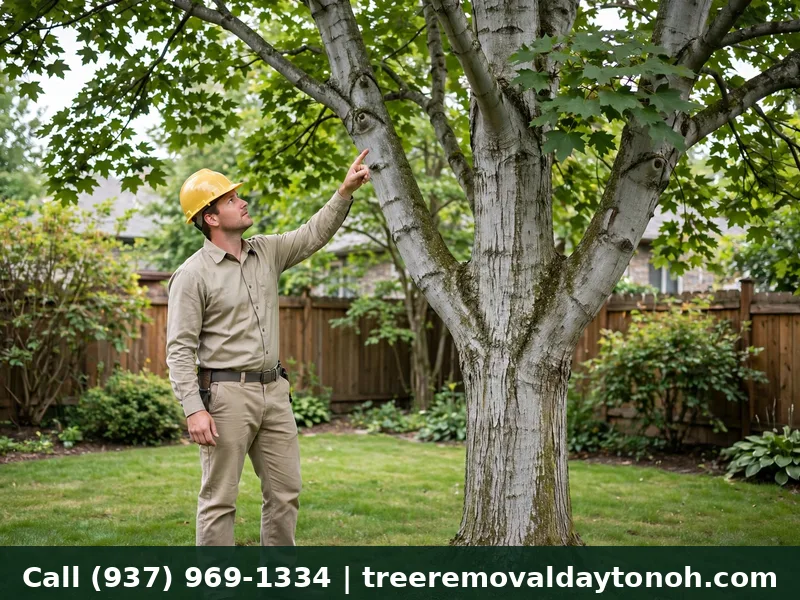
Removal is not the answer for every struggling silver maple. When the trunk is solid and the union is healthy, targeted pruning fixes most of the common complaints. Crown cleaning removes dead, diseased, and rubbing branches before they become falling hazards. Crown thinning opens the canopy so wind passes through instead of pushing the whole tree, which matters a lot for a top heavy silver maple in Dayton’s storm season. Crown raising lifts the lower limbs for clearance over roofs, driveways, and walkways.
The best time to prune silver maples in Ohio is the dormant season, roughly November through February. Silver maples bleed sap heavily in late winter and spring, so pruning before March avoids the mess and stress of heavy sap flow. Our Ohio pruning calendar lays out the timing for every common species if you are planning work across several trees.
Two cautions. First, never let anyone top your silver maple. Cutting the crown back to stubs, called topping, creates a flush of weak shoots that break off in the next storm and ruins the tree’s structure permanently. Second, cables and braces can support a co-dominant union, but they are a managed risk, not a cure. If an arborist recommends cabling, get the full picture: the hardware cost, the inspection schedule, and the point at which removal becomes the safer choice.
What Does Silver Maple Removal Cost in Dayton Ohio?
Most silver maple removals in the Dayton area land inside the local $350 to $2,800 range, with mature silver maples usually in the middle to upper part of that band. They earn that position for three reasons: they grow large, often forty to seventy feet with wide crowns, their brittle wood makes rigging and sectioning slower and more careful than with a sound hardwood, and many Dayton silver maples sit close to houses, fences, and driveways, which means piece by piece takedown instead of a simple fell.
As a planning guide, a smaller silver maple under thirty feet with clear drop space usually sits at the low end of the range. A medium tree, thirty to fifty feet, in a normal suburban yard with good access typically lands in the middle. A large mature silver maple over fifty feet, close to the house or tangled near utilities, moves toward the upper end, especially when crane work or traffic control enters the picture. Stump grinding is usually quoted separately, so ask whether it is included.
Do not shop for a silver maple removal on price alone. Silver maples over structures are exactly the job where the cheapest bid carries the most risk, because the wood is unpredictable. Our Dayton tree removal cost guide breaks down every factor that moves a quote so you can compare bids on equal terms. And if your tree needs power line clearance rather than full removal, read our power line tree guide before anyone touches it.
Get an Exact Price for Your Silver Maple Removal, Call Tree Removal Dayton Ohio at (937) 969-1334
What Happens to the Stump and Surface Roots After Removal?
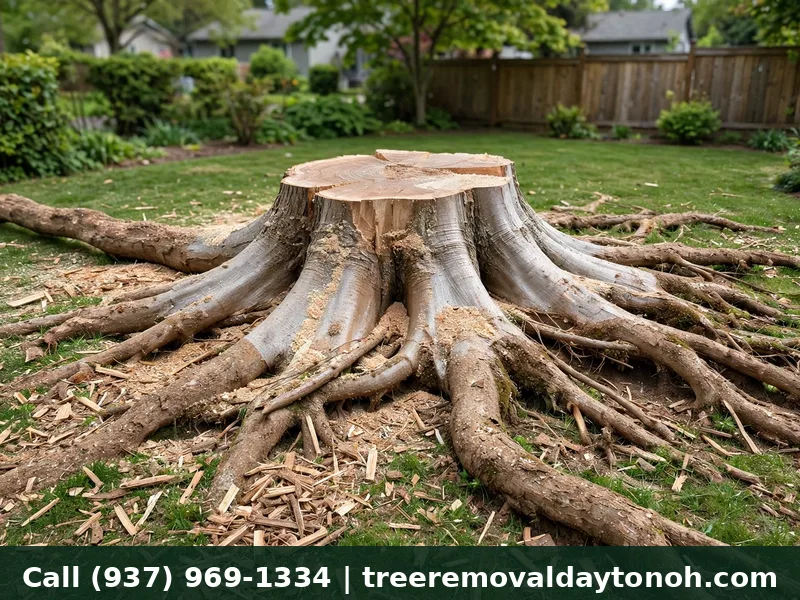
Cutting the tree is only half the job with a silver maple. The stump and the wide, shallow root system stay behind, and silver maple roots are famous for sending up suckers after the trunk is gone. If you skip the stump, expect a ring of fast growing shoots around the old trunk within a season or two.
Stump grinding solves the visible part. A grinder chews the stump to six to eight inches below grade, and a good crew chases the major surface roots outward so the lawn can be regraded and mowed. Our stump grinding cost guide for Dayton covers what grinding typically runs and what is usually included in the quote. For full details on how the removal itself is priced and scheduled, see our tree removal service page.
One rule for replanting: do not put the new tree in the old stump hole. Grindings mixed with soil settle and decompose, which starves a new tree, and old silver maple roots can harbor issues that follow the new planting. Plant the replacement at least ten to fifteen feet away, and this time pick a stronger species. Red maple, swamp white oak, and Kentucky coffeetree all handle Dayton soil and storms far better than silver maple ever did.
Important Considerations
Do not attempt a silver maple removal yourself. Brittle branch unions mean limbs can snap and fall in unexpected directions during cutting, and mature silver maples are heavy enough to kill. The combination of weak wood and a big tree is exactly why this species fills emergency rooms after DIY attempts. This is professional only work.
Time the job with Dayton’s storm season in mind. Late winter through early spring storms hit right when silver maples are most brittle, so a questionable tree assessed in fall should be scheduled before the spring storm pattern arrives, not after it.
Call 811 before any stump grinding or root work. Silver maple roots run wide and shallow, exactly where shallow utility lines, invisible fence wire, and landscape lighting like to hide. A quick locate call is free and avoids an expensive surprise.
If the tree sits on or near a property line, talk to your neighbor before the crew arrives. Shared trees and boundary trees cause more disputes than any other tree issue we see. A short conversation now beats a fence line argument later.
Finally, document everything with photos if insurance might be involved. Storm damaged silver maples are one of the most common claim situations in the Miami Valley, and our insurance claim guide explains what adjusters need to see.
Frequently Asked Questions
Can a silver maple with two trunks be saved?
Sometimes. If the union is tight, the bark is sound, and there is no decay or splitting, cabling or bracing plus regular crown work can keep the tree standing for years. If the V is opening, holding water, or showing decay, the union will eventually fail, and removal is the honest recommendation. An on site inspection is the only way to tell which case you have.
Why does my silver maple drop so many branches?
Fast growth is the cause. Silver maples add wood quickly, and the branch attachments do not keep up in strength. Weak unions plus a heavy, wind catching crown mean limbs snap in storms that other species shrug off. Regular crown thinning reduces the wind sail, but a tree that keeps dropping large limbs in moderate weather has a structural problem pruning cannot fix.
Are silver maple roots really bad for foundations and sewers?
They are among the worst. The roots stay shallow, spread two to three times wider than the canopy, and aggressively seek moisture, which means sewer lines, sump pits, and foundation cracks. If you have chronic sewer backups and a silver maple nearby, the tree is the prime suspect. Removal plus root management usually ends the cycle.
When is the best time to trim a silver maple in Ohio?
The dormant season, November through February, is the sweet spot. Sap flow is minimal, the crew can see the branch structure without leaves, and the tree heals fastest when growth resumes. Avoid March through May, when silver maples bleed sap heavily from fresh cuts.
How long do silver maples live in Dayton?
Sixty to eighty years is typical in a yard setting, shorter for street trees and trees with structural defects. Most silver maples planted in the 1960s and 1970s are now past their prime, which is why Dayton sees so many silver maple removals each year. Problems accelerate fast in the last decade of the tree’s life.
Should I remove a silver maple before selling my house?
Not automatically, but get it assessed. A documented professional assessment is valuable either way: a clean bill of health with a pruning plan reassures buyers, while a removal quote lets you price the issue honestly instead of losing the sale to a nervous home inspector. Many sellers handle the tree work before listing to keep the transaction simple.
Does Tree Removal Dayton Ohio handle silver maples near power lines?
Yes, and this matters more for silver maples than most species because their fast growth puts them into power lines sooner. Line clearance work follows utility rules and often involves coordination with the power company, so it is never a standard trim job. Call (937) 969-1334 and we will tell you exactly what your situation needs.
Silver Maple Causing Worry in Your Dayton Yard? Talk to a Local Pro Today, Call (937) 969-1334



3 Comments