
What Happens to Wood After Tree Removal in Dayton Ohio
TL;DR: What Happens to the Wood After Tree Removal
- After a tree is removed, your options for the wood are: have the crew haul it away, keep the trunk as firewood, chip the branches into mulch, or have usable logs cut and stacked on your property.
- Most quotes include hauling brush and small debris but not always the big wood. Whether trunk removal is included varies by company, so ask before the crew arrives.
- Ohio hardwoods need seasoning before they burn safely: ash is ready in about 6 to 12 months, maple in about 12 months, and oak needs 18 to 24 months. Fresh cut wood burns poorly and creates creosote.
- Wood chips make excellent free mulch for garden beds, but fresh chips should age before going against young plants. Dayton area cities offer curbside yard waste pickup or drop off sites for the rest.
- Decide the wood plan when you get the quote, not after the tree is on the ground. Call (937) 969-1334.
The tree is gone. Now what about the wood? Most Dayton homeowners are surprised to learn that “tree removal” does not automatically mean every trace of the tree is gone. The trunk, the logs, and the chips are three separate things, and what happens to each one is a decision you make, usually at quote time.
This guide walks through every option: hauling, firewood, mulch, and leaving the wood for the homeowner. We cover what a typical tree service includes in the price versus what costs extra, how Ohio species season for firewood, and how Dayton area disposal rules work. For the removal itself, start with our Dayton tree removal cost guide.
Getting a tree removed and not sure what to do with the wood? Call (937) 969-1334. We will quote the removal with the wood handled exactly the way you want.
What a Standard Tree Removal Quote Actually Includes
Every company phrases it differently, but a typical removal quote covers the cutting, the crew, the equipment, and cleanup of the work area. The fine print is where the wood question lives:
- Brush and limbs are almost always removed. Branches under a few inches thick are chipped on site or hauled off. This is standard.
- Trunk sections and large logs are often a separate line item. Some companies include hauling the trunk wood; others cut it into movable lengths and leave it, or charge extra for the haul. This is the number one source of confusion, so read the quote.
- The stump is usually separate. Removal covers the tree above ground. Stump grinding is priced separately in almost every Dayton quote.
- Cleanup level varies. Some crews rake the area clean and haul everything. Others leave chips and small debris. Ask whether the quote says “full cleanup” or just “debris removal,” because those mean different things.
When you compare quotes, compare the wood line. Two similar looking quotes can differ by hundreds of dollars depending on what happens to the trunk.
Option 1: Have the Crew Haul It All Away
This is the simplest option and the most common choice for homeowners who do not burn wood and do not garden. The crew loads the trunk sections and all the wood onto their trucks and takes it off your property.
Hauling is easy but not always free. Moving a few thousand pounds of hardwood takes truck space, fuel, and dump time, so many companies price it into the quote while others list it as an add on. On bigger trees, especially oaks and large maples, the haul away charge reflects real weight.
If you choose this route, confirm it in writing. “All wood and debris removed from property” is the phrase you want to see. If the quote only says “debris removed,” ask whether that includes the trunk.
Option 2: Keep the Wood as Firewood
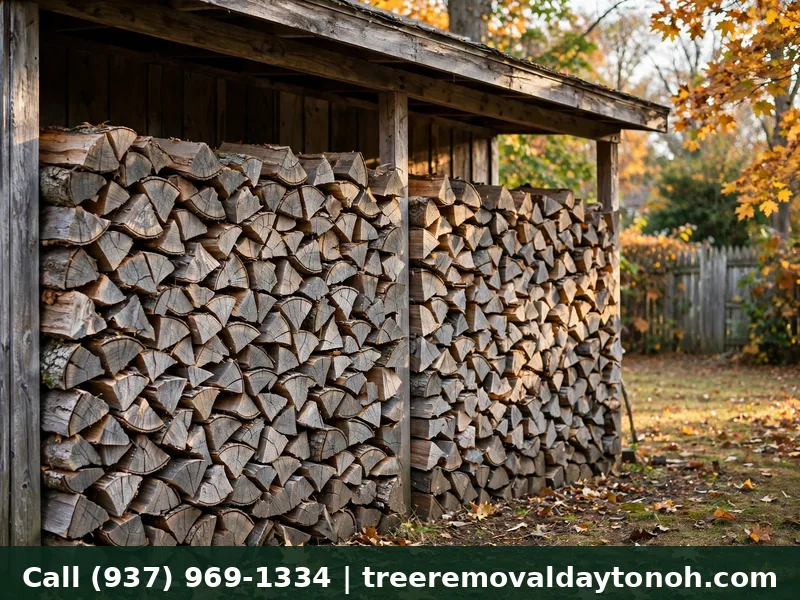
This is the option that makes a removal pay you back. A mature ash, oak, or maple can yield a full winter of firewood or more. The catch is moisture. Freshly cut wood is wet, often 50 percent moisture or more, and burning wet wood is a bad idea: it burns inefficiently, smokes heavily, and coats your chimney with creosote. Firewood needs seasoning, meaning split, stacked, and air dried until moisture drops below about 20 percent:
- Ash: ready in about 6 to 12 months. Easy to split and reliable to burn.
- Maple: about 12 months. Burns hot and clean once dry.
- Oak: the slow one and the best once ready. Needs 18 to 24 months.
- Hickory: about 12 to 18 months. Excellent heat, hard to split.
- Cherry: about 6 to 12 months. Burns clean with a pleasant smell.
Split rounds soon after cutting, because split wood dries far faster than whole logs. Stack off the ground on pallets or rails in a sunny spot with good airflow, top cover it but leave the sides open. Never stack green wood tight against your house.
Not every removed tree makes good firewood. Wood from dead or dying trees is usually fine once seasoned, but wood with heavy fungal decay is better as mulch or hauled away. If emerald ash borer was in the picture, local firewood movement rules can apply.

Option 3: Chip It Into Mulch for Your Yard
Every removal produces branches and brush, and running them through the chipper turns waste into free mulch. A two to three inch layer around trees and shrubs suppresses weeds, holds soil moisture, and feeds the soil as it breaks down.
Two cautions. First, fresh chips are high in carbon and pull nitrogen from surrounding soil as they decompose. Spread on top as mulch this is mostly harmless, but let chips age in a pile for a few months before using them in vegetable beds or around new plantings. Second, never pile mulch against tree trunks. Keep mulch a few inches from the bark and never more than a few inches deep.
Some crews spread chips into your beds as part of the job, others leave the pile for you to move, and some haul chips away by default. Chips from a diseased tree should not go back onto healthy plants, so mention any known disease when you discuss the plan.
Option 4: Leave the Logs for You to Use or Give Away
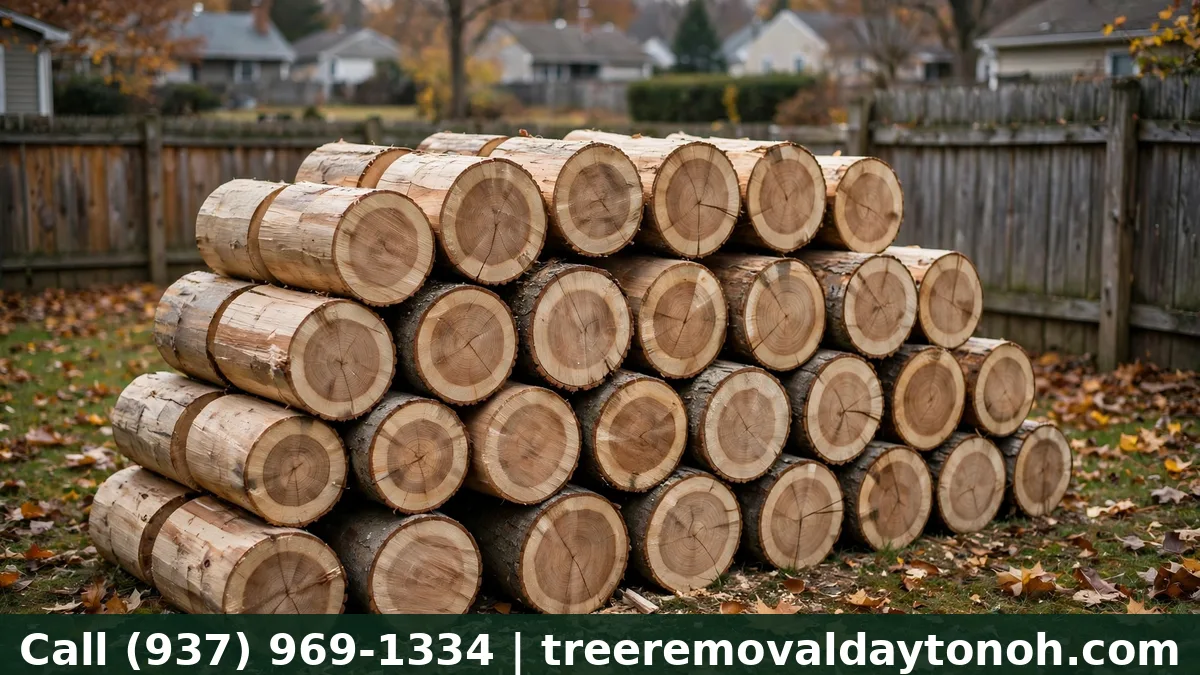
Some homeowners have the crew cut the trunk into manageable rounds and stack them neatly, then handle the rest themselves. You skip the haul away charge and get firewood, rustic edging, or project material.
Good firewood has real value in the Miami Valley. A full cord of seasoned hardwood sells for several hundred dollars, so a stack of free oak from your own yard is worth something. If you cannot use it all, offering it to neighbors or on local classifieds usually moves it fast, especially in fall.
Be realistic about the work. Moving and splitting a few thousand pounds of green oak is a serious weekend project. If you go this route, ask the crew to cut rounds to your preferred length and stack them where you want the pile.
Your Options Compared
| Option | Your effort | Typical cost impact | Best for |
|---|---|---|---|
| Crew hauls everything away | None | Included in many quotes; sometimes extra on large trees | Homeowners with no use for wood |
| Keep as firewood | High if you split it; medium if the crew stacks it | Can lower the quote and save on firewood | Anyone with a fireplace, stove, or fire pit |
| Chip into mulch | Low if the crew spreads it; medium if you move the pile | Usually included; saves buying mulch | Gardeners with landscape beds |
| Leave stacked logs | Medium; you decide the use later | Often reduces hauling charges; free wood | DIYers or anyone deferring the decision |
Haul it, stack it, or chip it, the choice is yours. Call (937) 969-1334. We price haul away, firewood cutting, and chip spreading as clear line items so there are no surprises.
Dayton Area Disposal Rules for What You Do Not Keep
- Curbside yard waste: Most Dayton area cities collect yard waste separately, with rules about bundling, branch diameter, and bundle length. Trunk sections and thick logs usually do not qualify.
- Drop off sites: Montgomery County and surrounding communities operate yard waste drop off options where you can bring brush and wood for composting, far cheaper than a dumpster.
- Open burning: Ohio restricts open burning, and most incorporated cities prohibit it outright or limit it to small recreational fires in approved containers. Check your city’s ordinance before burning anything.
- Landfills: accept tree debris by weight, but tipping fees add up fast on hardwood. For large jobs, a rental dumpster or the crew’s haul away service is usually cheaper per ton.
When in doubt, let the tree service handle disposal. On larger jobs like land clearing, the logistics are part of the service, and our land clearing page covers how big debris volumes are handled.
What to Ask About the Wood Before Hiring
These are the questions to ask any tree company, including us:
- Is trunk removal and hauling included? Get it in writing, not as a verbal promise.
- Will the crew cut firewood lengths if I keep the wood? Many crews do this at no charge if you ask at quote time.
- Are chips spread, piled, or hauled away? Each has a different price, and the default varies by company.
- Is stump grinding included? It almost never is. Our stump grinding service is quoted separately, and stump grinding cost in Dayton depends on size and access.
- What does “cleanup” mean in this quote? Full cleanup means rakes, blown beds, and nothing left but the lawn. Confirm it.
A company that answers these clearly, in writing, is a company you can trust with the rest of the job.
Comparing quotes and the wood lines do not match up? Call (937) 969-1334. We will spell out exactly what happens to your wood.
Important Considerations
- Decide the wood plan at quote time. Moving a cut trunk costs more than planning the haul before the saw starts.
- Green wood burns badly and is worth little. Seasoned hardwood is valuable, burns clean, and keeps creosote out of your chimney.
- Match the species to the use. Oak and hickory are premium firewood. Soft or decayed wood is better as mulch or haul away.
- Fresh chips are mulch, not soil. Spread on top, never tilled in around young plants, and never piled against trunks.
- Check local rules before burning or dumping. Most Dayton area cities restrict open burning, and curbside pickup does not cover trunk sections.
- Get the wood line in writing. Call (937) 969-1334 and we will spell out exactly what happens to your wood.
FAQs
Is wood removal included in a standard tree removal price?
Sometimes. Brush and small debris removal is standard, but hauling the trunk and large logs is often a separate line item. Ask the company to confirm in writing whether all wood leaves the property.
Can I keep the wood after my tree is removed?
Yes. Ask the crew to cut the trunk into firewood lengths (16 inches is standard) and stack it where you want it. You save on hauling and gain free firewood once it is seasoned.
How long does firewood need to season in Ohio?
Ash seasons in about 6 to 12 months, maple and cherry in about 12 months, hickory in 12 to 18 months, and oak needs 18 to 24 months. Split and stacked off the ground, wood dries far faster than whole logs in a pile.
Is it safe to burn wood from a diseased or dead tree?
Wood from dead trees is generally fine once seasoned, but wood with heavy fungal decay should be mulched or hauled instead. If the tree had a contagious disease, ask your tree crew about local firewood movement rules before transporting it.
Can I use fresh wood chips in my garden right away?
As top mulch around established plants, yes. In vegetable beds or around new plantings, let chips age a few months first. Never pile mulch against tree trunks.
Will keeping the wood lower my tree removal quote?
Often, yes. Hauling heavy hardwood costs truck time and dump fees, so quotes that leave the wood cut and stacked on your property can run lower. Ask for both prices and compare.
Ready to remove a tree and want the wood handled the right way? Call (937) 969-1334. We will quote the removal, the cleanup, and the wood exactly the way you want it done.