

Oak Wilt in Dayton Ohio: Why You Cannot Trim Oaks April Through July
TLDR
- What is oak wilt: A fatal fungal disease (Bretziella fagacearum) that blocks water and nutrient movement in oak trees and kills them within weeks to months.
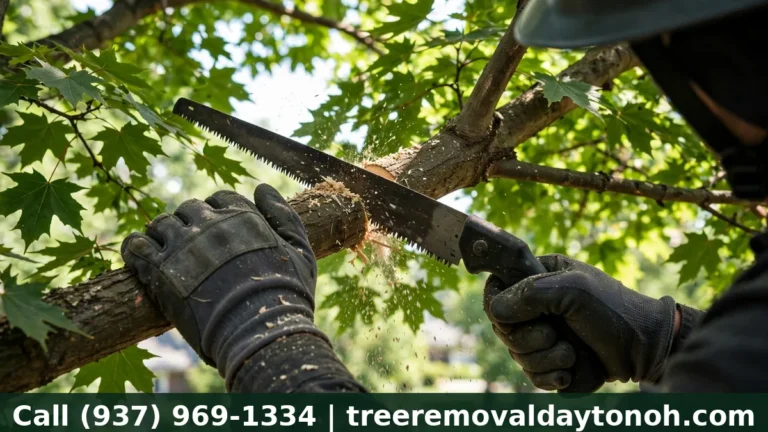
- Why April to July trimming is banned: Sap beetles that transmit oak wilt are most active April through July and are strongly attracted to fresh pruning cuts on oaks during this period.
- How fast oak wilt kills: Red oaks in Dayton Ohio can die within 4 to 6 weeks of infection. White oaks progress more slowly, sometimes over years.
- Can oak wilt spread underground: Yes. Oak wilt spreads through root grafts between neighboring oaks of the same species without any beetle involvement.
- Is there a cure: No cure exists once a tree is infected. Management focuses on removal of infected trees and disrupting root graft connections to protect neighboring oaks.
- Safe pruning window for oaks in Ohio: August through March. Never prune oaks from April through July in the Dayton Ohio climate. See our full guide on when to trim trees in Ohio.
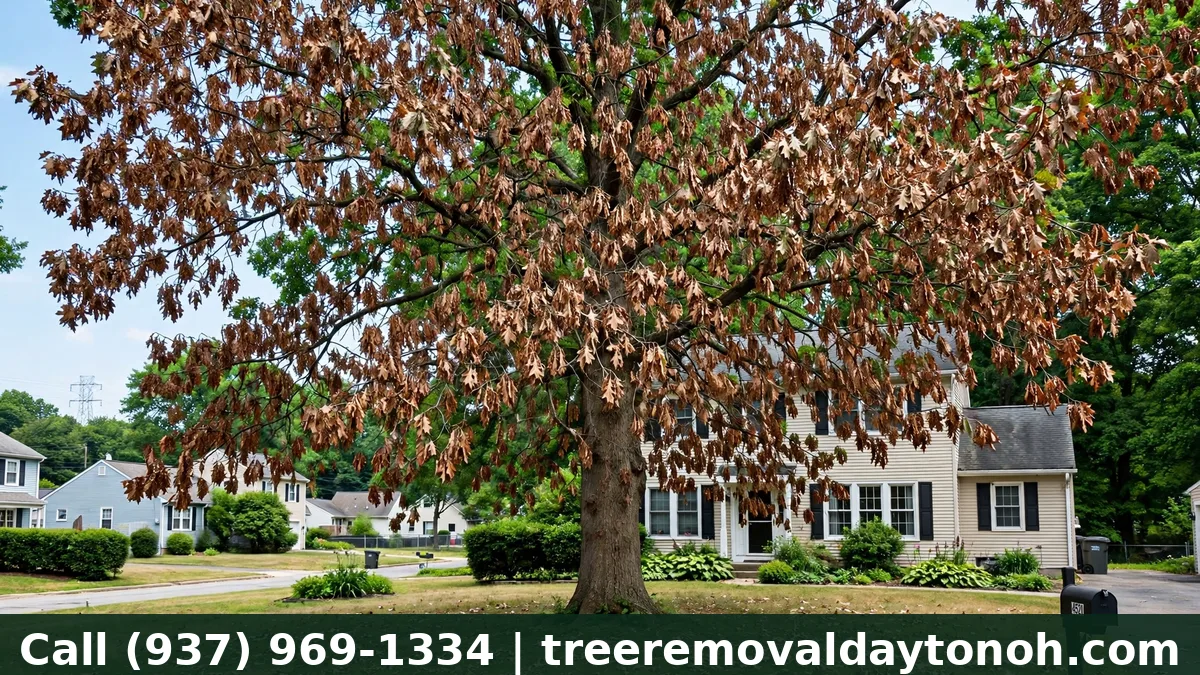
What Is Oak Wilt and Why Is It Deadly to Ohio Oaks?
Oak wilt is a vascular disease caused by the fungus Bretziella fagacearum. The fungus colonizes the xylem, the water-conducting tissue of the tree, and produces structures that physically block the movement of water and nutrients from the roots to the canopy. The tree essentially starves while its water supply is cut off from below.
Red oak species, including pin oak and Northern red oak which are common in Dayton Ohio neighborhoods, are highly susceptible and typically die within 4 to 6 weeks of infection. White oaks, which include bur oak and chinkapin oak, mount a stronger defensive response and may live for years after infection before succumbing, sometimes appearing to recover between seasons.
Oak wilt is present in Ohio and has been confirmed in multiple counties across the state. In the Dayton area, its spread follows the pattern common to Ohio: transmission through both sap beetles during the growing season and through underground root grafts between connected trees in groups or rows.
Oak Tree Concern in Dayton? Call (937) 969-1334 for an Arborist Assessment
How Do Sap Beetles Spread Oak Wilt in Dayton?
Sap beetles of the genus Nitidulidae are the primary overland vector for oak wilt in Ohio. These small beetles feed on sap from wounds, diseased material, and fermenting plant tissue. When they feed on a sporulating oak wilt mat, which is a fungal structure that forms under the bark of a recently killed red oak, they pick up fungal spores on their bodies.
If the same beetle then visits a fresh pruning cut or a storm wound on a healthy oak, it deposits those spores into the wound. The fungus then colonizes the exposed wood and enters the vascular system. This entire transmission process can occur within hours of a pruning cut being made during the beetle’s active season.
Sap beetle activity in the Dayton Ohio area peaks from late April through June but continues at lower levels through July. This corresponds exactly with the April through July ban on oak pruning. Pruning cuts made in August or later, when beetle populations have dropped for the year, do not carry the same transmission risk. However, wounds from storm damage during the active season should be treated with wound sealant as a precautionary measure.
How Does Oak Wilt Spread Underground?
Oak wilt spreads between neighboring trees through root grafts when the root systems of two nearby oaks of the same species have grown together. Red oaks commonly form root grafts when their roots are within 50 to 75 feet of each other. White oak species rarely form root grafts with each other, which is part of why white oaks resist the underground spread pattern more effectively.
When one tree in a root-connected group becomes infected, the fungus travels through the shared root system to the connected neighbors. This form of spread does not require any beetle activity and cannot be prevented by careful pruning timing alone. A cluster of red oaks growing within 50 feet of each other can all become infected from a single initial infection point within one to two growing seasons.
Disrupting root grafts is the primary management tool for containing underground spread. This is done with a soil trenching vibratory plow cut to a depth of 4 to 5 feet along the boundary between infected and healthy trees. The trench physically severs the shared roots. This is specialized equipment work typically performed by certified arborists or plant health care professionals, not standard tree removal crews.
| Transmission Type | How It Spreads | Distance | Prevention |
|---|---|---|---|
| Sap beetle overland | Beetles carry spores to fresh cuts | Unlimited | Avoid Apr to Jul pruning |
| Root graft underground | Fungus moves through fused roots | 50 to 75 feet | Vibratory soil trenching |
| Movement of infected wood | Logs, firewood, chips moved off site | Any distance | Do not move infected wood |
What Are the Symptoms of Oak Wilt in Dayton Ohio?
Oak wilt symptoms in red oaks appear rapidly and are dramatic. The first sign is sudden wilting and browning of leaves starting at the branch tips and moving inward. On red oaks, leaves typically turn brown from the outer edge inward while the midrib stays green temporarily. The wilting progresses from the upper canopy downward.
Because the progression in red oaks is so fast, many homeowners do not notice anything wrong until the tree is already severely affected. A red oak that looked healthy in May may be 80 percent brown and dead by July of the same year.
White oak symptoms are less dramatic and progress more slowly. Wilting tends to affect individual branches rather than the whole crown at once. A white oak may show gradual dieback over multiple growing seasons, which can be confused with other stressors like drought or root damage.
Suspect Oak Wilt? Call (937) 969-1334 — ISA Certified Arborist On Staff

What to Do If You Think Your Oak Has Oak Wilt in Dayton
If your red oak shows rapid wilting and browning in spring or early summer, contact a certified arborist for tree removal in Dayton Ohio immediately. Do not wait to see if the tree recovers. A red oak with confirmed oak wilt needs to be removed promptly to prevent sporulating mats from forming under the bark, which would create a local beetle transmission source for neighboring trees.
Do not move wood, logs, or chips from a suspected or confirmed oak wilt tree off your property without consulting with an arborist. The fungus can survive in freshly cut wood for up to a few weeks, and transporting infected wood spreads the disease.
After removal of an infected red oak, the stump should be treated with herbicide or the bark removed to prevent sporulating mat formation. If neighboring oaks are within 50 to 75 feet of the removed tree, discuss root graft disruption options with your arborist as a protective measure.
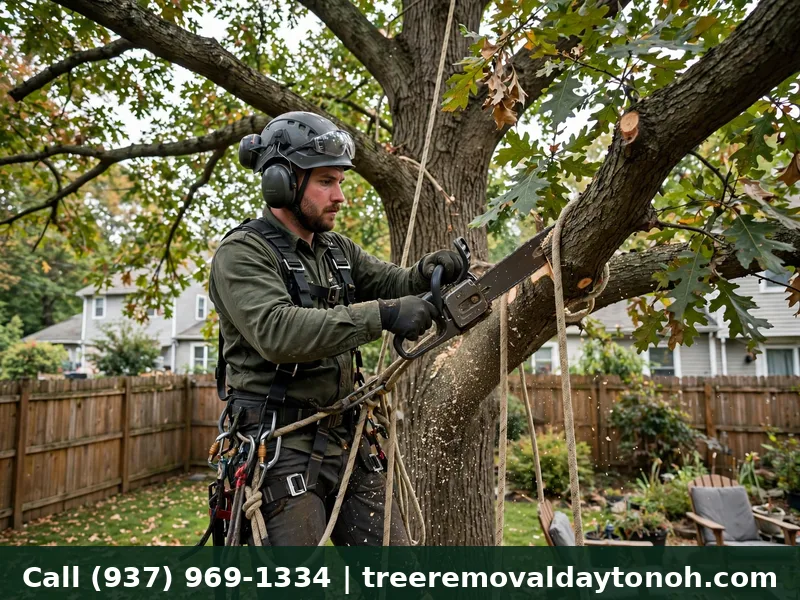
Important Considerations
Ohio has no mandatory reporting requirement for oak wilt as of 2026, unlike some other states. However, the Ohio Department of Natural Resources monitors its spread and tracks confirmed cases. If you suspect oak wilt on your property, the local OSU Extension office in Greene or Montgomery County can connect you with a certified plant diagnostician.
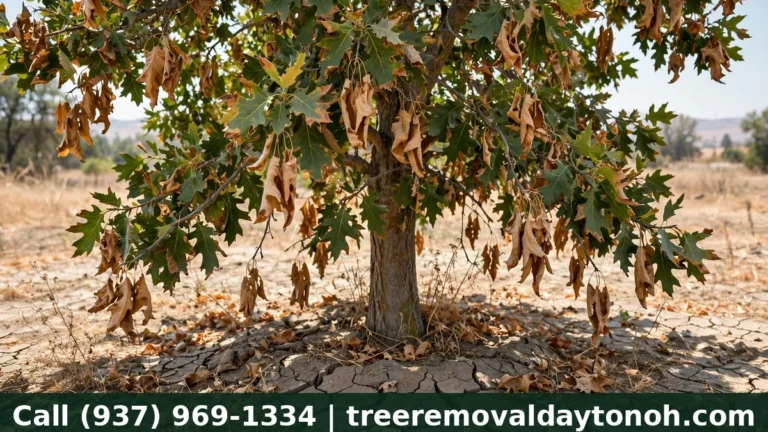
Not all rapid oak decline is oak wilt. Summer drought stress, Armillaria root rot, two-lined chestnut borer, and bacterial leaf scorch can all cause wilting and decline symptoms that resemble oak wilt. A definitive diagnosis requires laboratory sample analysis of affected tissue from the cambium layer.
Propiconazole fungicide injections have been used in white oaks to slow oak wilt progression, but this treatment does not cure infected trees and is not effective in red oaks. Treatment decisions should be made with a certified arborist who can assess whether injection is appropriate for your specific situation.
Frequently Asked Questions
Can I prune my oak tree in Ohio in March?
Yes. March is within the safe pruning window for oaks in Ohio. Most arborists recommend pruning oaks in late winter, from late January through mid-March, as the ideal time because sap beetle activity has not yet begun for the year and the tree’s wounds will close quickly when spring growth starts. Avoid pruning as April approaches and especially after the first warm weeks that bring beetles out of dormancy. This depends on the specific year’s seasonal temperature patterns.
Will oak wilt kill all the oaks in my neighborhood?
Oak wilt can spread to neighboring oaks through root grafts if the root systems of the same species are connected. In a grouping of red oaks on adjacent properties, the loss of one infected tree puts the connected neighbors at risk. However, not all oak trees in proximity are root grafted, and the presence of oak wilt in one tree does not guarantee spread to all nearby oaks. Managing the initial infected tree promptly and disrupting root grafts reduces the risk significantly.
Is it safe to burn firewood from an oak with oak wilt?
Firewood from an oak wilt-infected tree is generally safe to burn if it has been properly seasoned for one full year or longer. The oak wilt fungus does not survive in dry, seasoned firewood. However, do not move unseasoned or green wood from a confirmed oak wilt tree to another location because the fungus can survive and sporulate in fresh wood. Burn infected wood on site or allow it to season in place for at least one year before moving it. This depends on the degree of seasoning.
Does Tree Removal Dayton Ohio follow oak wilt prevention protocols?
Yes. We observe the April through July oak pruning ban and advise homeowners on it when scheduling oak work. For oak trees that require emergency attention during the high-risk window due to storm damage, we apply wound sealant to minimize beetle attraction. We also provide oak wilt assessment consultations for homeowners who notice symptoms in their oaks. Call (937) 969-1334 for a site visit.




One Comment