
How We Handle Crane Tree Removal in Oakwood and Kettering Ohio
TL;DR: Crane Tree Removal in Oakwood and Kettering, Ohio
- A crane is used when a tree cannot be felled or rigged down safely: overhanging roofs, power lines, fences, pools, or tight Oakwood lots with no drop zone.
- Crane removals typically cost 30 to 60 percent more than a standard removal, but the job usually finishes in a single day with less risk to your property.
- Our process: on-site assessment, crane sizing, a written lift plan, sectional picks, and full cleanup the same day.
- For a crane-removal assessment in Oakwood or Kettering, call Tree Removal Dayton Ohio at (937) 969-1334.
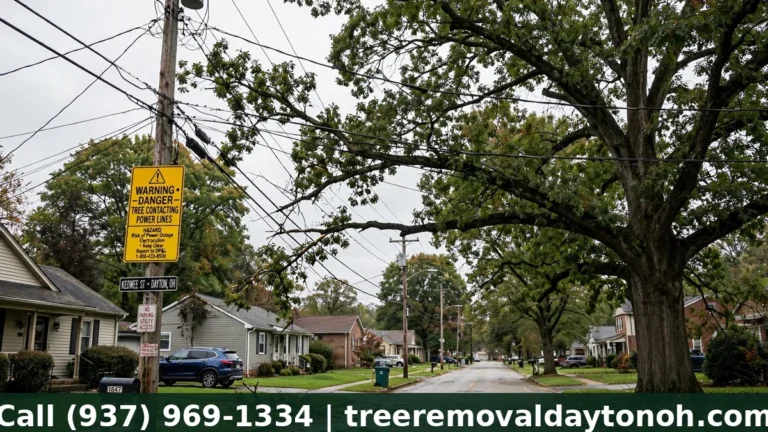
Most trees come down the same way: a climber rigs them apart in sections, and the ground crew handles the rest. But some trees cannot be taken down that way. The 90 foot oak leaning over your roof in Oakwood. The storm-damaged maple tangled in the service drop in Kettering. The dead ash wedged between two houses with six feet of clearance on each side. When there is nowhere for the tree to go, we bring the crane to it.
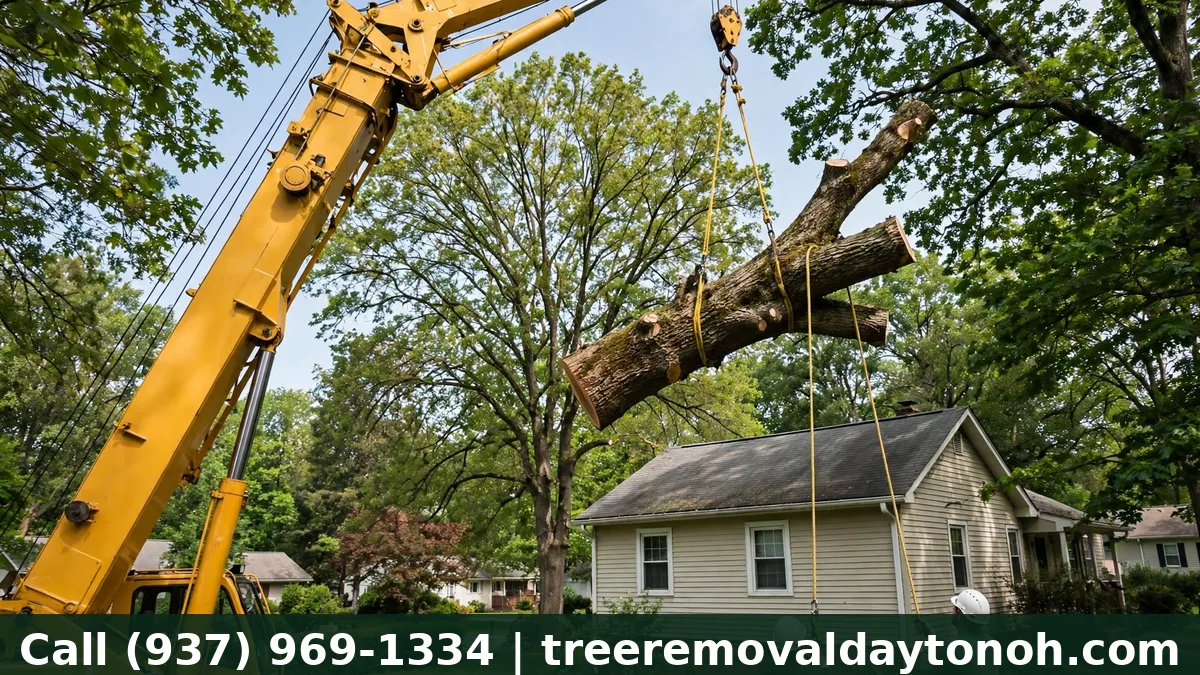
Crane tree removal sounds dramatic, and the equipment is impressive, but the real story is control. A crane lets us lift each cut section straight up and set it down exactly where we want it, which is the safest way to remove a large tree from a tight property. This guide explains when a crane is actually necessary, how a crane removal day works in Oakwood and Kettering, what it costs, and what to ask any company that proposes crane work on your property.
When Does a Tree Actually Need a Crane?
A crane is not about tree size alone. Plenty of huge trees come down with climbing and rigging. A crane becomes the right answer when the tree’s position makes every other method unsafe or impractical:
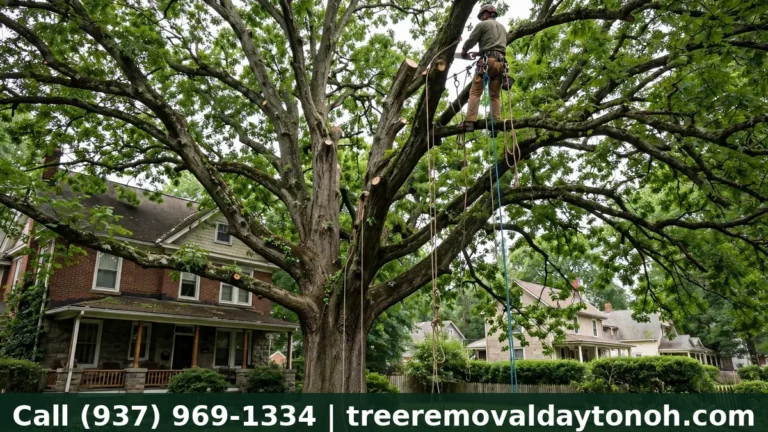
- No drop zone. The tree overhangs the house, garage, pool, or a neighbor’s structure, and there is no open ground to lower sections onto.
- Structural compromise. A hollow, cracked, or storm-damaged tree may not hold a climber safely. A crane lets us remove it without putting full weight on failing wood.
- Power lines. Trees in contact with or grown around service lines need the controlled vertical lift a crane provides, coordinated with the utility when required.
- Weight and reach. Very large hardwood sections can exceed what rope rigging handles safely. A crane rated for the pick weight removes the guesswork.
- Speed and risk. Even when rigging could work, a crane often finishes in hours what takes a climbing crew all day, with fewer people under the load.
If a company tells you every large tree needs a crane, get a second opinion. And if a company says they never need one, ask how they handle a tree over a roof. The honest answer depends on the tree, and it starts with someone standing on your property. Call (937) 969-1334 for an assessment that tells you which method your tree actually needs.
Why Oakwood and Kettering Lots So Often Need Crane Work
Oakwood and Kettering produce more crane jobs than anywhere else we work, and the reasons are built into the neighborhoods. Oakwood’s historic district has magnificent mature oaks and maples on modest lots: big trees, small yards, houses close together, and mature landscaping nobody wants crushed. There is often no room to fell anything and barely room to rig. A crane set up in the street or driveway solves the geometry problem in a day.
Kettering’s story is similar with a different flavor: large postwar lots with 60 year old silver maples and oaks that have outgrown their space, plus storm damage from the same wind events that hit the whole south Dayton corridor. When those trees fail partially, they fail over roofs, fences, and driveways, which is exactly the scenario cranes are built for.
Both cities also have the access factor. Crane work needs a staging area: a driveway, a wide street, or an alley that can hold the outriggers. We plan the crane placement during the estimate, including whether street access requires coordination with the city. Historic Oakwood properties get extra care in our planning because the trees, the homes, and the landscaping all carry more value. Our guide to tree service in Oakwood covers what makes work on historic properties different.
Standard Removal vs Crane Removal: An Honest Comparison
| Standard Climbing and Rigging Removal | Crane-Assisted Removal | |
|---|---|---|
| Best for | Trees with a workable drop zone, healthy enough to climb or rig | Trees over structures, compromised trees, zero-clearance lots |
| Typical duration | Half day to two days for a large tree | Usually a single day, often just hours of lifting |
| Cost | Lower; priced by size, species, and complexity | 30 to 60 percent more, reflecting crane and operator cost |
| Risk to property | Low with good rigging, higher on tight lots | Lowest available method for trees over structures |
| Crew on site | Climber plus ground crew | Climber, ground crew, plus certified crane operator |
| Access needed | Side yard or gate access for equipment | Street, driveway, or alley space for crane setup and outriggers |
The table makes crane work look like the premium option, and on price it is. But for the wrong tree, standard removal is not the cheaper option: it is the unavailable one. A 5,000 pound oak section has to go somewhere, and “somewhere” over your roof is not a plan. When the geometry demands a crane, the crane is the economical choice because it is the only safe one.
How a Crane Removal Day Works, Step by Step
Homeowners are often surprised by how orderly a crane job is. Here is the sequence:
- 1. Assessment and lift plan. Done days before, during the estimate. We measure the tree, estimate pick weights, choose the crane size, and plan exactly where the crane sets up and where each section lands. Nothing is improvised on the day.
- 2. Setup and protection. The crane arrives, outriggers go down on mats to spread the load and protect your driveway or street, and the drop zone is established. Lawn and landscape protection goes in before the first cut.
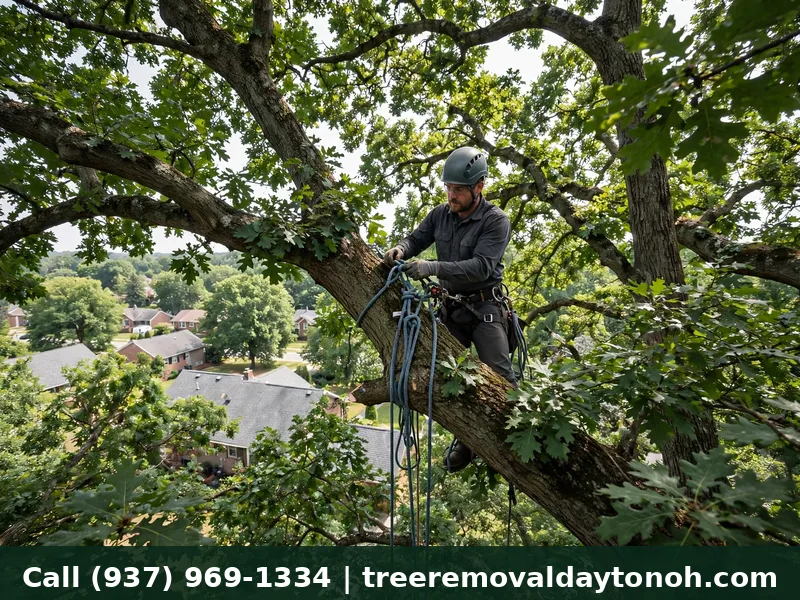
- 3. Rigging. The climber ascends and attaches the crane’s slings to the first section. Every pick is calculated: the crane only lifts what it is rated for at that radius.
- 4. Cut and lift. The climber makes the cut, the crane takes the weight, and the section rises vertically, clear of the roof, and swings to the landing zone. The climber is never under the suspended load.
- 5. Processing. The ground crew cuts each landed section into manageable pieces as the crane keeps working. Wood is stacked, chipped, or hauled per your preference.
- 6. Stump and cleanup. The stump is ground below grade, and the crew rakes, blows, and walks the property with you. Most crane jobs are fully cleaned up the same day.
The whole operation hinges on step one. A proper lift plan is what separates a professional crane job from a dangerous improvisation. Ask any company bidding crane work to explain their lift plan in plain language. If they cannot, keep looking.
What Does Crane Tree Removal Cost in Oakwood and Kettering?
A crane-assisted removal of a large tree in Oakwood or Kettering typically runs $2,500 to $7,500, with most jobs landing between $3,500 and $5,500. The crane itself, with a certified operator, is the biggest single cost driver, which is why crane jobs run 30 to 60 percent above an equivalent standard removal.
What moves the price:
- Tree size and pick weight. Bigger sections need a bigger crane. A 90 foot oak over a house needs more crane than a 50 foot maple.
- Crane size and setup difficulty. Tight streets or long reaches from the setup point to the tree require larger cranes, which cost more per day.
- Tree condition. Dead, hollow, or storm-damaged trees take longer to rig safely because every attachment point has to be verified.
- Stump and cleanup. As with standard removals, stump grinding and the cleanup level should be named in the written quote.
For context on standard pricing, our Oakwood tree removal cost guide covers what historic-property removals run without crane assistance, and our Dayton area cost guide covers the wider market. A crane assessment is free, and we will tell you honestly when your tree does not need one. That call is (937) 969-1334.
Important Considerations Before Booking Crane Work
- Verify insurance, specifically. Crane work should carry crane-specific liability coverage, not just general tree service insurance. Ask for the certificate and confirm the crane operation is named.
- Ask who operates the crane. The operator should be certified and experienced with tree picks, which are dynamic loads. A general crane operator without tree experience is a risk.
- Get the lift plan in writing. Crane size, setup location, pick sequence, and landing zone should be documented before the day, not decided on arrival.
- Confirm street access. If the crane stages in the street, check whether the city needs notice. We coordinate any needed notice or permission with Oakwood or Kettering as part of the job planning, so you do not have to navigate it yourself.
- Do not price-shop crane work to the bottom. The cheapest crane bid usually means the smallest crane, the least experienced operator, or skipped insurance. On a pick over your roof, none of those are savings.
- Consider a hazard assessment first. If you are unsure whether the tree is an emergency, our hazard tree assessment process documents the risk before anyone climbs or lifts.
Get a Crane-Removal Assessment in Oakwood or Kettering
Large trees on tight lots are a specialty, not a sideline. Tree Removal Dayton Ohio runs crane-assisted removals across Oakwood, Kettering, and the south Dayton suburbs, with certified operators, written lift plans, and full insurance that names the crane work. If a tree is over your roof, tangled in lines, or simply too big for its lot, we will tell you exactly what it needs and what it costs, in writing, before anything is scheduled. See our Oakwood service page and our main tree removal service page for the full picture, or reach our emergency crew around the clock when a tree cannot wait. Call (937) 969-1334 to schedule your free assessment.
Frequently Asked Questions About Crane Tree Removal in Oakwood and Kettering Ohio
How do I know if my tree needs a crane?
If the tree overhangs a structure with no safe drop zone, is too compromised to climb, or is tangled in power lines, a crane is likely the answer. An on-site assessment confirms it: we measure, plan the picks, and tell you honestly when standard rigging would work instead.
Will a crane damage my driveway or yard?
Outriggers sit on heavy mats that spread the load, which protects driveways and streets. Some lawn compression where the crane stages is normal, and we restore the area during cleanup. We plan the setup location with you before the day.
How long does a crane tree removal take?
Most residential crane removals are completed in a single day, with the lifting itself often taking just a few hours. Larger or more complex trees can run to a second day for processing and cleanup.
Is crane tree removal safe for my house?
It is the safest method available for trees over structures, because each section is lifted vertically away from the roof rather than lowered through rigging near it. The key variables are the lift plan, the operator’s certification, and the insurance behind the job.
Do you need permission to put a crane in the street?
It depends on the street and the city. We coordinate any needed notice or permission with Oakwood or Kettering as part of the job planning, so you do not have to navigate it yourself.