

How to File an Insurance Claim for Storm-Damaged Tree Removal in Ohio
TLDR
- Does insurance cover storm tree removal in Ohio: Homeowners insurance usually covers removal when a storm damaged tree hits a covered structure such as your house, garage, or fence. A healthy tree that falls in a yard with no structure damage is often not covered.
- What to do first: Photograph all damage before anything is moved, make your home safe, then call your insurer to open the claim and get a claim number.
- What insurers pay for: Most Ohio policies pay a limited amount for tree removal, commonly $500 to $1,000 per tree, plus the cost to repair the structure the tree damaged.
- What speeds up approval: Time stamped photos, a written arborist assessment, and an itemized removal quote that separates emergency work from cleanup.
- Who to call in Dayton: Tree Removal Dayton Ohio documents storm damage and removes the tree safely. Call (937) 969-1334.
Does Homeowners Insurance Cover Storm Damaged Tree Removal in Ohio?
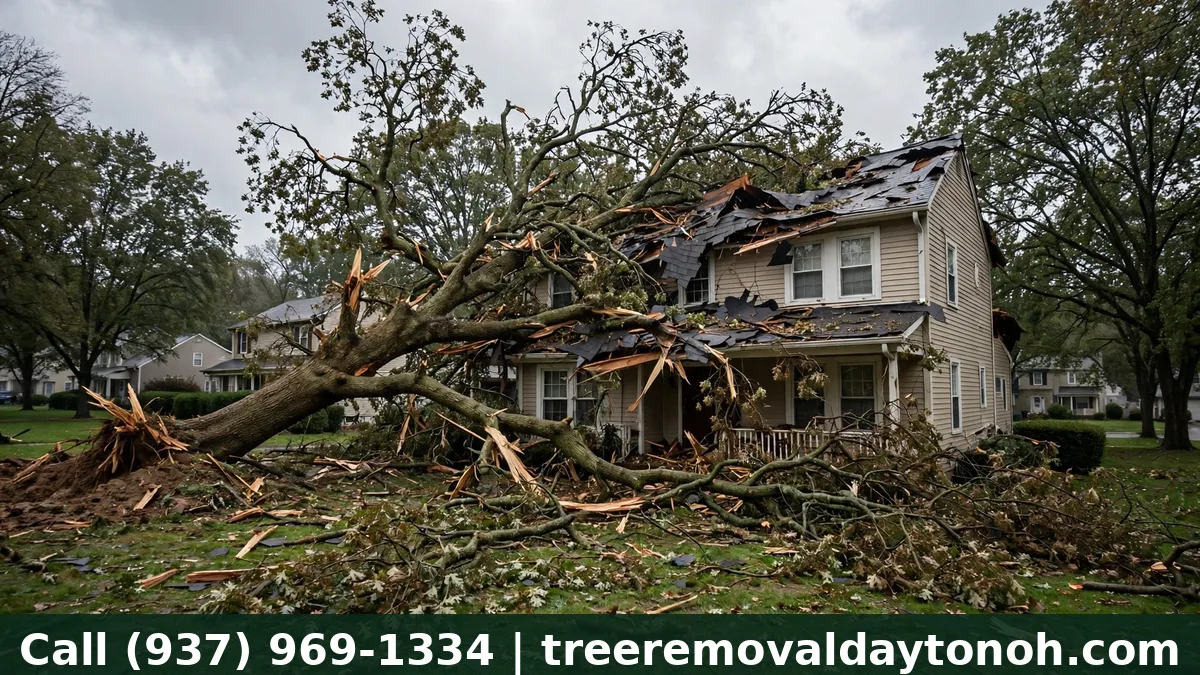
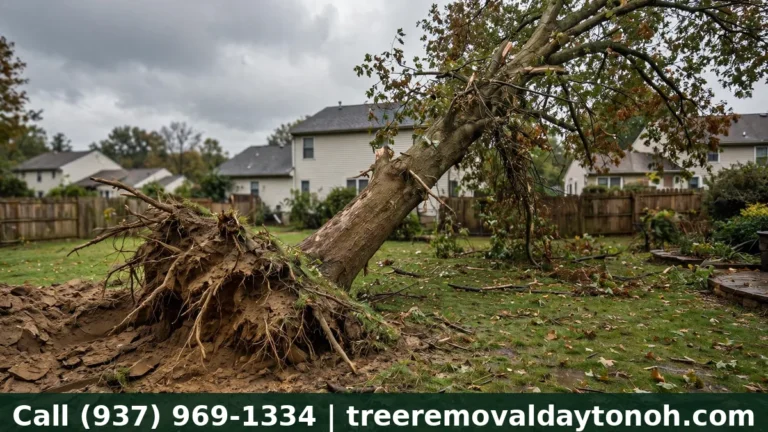
Yes, in most cases homeowners insurance in Ohio covers storm damaged tree removal when the tree has fallen on or damaged a covered structure. If a wind storm drops an oak through your roof in Dayton, Kettering, or Beavercreek, your policy generally helps pay to remove the tree from the structure and to repair the roof damage. The tree removal portion is usually capped at a set amount per tree.
Coverage works differently when no structure is touched. If a tree falls in the middle of your yard and damages nothing, many policies pay nothing for removal because the loss is considered landscaping. Some policies include a small debris removal allowance even in that case, so the policy wording matters more than the storm itself.
The cause of the fall also matters. Wind, lightning, and the weight of ice or snow are covered perils on standard Ohio policies. A tree that falls because it was dead, rotten, or neglected for years can be denied, because insurers treat long term decay as a maintenance issue rather than a sudden storm event.
Storm Tree on Your House? Call Tree Removal Dayton Ohio at (937) 969-1334
What Should You Do in the First 24 Hours After Storm Tree Damage?
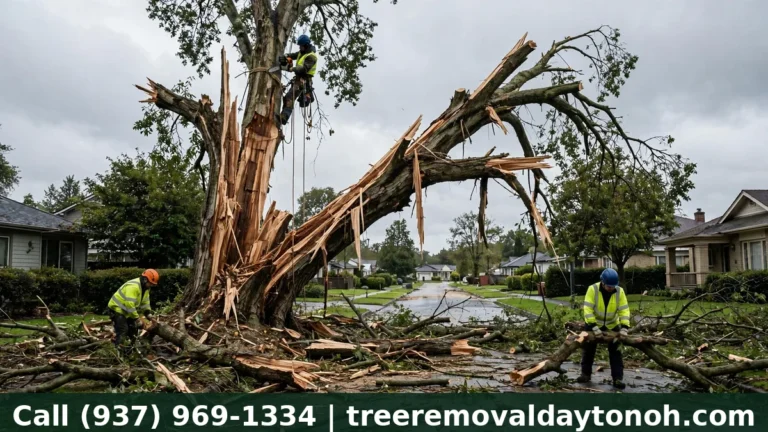
Start with safety. Keep people and pets away from the fallen tree, and treat any tree touching a power line as energized until the utility confirms it is safe. If the tree has broken the roof or a window, cover the opening with a tarp if you can do so safely from inside, and move valuables away from water intrusion.
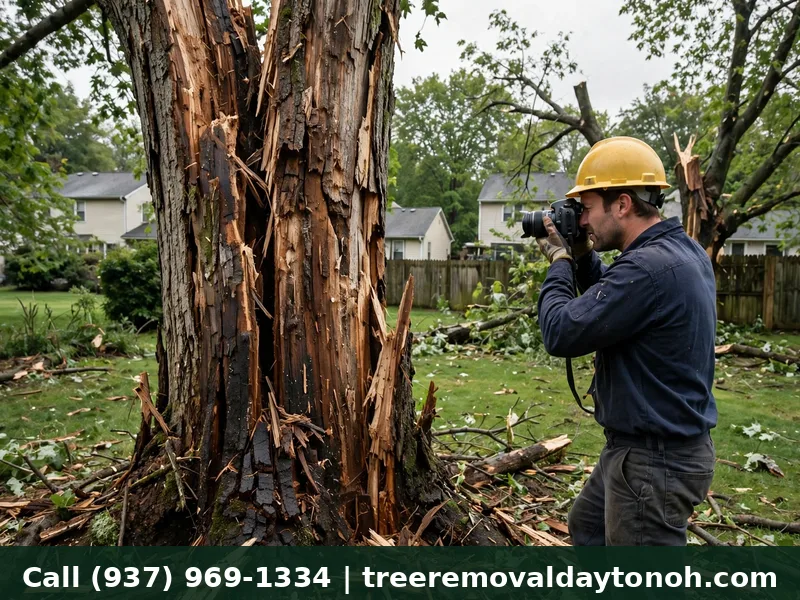
Next, document everything before cleanup begins. Photograph the tree from several angles, the structure damage, the point where the trunk or limbs struck, and any damage to fences, decks, vehicles, or neighboring property. Wide shots that show the whole scene plus close ups of the impact point give an adjuster what they need to approve the claim quickly.
Then call your insurer or file online to open the claim. Ask three questions: what is my deductible, what is my per tree removal limit, and do I need approval before emergency removal. Write down the claim number and the name of everyone you speak with.
Finally, call a tree service for an itemized written quote. For insurance purposes the quote should separate the emergency removal from the structure, standard removal of the remaining tree, stump work, and debris hauling. Adjusters approve itemized quotes faster than one lump sum number.
What Does Insurance Typically Pay for Tree Removal in Ohio?
Most Ohio homeowners policies pay between $500 and $1,000 per tree for removal when a covered structure is damaged, with a total limit per storm event that is often tied to a percentage of the dwelling coverage. The repair of the damaged structure itself, for example a roof section, gutter, or fence panel, is paid under the structure coverage and is separate from the tree removal limit.
Dead tree removal with no storm and no structure damage is almost never covered. Neither is the value of the lost tree itself in most residential policies, although some policies pay a small amount for fire, lightning, or vandalism losses to trees and shrubs.
| Situation | Usually Covered | Typical Ohio Payout | Notes |
|---|---|---|---|
| Storm tree on house or garage roof | Yes | $500 to $1,000 per tree plus structure repair | Document before removal |
| Storm tree on fence, deck, or driveway | Often yes | Per tree limit applies | Check other structures coverage |
| Tree falls in open yard, no damage | Usually no | $0, small debris allowance on some policies | Removal is homeowner cost |
| Dead or rotten tree falls, no storm | Usually no | $0 | Treated as maintenance |
| Your tree damages a neighbor home | Neighbor policy first | Varies | Liability only if negligence is shown |
Get an Itemized Storm Removal Quote for Your Claim, Call (937) 969-1334
How Do You Document Tree Damage So an Adjuster Approves It?
Good documentation is the difference between a fast approval and weeks of back and forth. Take photos before the tree is cut, while it is being removed, and after the area is clear. Include a photo that shows the whole structure and the tree together so the adjuster can confirm the tree struck a covered structure.
Ask your tree service for a short written assessment that states the species, the approximate size, the cause of failure as observed, for example wind throw, trunk fracture, or limb drop, and the hazard the tree presented. Adjusters rely on this when the tree is gone by the time they review the file.
Keep every receipt. Emergency tarping, removal, stump grinding, and debris hauling should each appear on the invoice. If you paid a deposit by card, keep that record with the claim file as well.
Our guide to dangerous tree signs in Dayton lists the failure patterns adjusters and arborists look for after a storm, and it can help you describe the damage accurately on the claim form.
When Can You Remove the Tree Before the Adjuster Visits?
You do not have to leave a tree on your roof until an adjuster arrives. Ohio policyholders have a duty to prevent further damage, which means emergency removal and tarping are expected. The key is to document thoroughly before and during the work, and to keep the claim number on every invoice.
Tell your insurer the removal is scheduled and ask whether they want photos sent in advance. Most Dayton area adjusters accept photo documentation for tree removal and only visit in person for the structure repair estimate.
If the tree is blocking your driveway or is resting on the house, our emergency tree removal guide for Dayton storms explains what to do first and what can safely wait until morning.
Need Emergency Removal Documented for Insurance? Call (937) 969-1334
What If Your Tree Fell on a Neighbor Property in Ohio?
In Ohio, each homeowner generally files with their own insurer when a storm blows a tree across a property line, even if the tree grew in your yard. Your neighbor files for their structure damage and removal, and you file for yours. Liability usually only enters the picture if the tree was visibly dead or hazardous and the owner was notified and took no action.
This is one reason a written hazard notice matters. If a neighbor has told you in writing that your tree is dead and leaning toward their house, get an assessment promptly. Our Trotwood tree removal guide covers the storm damage patterns we still see across the Miami Valley and how documentation protects both sides.
For urgent hazards near utility lines, read our notes on tree removal services and call before anyone attempts a DIY cut near a line.
Important Considerations
Mold and water damage clocks start at the storm, not at the claim approval. Tarping a broken roof and removing the tree quickly protects both your home and your claim, because insurers can reduce payment for damage that worsened through delay.
Never sign an assignment of benefits form from an unknown contractor who knocks on your door after a storm. Work with a local company you called yourself, get the quote in writing, and keep the claim communication between you and your insurer.
City ordinances in Dayton and surrounding suburbs may require permits for some removals and have rules for debris left at the curb. Your tree service should confirm what applies to your street before the work starts.
Stump grinding is often billed separately and is not always inside the per tree removal limit. Confirm with your adjuster before approving stump work so there are no surprises on the final invoice.

Frequently Asked Questions
How do I file an insurance claim for a fallen tree in Ohio?
Photograph the damage, make the home safe, then contact your insurer by phone, app, or agent to open the claim. Provide the date and time of the storm, describe what the tree struck, and upload your photos. Get the claim number, then obtain an itemized removal quote from a tree service and send it to the adjuster. Keep copies of every invoice and receipt until the claim closes.
Will insurance pay to remove a tree that fell but hit nothing?
Usually no. If a storm tree falls in an open yard and damages no covered structure, most Ohio policies exclude the removal cost. A small number of policies include limited debris removal coverage. Review the trees, shrubs, and plants section and the debris removal section of your policy, or ask your agent to point to the exact wording.
How much will my insurer pay per tree in Dayton Ohio?
Common Ohio policy limits are $500 to $1,000 per tree for removal when a covered structure is damaged, subject to your deductible and an overall event limit. Structure repair is paid separately under dwelling or other structures coverage. Your exact limit is printed in your policy declarations, and your adjuster confirms it on the first call.
Do I need an arborist report for a tree damage claim?
It is not always required, but a short written assessment from the removing company strengthens the file, especially when the tree is fully removed before the adjuster reviews the claim. The report should state the cause of failure, the hazard, and the work performed, supported by dated photos.
What if my claim for storm tree removal is denied?
Ask for the denial reason in writing and the policy section it relies on. Many denials turn on whether a covered structure was damaged or whether the tree was already dead. If the tree struck your home and the denial cites condition, a written arborist statement about storm failure patterns can support an appeal. You can also file a complaint with the Ohio Department of Insurance if the dispute continues.
Does Tree Removal Dayton Ohio help with insurance documentation?
Yes. We photograph the scene on arrival, provide an itemized quote that separates emergency removal, standard removal, stump work, and hauling, and supply a written assessment for the adjuster. For urgent cases see our emergency tree service page, then call (937) 969-1334 so we can document the damage before cleanup starts.

One Comment