
Huber Heights Ohio Tree Removal: Silver Maples and Planned Community Tree Problems
TL;DR: Tree Removal in Huber Heights, Ohio
- Most tree removals in Huber Heights involve silver maples planted when the subdivisions were built: weak wood, co-dominant stems, and roots that find sewer laterals.
- Typical residential removal costs run $900 to $3,500, depending on tree size, location, and whether a crane is needed for tight lots.
- Many Huber Heights neighborhoods have HOA rules and city right of way protections: check both before any tree comes down.
- Free on-site estimates from Tree Removal Dayton Ohio at (937) 969-1334 include an HOA and permit check so the job starts clean.
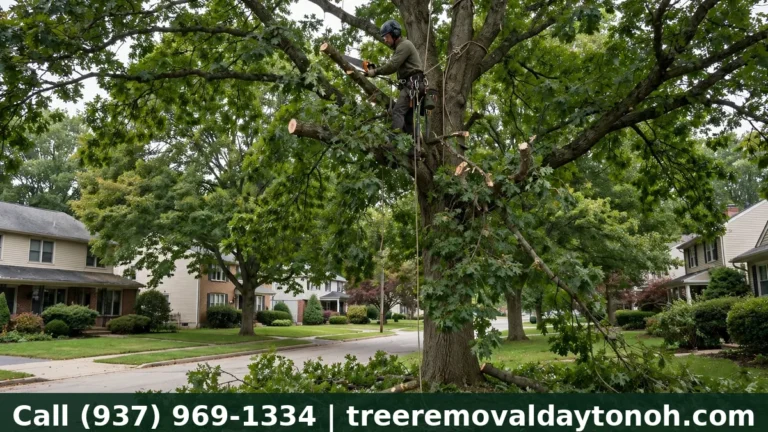
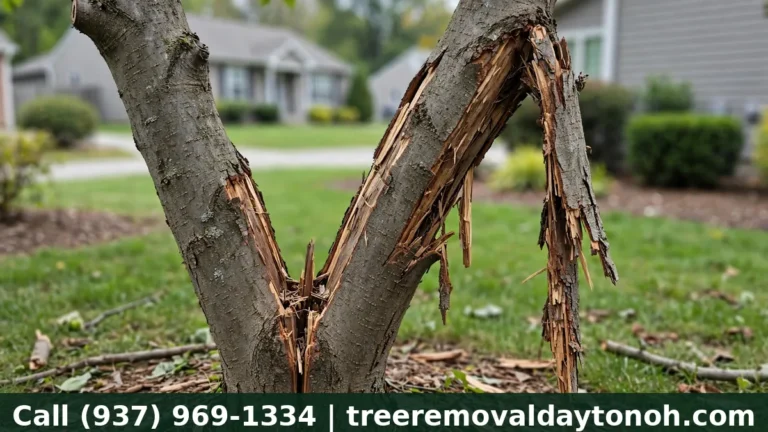
Huber Heights looks different from most Dayton suburbs, and its trees tell you why. The city grew fast in the 1970s through the 1990s, when developers planted the same fast-growing species on street after street: silver maples, Bradford pears, and ash. Those trees are now 30 to 50 years old, which is exactly the age when the cheap, fast-growing species start failing. Walk any established Huber Heights neighborhood and you will see the pattern: a silver maple with a split crotch over the driveway, a pear that lost half its canopy in a windstorm, an ash skeleton left by the emerald ash borer.
That history shapes every tree removal we do in Huber Heights. The trees are large, the lots are modest, fences and neighbors are close, and the planned-community rules add paperwork that older neighborhoods never had. This guide covers what tree removal actually involves in Huber Heights: which trees we take down most, what the HOA and city rules require, what it costs, and how a removal day works on a typical lot.
Why Silver Maples Dominate Tree Removal in Huber Heights
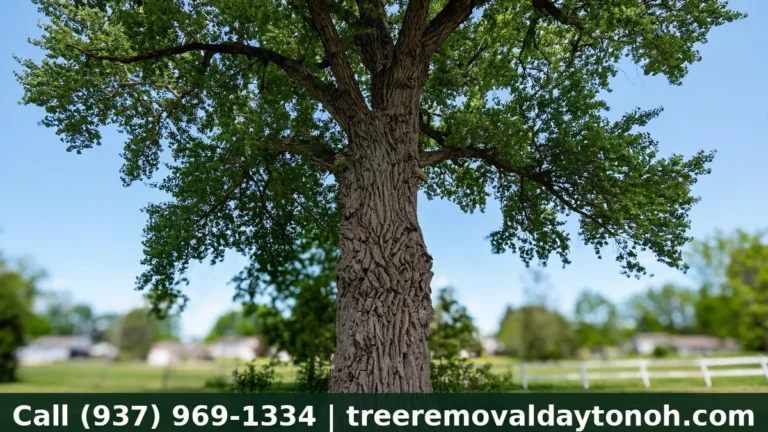
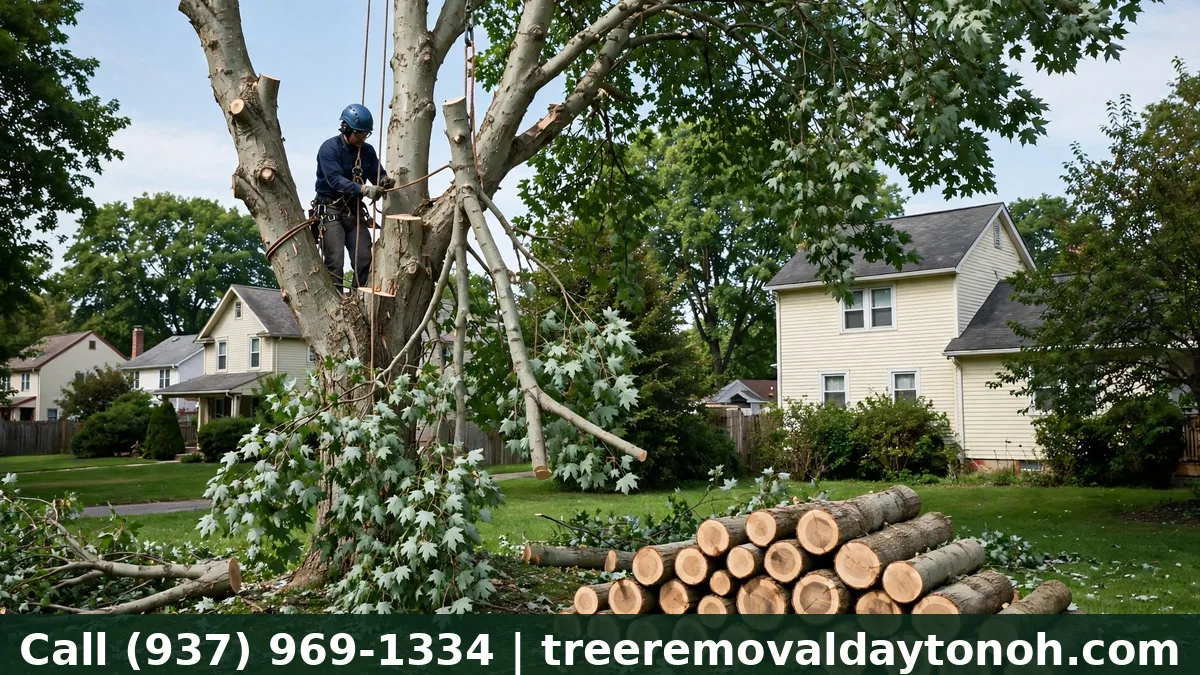
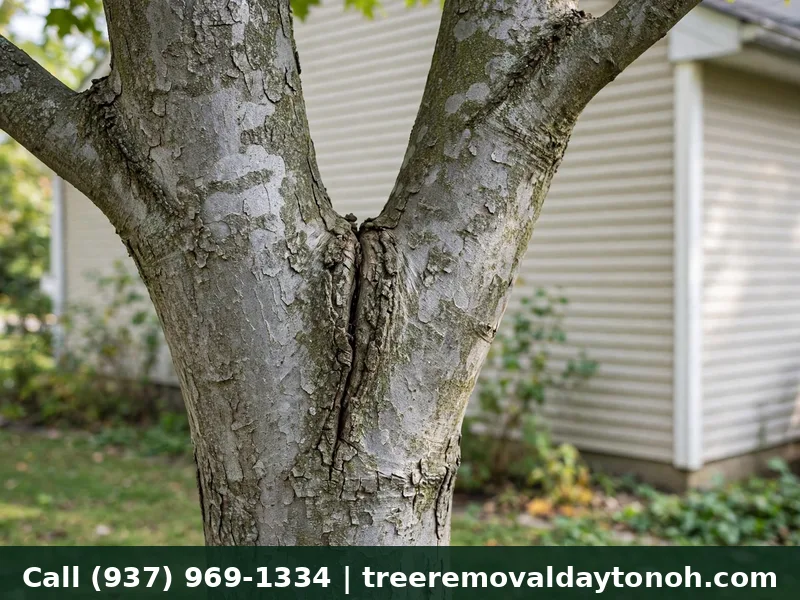
Silver maples were the default street and yard tree for a generation of Ohio developers. They grow fast, they survive poor soil, and they make a new subdivision look established in a decade. The trade-off arrives in middle age. Silver maple wood is brittle, the species grows co-dominant stems with weak bark-included crotches, and the limbs get heavy far faster than the joints can support. A 40 year old silver maple in Huber Heights is a tree at the top of its failure curve.
The calls we get follow a familiar script. A homeowner notices a crack running down a main crotch. Or a limb drops in a summer storm and misses the house by feet. Or the roots surface through the lawn and start lifting the driveway, or worse, show up in the sewer lateral. Silver maples are notorious for aggressive surface roots and for invading sewer lines, and in Huber Heights, where many laterals are now decades old, root intrusion is one of the most common reasons a silver maple gets scheduled for removal. Our full guide to silver maple removal in the Dayton area explains the species warning signs in detail.
The other two regulars in Huber Heights are Bradford pears and ash. Bradford pears were planted everywhere as ornamental street trees and are now splitting apart in their 20s and 30s. Ash trees are mostly a removal-only species now: the emerald ash borer has killed the untreated ones, and a dead ash is a hazard that gets more dangerous every season it stands.
Planned Community Rules: HOAs, Right of Way, and City Permits
Huber Heights has more planned communities and active HOAs than most Dayton suburbs, and that changes the tree removal process. Before any saw starts, you need to answer three questions.
First, is the tree yours? Trees in the strip between the sidewalk and the street are usually in the city right of way, which means the city controls them even if you have been mowing around them for years. Removing a right of way tree without permission can bring fines and a bill for replacement. We confirm the tree’s status during the estimate, because crews that skip this step leave homeowners holding the fine.
Second, does your HOA require approval? Many Huber Heights HOAs require written approval before removing a visible tree, and some require a replacement planting. The approval process takes days to weeks, so it needs to start before you schedule the crew, not after. We flag this on every estimate in HOA neighborhoods and will tell you exactly what your board typically asks for.
Third, does the city require a permit? For trees on private property, Huber Heights generally does not require a removal permit the way some cities do for street trees, but rules change and special cases exist, especially near drainage corridors and for larger specimen trees. When in doubt we check with the city before scheduling. If you are unsure where your tree stands, call (937) 969-1334 and we will sort out the right of way, HOA, and permit questions as part of the free estimate.
Trim It or Remove It: The Huber Heights Decision Table
Not every problem tree needs to come down. Here is how we advise Huber Heights homeowners when they ask whether a tree can be saved:
| What you are seeing | Usually trimmable | Usually a removal |
|---|---|---|
| Dead branches in the canopy | Yes, if the rest of the tree is healthy and the deadwood is less than about a quarter of the canopy | If dieback exceeds half the canopy or the trunk shows decay |
| Crack in a main crotch | Sometimes, with cabling and bracing on a young tree with sound wood | On a mature silver maple or Bradford pear, the classic failure point, removal is usually the honest answer |
| Roots lifting driveway or sidewalk | Root pruning can buy time on a valuable tree | If roots are in the sewer lateral or the tree is a silver maple, removal plus stump grinding stops the cycle |
| Leaning after a storm | If the lean is new, the root plate is intact, and the tree is small | A large tree with a lifted root plate or cracked soil on the opposite side is a tip-over waiting for the next wind event |
| Too close to the house | Reduction pruning can redirect growth away from the roof | If branches touch the roof or roots threaten the foundation, removal protects the structure |
An honest assessment matters more than the decision itself. A company paid per removal will find reasons to remove; a company paid per trim will find reasons to trim. We do both, so our recommendation follows the tree. If your Huber Heights tree survived a storm but looks questionable, our Huber Heights storm damage guide walks through the post-storm checklist we use on every call.
How Much Does Tree Removal Cost in Huber Heights?
For a typical residential removal in Huber Heights, expect $900 to $3,500. Small ornamental trees under 30 feet start near the bottom of the range. A mature 60 to 80 foot silver maple over a house, with rigging and a tight drop zone, lands in the middle to upper end. Large removals that need a crane, or emergency storm work, can exceed $5,000.
Five factors move the price more than anything else:
- Size and species. A 70 foot silver maple costs far more to remove than a 25 foot ornamental pear. Dead ash trees are brittle and unpredictable, which adds rigging time.
- Location on the lot. A tree in an open back yard is a straightforward job. A tree wedged between the house, the fence, and the neighbor’s garage requires sectional rigging, which takes longer.
- Access. Huber Heights lots with a wide side yard let us bring equipment close. Fenced lots with no gate access mean everything is carried out by hand, and the price reflects the labor.
- Stump decision. Grinding the stump below grade is the standard finish and usually adds a few hundred dollars. Leaving the stump is cheaper but invites regrowth and gets in the way of replanting.
- Cleanup level. A full-service removal includes chipping brush, cutting wood to manageable lengths, raking, and blowing the yard clean. Always confirm cleanup is in the written quote.
Our Dayton area tree removal cost guide breaks down pricing bands in more detail if you are comparing quotes. And remember that phone estimates are guesses: a real price comes from standing on your lot. That walkthrough is free at (937) 969-1334.

What Happens on Removal Day in Huber Heights
Most residential removals in Huber Heights take half a day to a full day. Here is the sequence our crews follow:
- Walkthrough and protection. We confirm the work plan with you, protect lawns, beds, and fences with mats and plywood where equipment travels, and set the drop zone.
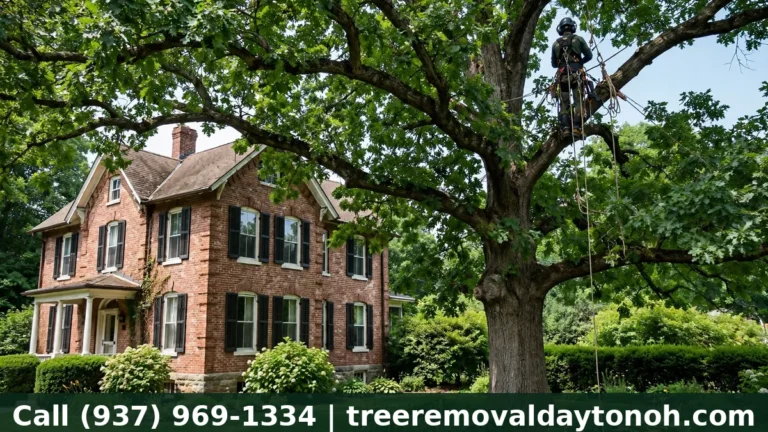
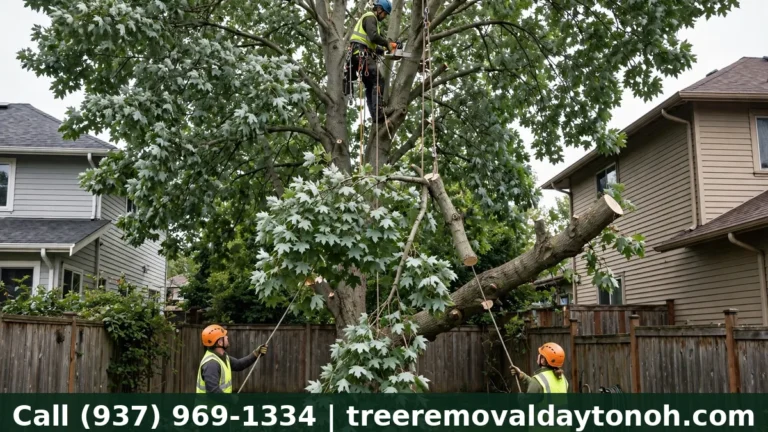
- Sectional takedown. On tight lots, the climber removes the tree in sections, lowering each piece on ropes. Nothing free-falls near a house.
- Stump grinding. The grinder takes the stump 6 to 12 inches below grade, and the chips are raked into the hole or hauled per your preference.
- Cleanup. Brush is chipped, wood is cut to your specification or hauled, and the yard is raked and blown. The goal is a yard that looks like we were never there, minus the tree.
If the tree is storm-damaged and dangerous, the sequence changes: stabilization first, then removal. Our emergency tree service runs around the clock for exactly those situations, and our main tree removal service page covers the full range of residential work.
Important Considerations Before You Remove a Tree in Huber Heights
- Confirm the tree is yours. Right of way trees belong to the city. Removing one without permission risks fines. We verify this on every estimate.
- Start HOA paperwork early. Board approvals take days to weeks. Schedule the crew after approval, not before.
- Do not wait on a cracked silver maple. A visible crack in a main crotch is a countdown, not a warning. These trees fail in ordinary summer storms, not just tornadoes.
- Get the stump ground. A silver maple stump left at grade will sucker for years. Grinding below grade ends the cycle and frees the spot for replanting.
- Check your sewer lateral. If a silver maple stood near your sewer line, consider a camera inspection after removal. Roots do not die with the tree immediately, and a collapsing root mass can block the line.
- Replant with a better species. Replace a removed silver maple with an oak, honeylocust, or disease-resistant elm. You will wait a little longer for shade and get a tree that outlives the house.
Schedule Your Free Huber Heights Tree Removal Estimate
Huber Heights trees have a specific life story: fast-growing species, aging together, on lots where every removal is a precision job. The right crew knows the species, respects the HOA process, and leaves your yard clean. Tree Removal Dayton Ohio provides free on-site estimates across Huber Heights, checks the right of way and HOA questions before scheduling, and backs every job with full insurance. See our Huber Heights service page for the full list of services. Call (937) 969-1334 to schedule your walkthrough.
Frequently Asked Questions About Tree Removal in Huber Heights Ohio
Do I need a permit to remove a tree on my property in Huber Heights?
For most trees on private property, no city permit is required, but trees in the city right of way need city permission and HOA communities usually require board approval. We confirm all three during the free estimate.
How much does it cost to remove a large silver maple in Huber Heights?
A mature silver maple typically costs $1,500 to $3,500 to remove, depending on size, location, and access. Tight lots requiring sectional rigging land at the higher end. Stump grinding is usually quoted separately.
Can a silver maple with a cracked crotch be saved?
Rarely, once the tree is mature. Cabling can extend the life of a young tree with sound wood, but a cracked co-dominant stem on a 40 year old silver maple is a structural failure in progress. Removal is usually the safe and honest recommendation.
Will the city remove a tree in front of my house?
If the tree is in the city right of way, the city is responsible for it. Report hazardous right of way trees to the city. We can assess whether the tree is actually in the right of way during our visit.
What should I plant after removing a silver maple?
Oaks, honeylocust, Kentucky coffeetree, and disease-resistant elms all perform well in Huber Heights soils and develop far stronger structure than silver maples. Avoid replanting another fast-growing weak-wooded species in the same spot.