

Tree Trimming Cost Dayton Ohio: What Affects Your Quote
TLDR
- Typical Dayton trimming cost: as a planning estimate, most residential trimming jobs in Dayton run from about $150 for a small ornamental tree to roughly $1,200 for a large mature tree needing serious crown work. Every job is quoted on site because access and canopy volume change the price.
- What moves the quote: tree height and spread, how much canopy comes off, whether the work is simple deadwood cleanup or structural pruning, access for the crew and equipment, and species timing constraints.
- Trimming stays well below removal: a full removal in Dayton typically runs $350 to $2,800, so trimming is almost always the cheaper option when the tree is worth keeping. The comparison flips only when a tree needs repeated heavy work year after year.
- Timing affects price and health: dormant season pruning (roughly November through February) is usually the cheapest window to book and the best window for the tree. Spring sap season and storm season work often costs more.
- Beware the flat $99 trim: suspiciously cheap trimming usually means topping, uninsured climbers, or a crew that vanishes before cleanup. A proper quote names the work, the cleanup, and the insurance behind it.
- Get a clear quote: Tree Removal Dayton Ohio prices every trimming job on site across the Miami Valley and leaves your yard clean. Call (937) 969-1334.
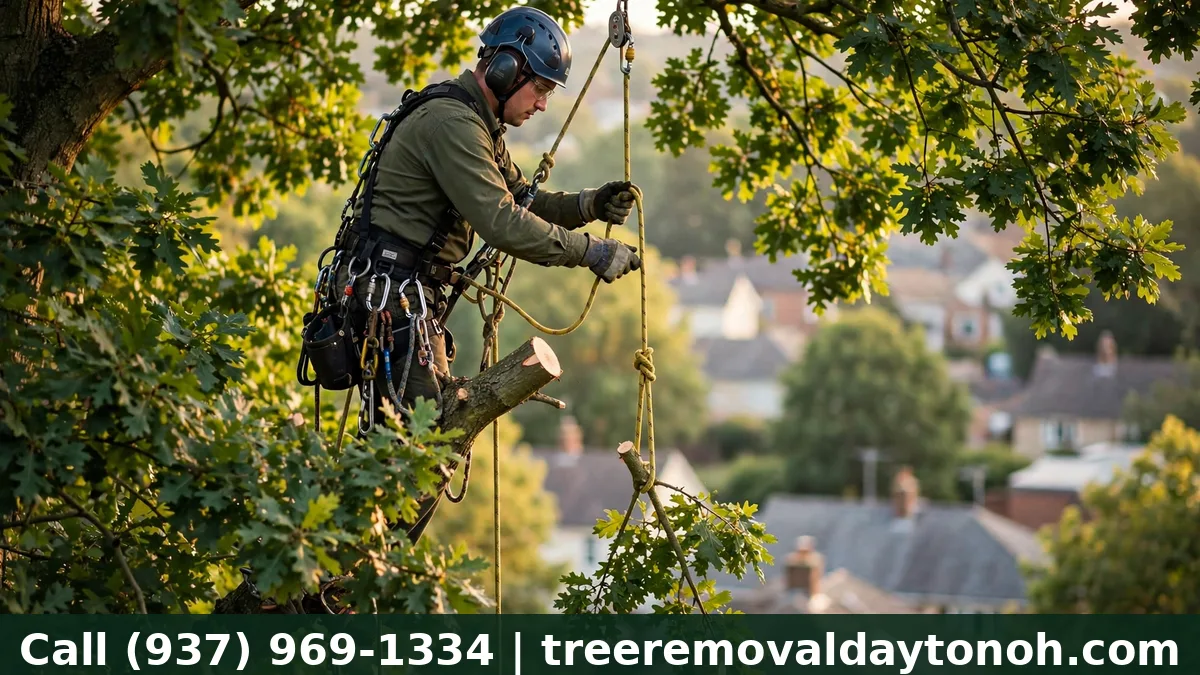
What Does Tree Trimming Cost in Dayton Ohio?
For most Dayton homeowners, professional tree trimming lands somewhere between about $150 and $1,200 per tree as a planning estimate. A small ornamental tree or a young shade tree needing light shaping sits at the bottom of that range. A medium tree needing deadwood removal and canopy thinning sits in the middle. A large mature tree needing major crown reduction, storm damage repair, or work near a roof or power line sits at the top, and complex jobs can go above it.
Those numbers are planning estimates, not quotes, because trimming is priced on the job, not the species. Two oak trees of the same height can price hundreds of dollars apart if one stands in an open front lawn and the other leans over a garage with no room for equipment. Any company that quotes a firm price over the phone without seeing the tree is guessing, and the guess usually changes on site.
This guide explains what trimming quotes are built from so you can compare bids fairly. If you are trying to decide whether a tree is even worth trimming, our hazard tree assessment guide helps you judge the tree’s health first. And if the real question is trim versus full removal, that decision has its own guide on the way; for now, the cost comparison section below gives you the quick math.
Wondering What Your Trimming Job Will Cost? Get a Free On Site Quote, Call (937) 969-1334
Typical Tree Trimming Costs in Dayton Ohio
| Trimming Job | Planning Estimate | What the Job Usually Includes |
|---|---|---|
| Small ornamental or young tree, light shaping | About $150 to $350 | Ground based work, shaping cuts, light thinning, full cleanup |
| Medium tree, deadwood removal and thinning | About $300 to $650 | Climbing or lift work, dead limb removal, canopy thinning, debris removal |
| Large mature tree, crown reduction or clearance | About $600 to $1,200 or more | Sectional work, rigging limbs down, roof or line clearance, full cleanup |
| Storm damage cleanup, single tree | About $250 to $800 or more | Hanging limb removal, broken crown repair, debris haul away |
| Multiple trees, same visit | Lower cost per tree | Mobilization and setup spread across the whole job |
| Emergency or after hours trimming | Adds a premium | Immediate response, often at night or in bad weather |
Every figure in that table is a planning estimate for budgeting, and every row ends the same way in real life: with a free on site estimate before anyone climbs. The table exists so you can spot an absurd quote, not so you can price the job yourself. If one bid comes in at triple the estimate for a simple deadwood job, something is off. If three bids all land near the same number, that is the real market price for your tree.
For the full picture of what our crews do on a trimming visit, see our tree trimming service page. And when a tree’s problems are in the trunk rather than the canopy, the math changes completely; our Dayton tree removal cost guide shows what the other option runs.
Get a Firm Trimming Price for Your Tree, Not a Phone Guess, Call (937) 969-1334
What Drives Your Trimming Quote Up or Down?
Height and canopy volume. This is the biggest factor. A trimmer prices the amount of canopy being worked, not just the trunk height. A tall narrow tree with a small crown is cheaper than a shorter tree with a massive spreading crown that needs work in every direction. When you describe the job, think in terms of how much of the canopy needs attention, because that is what the crew prices.
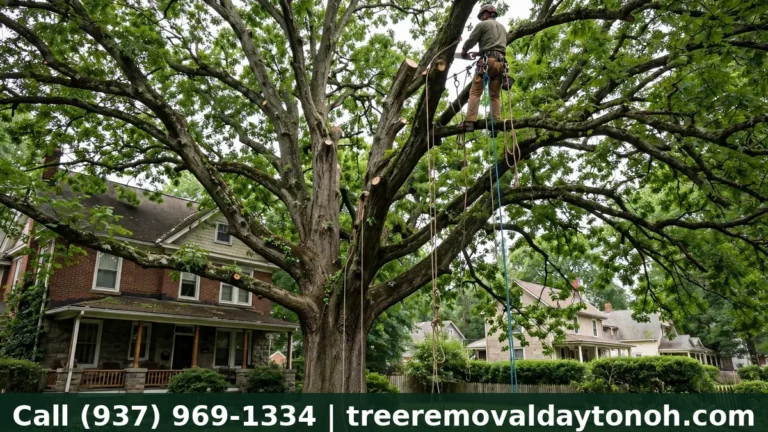
How much comes off. Light maintenance, removing deadwood and a few crossing branches, is fast work. Structural pruning, reshaping the crown, reducing height, or clearing a roof takes far longer and needs rigging to lower heavy limbs safely. As a rule of thumb, never remove more than about a quarter of a healthy tree’s canopy in one year; a quote that proposes taking half the crown is a red flag, not a bargain.
Access and obstacles. A tree in an open front yard with driveway access is the easy case. A tree in a fenced backyard with a thirty six inch gate, over a pool, tangled with a deck, or leaning over a garage needs smaller equipment, ground protection, and more rope work. Crews price the difficulty of getting to the tree and getting the debris out, so mention fences, slopes, and tight gates when you call.
Deadwood versus structural work. Removing dead limbs is straightforward: they come down, get chipped, and the crew moves on. Structural pruning is a skill job. The trimmer decides which limbs to keep for the tree’s long term shape, makes proper cuts at the branch collar, and balances the canopy. It takes longer and it is worth paying for, because bad structural cuts create the weak attachments that fail in the next storm.
Species and timing. Some trees are simply harder to work. Brittle species like silver maple need slower, more careful rigging because limbs snap unpredictably. Oaks should be pruned in the dormant season to reduce oak wilt risk, which concentrates demand in winter. Timing constraints like these show up in the quote. Our Ohio pruning calendar explains the best windows for every common Dayton species.
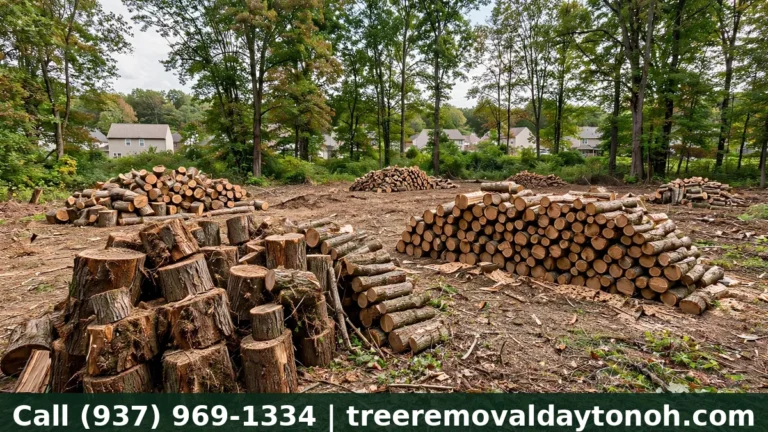
Cleanup and disposal. Always confirm what happens to the debris. A proper quote includes chipping branches and hauling the chips away, or stacking firewood length logs if you want them. The cheapest bid in the pile is often the one that leaves the brush in your yard. Ask before you book, not after the crew leaves.
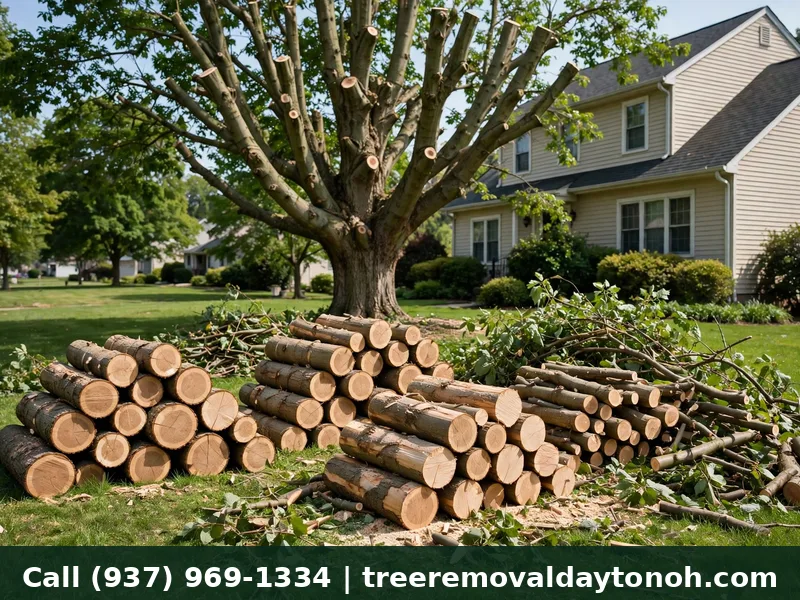
When Should You Trim Trees in Dayton Ohio?
The short answer is the dormant season, roughly November through February. The tree is asleep, the crew can see the branch structure without leaves in the way, disease pressure is low, and this is usually the easiest season to book a crew. Most Dayton homeowners who plan ahead schedule their trimming in late fall or winter and get the best combination of price, scheduling flexibility, and tree health.
Spring is the season to be careful. Maples bleed sap heavily from March through May, and fresh oak wounds in spring raise oak wilt exposure. Summer trimming is fine for corrective work like removing storm damage or clearing a roof, but heat stress means the crew should go lighter on live wood. Emergency work happens whenever the tree demands it; seasonal rules bend for a hanging limb over your driveway.
The full species by species calendar lives in our Ohio pruning calendar guide, which is the timing companion to this cost guide. Book timing work in winter, handle urgent problems immediately, and never let a calendar override a safety issue.
Is Trimming Always Cheaper Than Removing the Tree?
Almost always, for a tree worth keeping. A typical trimming job runs a fraction of the $350 to $2,800 a full removal costs in Dayton, and one good structural pruning can keep a healthy tree safe for five to ten years. The math only flips in two situations. The first is a tree that needs major work every year or two, usually a fast growing weak species in the wrong spot, where the lifetime trimming bill eventually passes a one time removal. The second is a tree whose trunk is failing; trimming a decaying tree is money spent on borrowed time, and the removal decision should be made honestly up front.
The practical rule: trim trees with sound trunks and fixable canopy problems, remove trees with failing trunks, severe decay, or root damage. If you are unsure which category your tree falls in, that is exactly what an assessment visit answers. And if the tree is a silver maple, read our silver maple remove versus trim guide first, because that species has its own rules.
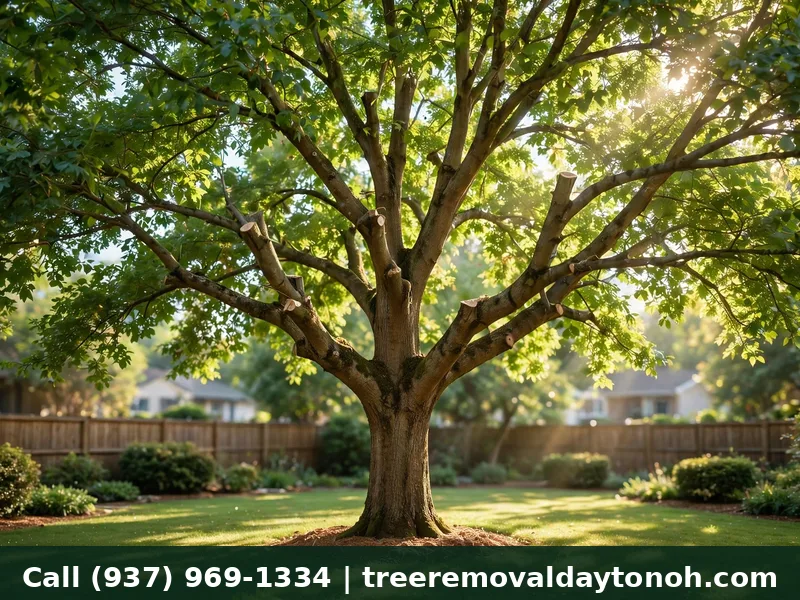
Important Considerations
Never hire a trimmer who wants to top your tree. Topping, cutting the crown back to stubs, is the fastest way to ruin a tree’s structure and create a crop of weak shoots that break in the next storm. It is cheaper today and far more expensive over the life of the tree. Any quote built around topping should be rejected outright.
Verify insurance before anyone climbs. Tree work is one of the most dangerous trades in the country, and an uninsured climber in your yard is your liability problem if something goes wrong. A legitimate company carries liability insurance and workers compensation and will show proof without being asked twice.
Get the scope in writing. The quote should name what gets cut, how much canopy comes off, what happens to the debris, and what the cleanup standard is. Vague quotes produce vague results. If two bids differ wildly, the difference is usually in the scope, not the hourly rate.
Trimming near power lines is not a standard trim job. Line clearance follows utility rules, and in many cases the power company handles or must approve the work. Our power line tree guide explains who does what before anyone touches it.
Finally, think about the whole property, not just one tree. Crews already on site with equipment can often handle a second or third tree for far less per tree than a separate visit. Walk the yard with the estimator and point out every tree that worries you.
Frequently Asked Questions
How often should trees be trimmed in Dayton?
Most healthy shade trees need professional attention every three to five years: deadwood removal, light thinning, and clearance checks. Fast growing species like silver maple may need a look every two to three years. Young trees benefit from structural pruning every couple of years while their shape is still being set.
Can I trim my own trees to save money?
For small ornamental trees you can reach from the ground with hand tools, yes, with proper cuts. Anything that needs a ladder, a chainsaw overhead, or work near a roof, a fence, or a power line belongs to a professional. The injury statistics for DIY tree work are grim, and a bad cut costs more to fix than the trim would have.
Will trimming stop my tree from dropping branches in storms?
It reduces the risk a lot but cannot eliminate it. Removing deadwood and thinning the canopy lowers the wind load and removes the limbs most likely to fail. A tree with a decaying trunk or failing root system can still come down, which is why an assessment matters before you spend money on pruning.
Does trimming in winter hurt the tree?
No, winter is the best time for most species. The tree is dormant, disease organisms are inactive, and the crew can see the structure clearly. The tree seals its cuts and pushes new growth when spring arrives. Our pruning calendar covers the few species specific exceptions.
What is the difference between trimming, pruning, and crown reduction?
Trimming and pruning are usually the same thing in practice: selective branch removal for health, safety, or appearance. Crown reduction is a specific technique that shortens the overall canopy while keeping its natural shape, used when a tree has outgrown its space. Topping is not a technique at all; it is tree abuse.
How long does a trimming job take?
A small tree can be done in an hour or two. A medium tree with deadwood and thinning usually takes half a day. A large tree needing crown work or storm repair can take a full day, and multi tree jobs run longer. Cleanup is part of the time, not an afterthought.
Does Tree Removal Dayton Ohio give free trimming estimates?
Yes. We quote every trimming job on site across Dayton, Kettering, Beavercreek, Oakwood, and the rest of the Miami Valley, with the scope in writing and the cleanup included. Call (937) 969-1334 to schedule yours.
Ready for a Firm Trimming Quote? Schedule Your Free Estimate, Call (937) 969-1334

One Comment