
Tree Root Damage to Foundation in Dayton Ohio: What Are Your Options?
TL;DR: Tree Root Damage to Foundations in Dayton
- Tree roots rarely crack a healthy foundation by force. In Dayton homes, the real damage comes from roots drawing moisture out of clay soil (which shrinks and lets the foundation settle) and roots exploiting existing cracks, joints, and old drain lines.
- Warning signs: stair step cracks in block walls, doors and windows sticking, uneven floors, visible roots against the foundation, and soil pulling away from the house in dry spells.
- Your options run from least to most drastic: redirect water and mulch properly, install a root barrier, prune offending roots professionally, or remove the tree entirely. What is right depends on the tree’s value, the damage stage, and your soil.
- Silver maples, willows, and elms are the worst offenders in the Miami Valley. Oaks are slower but their roots travel far.
- If you are trying to decide between the tree and the foundation, start with our partner guide on trees too close to houses, then get a professional look. Call (937) 969-1334.

The tree is beautiful. The crack in the basement wall is not. And every Dayton homeowner with a mature tree near the house eventually asks the same question: is the tree hurting my foundation, and what are my options if it is?
Here is the honest, arborist level answer. Roots almost never punch through a sound foundation like a fist. What they do in Ohio clay soil is sneakier, and understanding the mechanism is the difference between spending money on the right fix and spending it twice.
Suspect root damage at your home? Call (937) 969-1334. We will assess the tree, the roots, and give you real options, not just a removal quote.
How Tree Roots Actually Damage Foundations
Three mechanisms do nearly all the damage in the Dayton area:
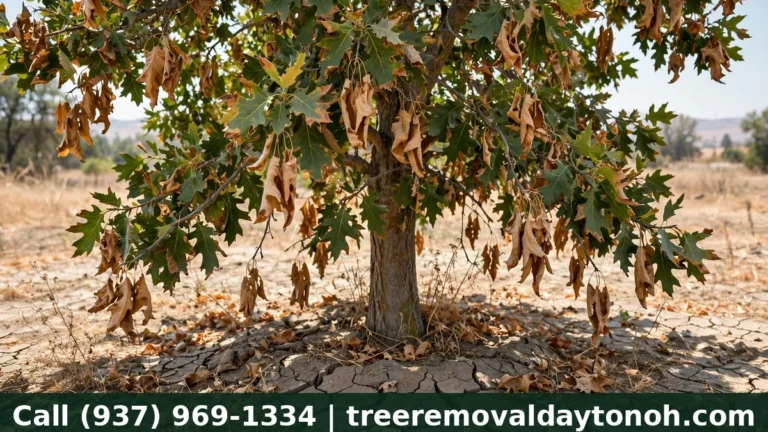
- Moisture theft in clay soil. This is the big one. Much of the Miami Valley sits on clay that swells when wet and shrinks when dry. A thirsty tree near the house drinks the soil dry in summer, the clay shrinks, and the foundation settles unevenly. The tree never touches the wall, but the damage is real.
- Exploiting existing weaknesses. Roots are opportunists. They find existing hairline cracks, cold joints, and deteriorated mortar, then grow into them. As the root thickens, it wedges the crack wider. The root did not start the problem, but it finishes it.
- Physical pressure on old walls. Large structural roots can press against older block and stone foundations, especially where the wall has already lost strength. This is slower but relentless.
Knowing which mechanism is at work matters, because each one points to a different fix. A moisture problem gets a different answer than a root wedged in a crack.
The Warning Signs Homeowners Should Watch
Walk your foundation twice a year, spring and late summer, and look for:
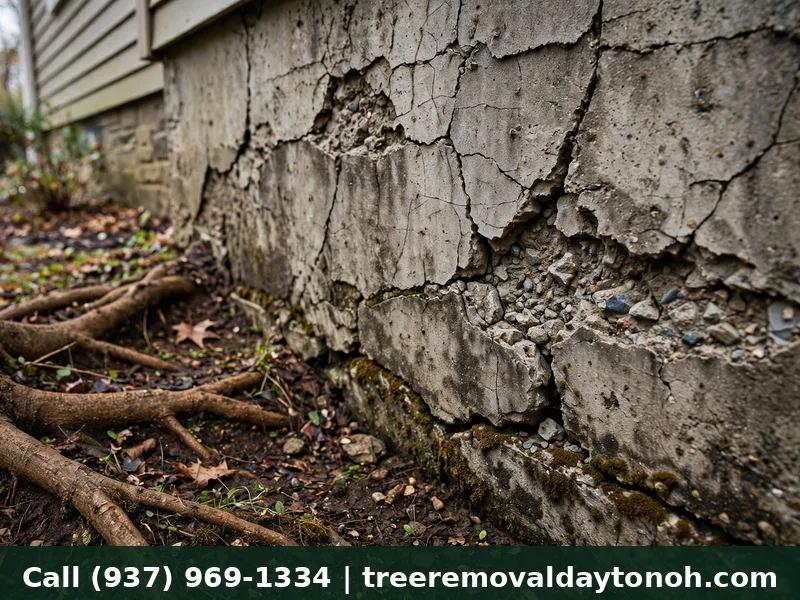
- Stair step cracks in block walls. Cracks that follow the mortar joints in a staircase pattern signal differential settlement. Horizontal cracks in the middle of the wall are the ones that worry engineers most.
- Doors and windows that stick or will not latch. When a foundation settles unevenly, the frame twists. If the back door worked fine last year and drags now, pay attention.
- Uneven or sloping floors. Roll a marble. If it consistently travels one direction, something has moved.
- Soil pulling away from the foundation. In dry spells, clay shrinks and gaps open between soil and wall. A thirsty nearby tree makes this worse.
- Visible roots against the wall. If you can see roots touching or entering the foundation zone, the situation is already advanced.
- Water in the basement after dry periods. Paradoxically, settled foundations often leak first. The cracks from settlement become water paths.
If you see two or more of these, get both an arborist and a foundation professional involved. Our hazard tree assessment covers the tree side, and a check of the danger signs helps you read what the tree is telling you.
Which Trees Are the Worst Offenders in Dayton
| Species | Root behavior | Risk near foundations |
|---|---|---|
| Silver maple | Aggressive, shallow, far traveling roots | Very high. The number one foundation troublemaker in Dayton |
| Willow | Extremely thirsty, seeks water relentlessly | Very high, especially near old drain lines |
| American elm | Wide spreading surface roots | High on older lots |
| Oak | Deep but far reaching, slower growing | Moderate to high, depends on distance |
| River birch | Thirsty surface roots | Moderate, worse in dry summers |
| Ornamental pear | Moderate root spread | Lower, but the tree itself fails in storms |
Distance is the other half of the equation. As a rough rule, keep large trees at least as far from the foundation as their mature height, and aggressive species farther. If you are planting new, our pruning calendar guide is about care, but the planting principle is the same: right tree, right place, right distance.
Your Options, From Gentlest to Most Drastic
1. Fix the water, not the tree. For moisture driven settlement, consistent watering around the foundation in dry spells keeps clay from shrinking. Soaker hoses in summer are cheaper than any tree work. Mulch properly, keep grade sloping away from the house, and make sure gutters discharge well away from the foundation.
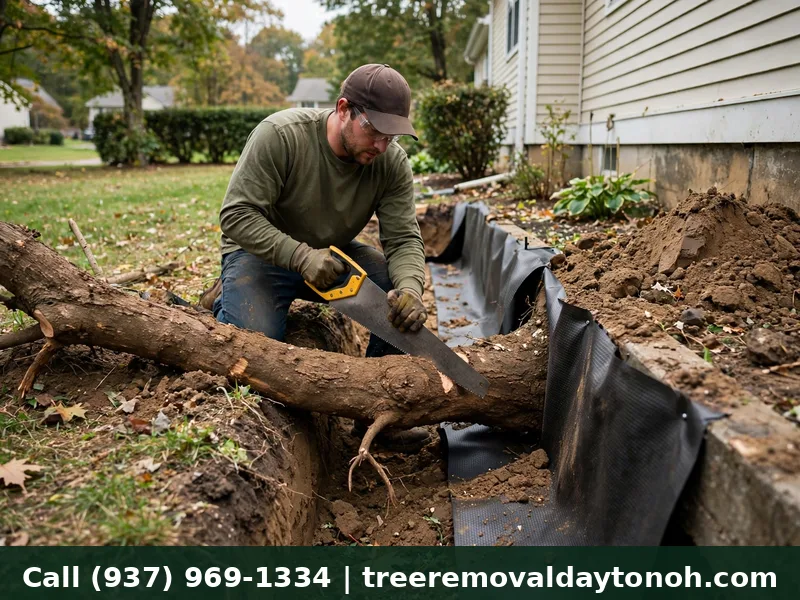
2. Install a root barrier. A physical barrier buried between the tree and the foundation redirects roots downward and away. It works best as prevention or for young problems, installed by someone who knows how deep your local roots run. It does not fix roots already inside the foundation zone.
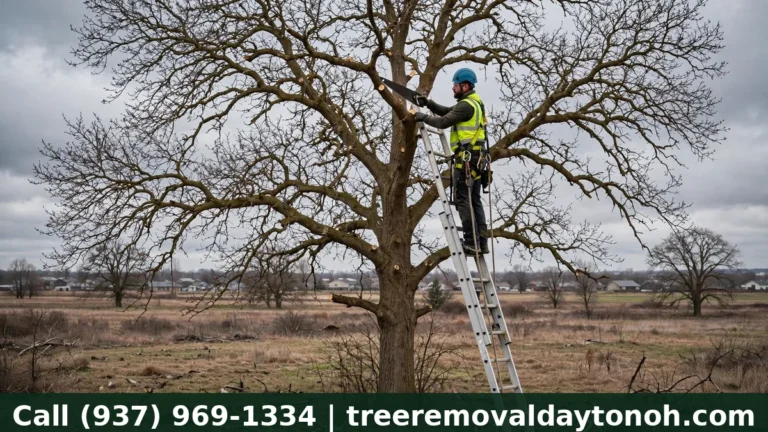
3. Professional root pruning. An arborist can cut offending roots at a safe distance from the trunk, following the rule of never removing more than about a quarter of the root system at once. This buys time and can stop active damage, but the tree will try to regrow, so pair it with a barrier. Done wrong, root pruning destabilizes the tree, which is why this is not a DIY job with a reciprocating saw.
4. Remove the tree. When the damage is advanced, the tree is the wrong species in the wrong place, or the foundation needs structural repair that roots would just undo, removal is the honest answer. For what that costs, see our Dayton tree removal cost guide and our dead tree removal guide for the process. Price stump grinding with it so the root plate does not keep causing trouble.
5. Repair the foundation, then protect it. Foundation cracks from settlement need a foundation contractor, not a tree crew. The right sequence is usually: address the tree cause first, then repair the structure, then install barriers and manage water so it does not happen again.
Not sure which option fits your situation? Call (937) 969-1334. We will look at the tree and the roots and tell you honestly whether the tree can stay.
How This Differs From Our Tree Too Close to House Guide
Our companion guide on trees too close to houses covers the full decision: canopy over the roof, branches on gutters, whole tree risk. This page goes deep on the underground half of that problem, the foundation specific diagnosis and the repair sequence. Read both if the tree is close enough to threaten the house above and below ground.
Important Considerations
- Clay soil is the real culprit in most Dayton cases. Manage moisture and you prevent most root related settlement without touching the tree.
- Roots exploit cracks, they rarely start them. A cracked foundation needs a foundation professional too. Fix the cause and the structure, in that order.
- Never trench through a root zone yourself. Cutting structural roots destabilizes the tree and can turn a foundation problem into a falling tree problem. Hire an arborist.
- Silver maples near foundations are a removal waiting to happen. If yours is within twenty feet of the house, get it assessed before the damage starts, not after.
- Document everything. Photos of cracks with dates, arborist assessments, and receipts. If insurance or a neighbor dispute ever enters the picture, documentation wins.
- Prevention beats repair by an order of magnitude. Right tree, right place, right distance, managed water. Call (937) 969-1334 before planting near the house and we will help you choose.
Tree Root Foundation Damage FAQs
Can tree roots really crack a foundation? They rarely crack a healthy wall by force. In Dayton, roots mostly cause damage by drying out clay soil (which shrinks and lets the foundation settle) and by growing into existing cracks and widening them.
How far should a tree be from my house foundation? A rough rule: at least the tree’s mature height away for large species, farther for aggressive ones like silver maple and willow. An arborist can give you a number for your specific tree.
Should I remove a tree that is damaging my foundation? Not always. If the damage is early, water management, root barriers, and professional root pruning can save the tree. Removal is the answer when damage is advanced or the species will keep causing it.
Will homeowners insurance cover root damage to my foundation? Usually not for gradual root damage, which insurers treat as maintenance. Sudden damage may be covered. Document everything and read your policy.
Can I cut the roots myself? Do not. Cutting structural roots can destabilize the tree, and cutting too much can kill it. Root pruning near foundations is arborist work.
Who do I call first, an arborist or a foundation company? If the tree is the suspected cause, start with an arborist to assess the roots. If the foundation is actively failing, get both. Call (937) 969-1334 and we will tell you which you need.