
When to Trim Trees in Ohio: The Dormant Season Pruning Calendar
TLDR
- Best overall trimming window in Ohio: Late November through early March, when trees are fully dormant and leafless.
- Oak trees specific window: August through March only. Never prune oaks from April through July due to oak wilt disease risk.
- Worst time to prune most trees: Spring bud break through early summer, when trees are using stored energy to push new growth and are most vulnerable to stress.
- Can you trim in summer: Light deadwood removal is acceptable in summer. Major structural pruning is best avoided until fall dormancy.
- What happens if you trim at wrong time: Timing does not kill healthy trees in most cases, but improper timing increases pest and disease vulnerability and slows recovery.
- Does tree species matter: Yes significantly. Oaks, elms, and fruit trees each have specific timing requirements that differ from each other and from general hardwood pruning rules.
What Is the Best Time of Year to Trim Trees in Ohio?
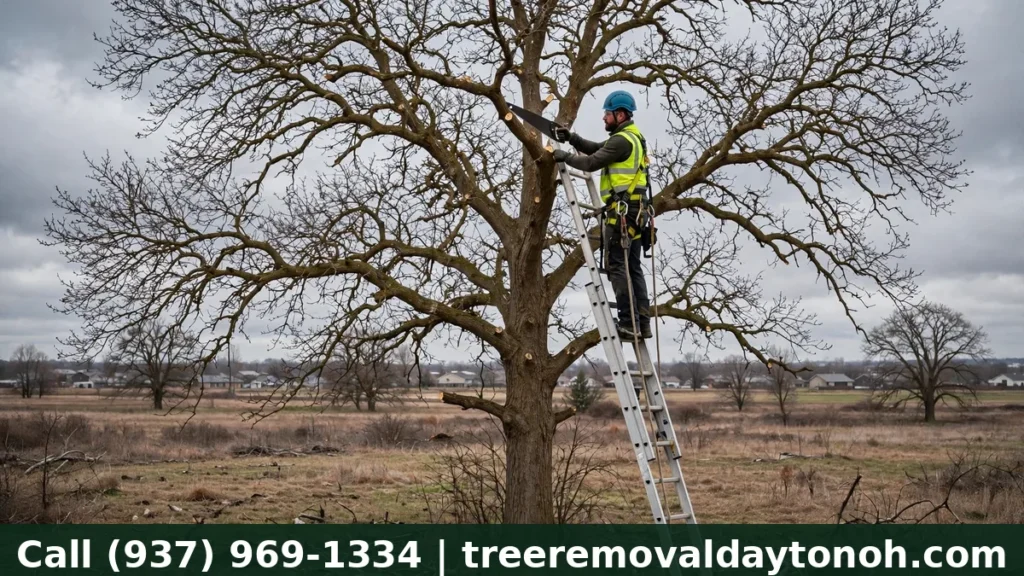
The best time to trim trees in Ohio is during the dormant season, from late November through early March. During dormancy, trees have moved stored energy down from the canopy into the root system, the sap is not actively flowing, and insect and fungal populations that can enter pruning cuts are largely inactive in Ohio’s cold winter temperatures.
Dormant pruning also gives the homeowner and the crew a clear view of the tree’s structure. Without leaves, it is much easier to identify crossing branches, dead wood, co-dominant stems, and the overall balance of the canopy. Pruning decisions made in winter are structurally more precise than those made when the full leaf canopy is blocking visibility.
Winter pruning wounds also close more efficiently than summer cuts in most tree species. When spring growth begins, the tree’s energy surge promotes faster callus formation over the pruning wound. However, the best timing varies meaningfully by species, and oak trees in particular have a stricter seasonal window that overrides the general dormancy rule.
Schedule Dormant Season Tree Trimming in Dayton — Call (937) 969-1334
The Ohio Tree Pruning Calendar by Species
| Tree Species | Best Pruning Window | Avoid | Reason |
|---|---|---|---|
| Oak (all varieties) | Aug through Mar | Apr through Jul | Oak wilt disease risk |
| Silver maple | Nov through Feb | Mar through May | Heavy sap flow in spring |
| Ash tree | Nov through Mar | Apr through Jun | EAB beetle activity |
| Bradford pear | Nov through Feb | Mar through May | Fire blight risk |
| Fruit trees (apple, pear) | Feb through Mar | Jun through Sep | Disease entry and stress |
| Elm | Nov through Mar | Apr through Aug | Dutch elm disease risk |
| Dogwood | Jul through Sep | Mar through May | Borer vulnerability in spring |
| General hardwoods | Nov through Mar | Apr through Jun | Pest and disease exposure |
Why the Oak Pruning Window in Ohio Is Different
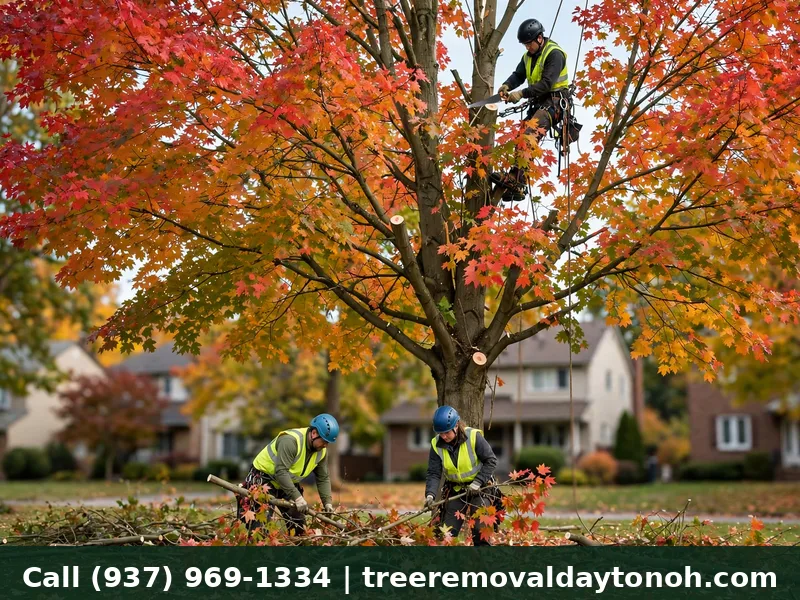
Oak trees in Ohio must not be pruned from April through July because of oak wilt, a fatal fungal disease transmitted by sap beetles. These beetles are attracted to fresh pruning cuts during their active season, which runs from April through July in the Dayton Ohio climate zone. An infected beetle landing on a fresh cut can introduce the fungus, which then travels through the vascular system and kills the tree.
Oak wilt can kill a red oak within 4 to 6 weeks of infection. White oaks are slightly more resistant but can still be killed. The disease also spreads through root grafts between neighboring oaks of the same species, meaning one infected tree can spread the disease underground to adjacent oaks without any insect involvement.
The safe pruning window for oaks in Ohio is August through March. Pruning during August and September, when sap beetles are declining but temperatures are still workable, is a common compromise for homeowners who cannot schedule winter work. If an oak limb breaks in a storm between April and July, apply pruning wound sealant to the exposed wood as a temporary protective measure, though this is not a guarantee.
Can You Trim Trees in Ohio During the Summer?
Limited pruning during summer is acceptable and sometimes necessary. Dead branches can be removed at any time of year because they do not bleed sap and do not create the same pest or disease entry points as live wood cuts. Removing dead wood in summer clears hazards and improves appearance without the seasonal risks associated with live wood pruning.
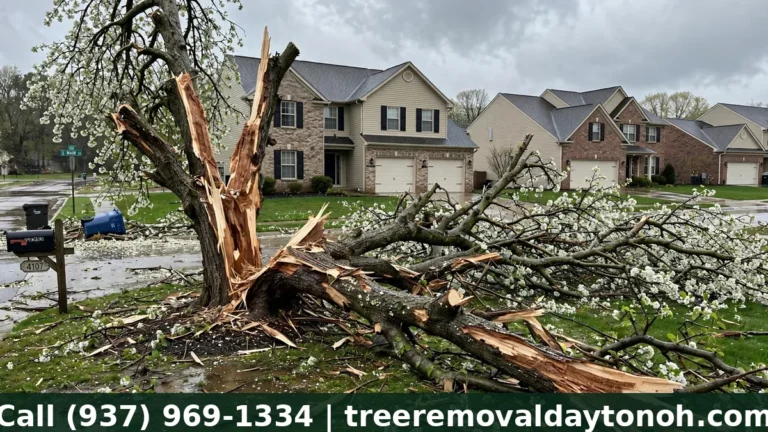
Storm damage repair is also appropriate in summer regardless of timing. If a storm breaks a major limb and leaves a ragged wound, waiting until winter to clean the cut is not advisable. Corrective trimming after storm damage should be done promptly regardless of season, though oak wound sealant should be applied to exposed oak wood during the April through July window.
Structural pruning of live wood during summer growth is generally not recommended for most Ohio tree species. The tree is using maximum energy to support its canopy during the growing season, and large live wood cuts during this period place significant stress on the tree’s reserves. However, minor corrective pruning of small branches typically does not cause problems even in summer.
Tree Trimming Questions? Call (937) 969-1334 for Expert Advice
What Happens If You Prune a Tree at the Wrong Time in Ohio?
For most healthy trees in Ohio, pruning at a suboptimal time does not cause permanent harm. A tree pruned in the wrong season may experience slower wound closure, temporary stress, or slightly higher vulnerability to secondary pest and disease pressure, but a healthy established tree typically recovers without lasting damage.
The significant exception is oak trees pruned during the April to July window. Oak wilt infection from a poorly timed pruning cut can kill the tree within weeks and there is no cure once the fungus enters the vascular system. The timing restriction for oaks is not a preference but a critical protective measure.
Elm trees also carry a timing restriction related to Dutch elm disease risk during the spring through summer period. Elms are less common in the Dayton metro than they were before Dutch elm disease swept through Ohio in the 1960s and 1970s, but surviving elms should follow the same fall and winter trimming guidance.
How to Know If a Tree Needs Trimming in Ohio
A tree in the Dayton Ohio area typically benefits from trimming when dead branches account for more than 10 to 15 percent of the canopy, when large branches are crossing and rubbing against each other, or when the canopy has extended far enough over a structure to create impact risk in a storm.
Visible deadwood, hanging broken branches called widow makers, and co-dominant stems growing at narrow angles are all structural concerns that benefit from professional attention before a storm event triggers a failure. An assessment by an ISA Certified Arborist gives you a written evaluation of what needs to be addressed and in what priority order.
Regular light pruning every 3 to 5 years is generally better for tree health than infrequent heavy pruning. Removing more than 25 percent of a tree’s canopy in a single pruning session causes significant stress. If a tree is beyond saving, see how long tree removal takes in Dayton Ohio and our stump grinding vs stump removal guide and can trigger excessive water sprout growth. However, the right cycle depends on the species, age, and condition of the specific tree.
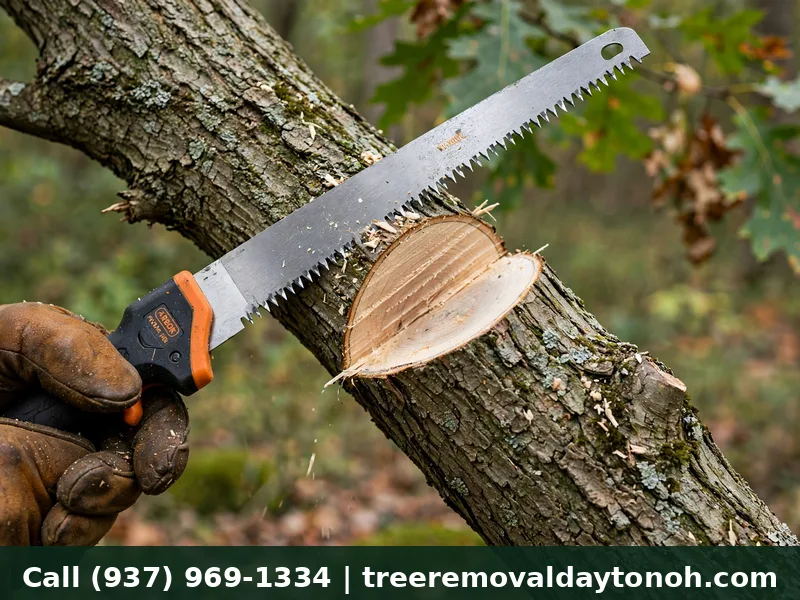
Important Considerations
If a neighbor has oak wilt on their property and their oaks share root systems with your oaks, root graft transmission can infect your tree regardless of your pruning timing. Oak wilt management in a connected stand of oaks sometimes requires soil injection treatments to disrupt root grafts.
Hiring a company that does not follow species-specific timing guidelines is a risk. Ask your tree company directly whether they observe the April through July oak pruning restriction before scheduling work on your oaks.
Topping trees at any time of year is never recommended. Topping removes the main structural branches and causes rapid re-growth of weakly attached water sprouts, making the tree more hazardous than before the cuts were made. This is true regardless of species or season.
Frequently Asked Questions
Is it OK to trim trees in October in Ohio?
October is an acceptable time to trim most Ohio trees, though it is slightly early in the dormancy cycle because some trees are still dropping leaves and closing down for winter. By late October and November, most Ohio trees have fully stopped active growth and the full dormant season trimming window is open. October pruning is much better than spring or summer pruning for most species. However, wait until at least mid-October for the coolest weather and reduced pest activity.
Can I trim my oak tree in September in Ohio?
September is a good time to trim oak trees in Ohio. The oak wilt beetle population declines significantly after late August, and September trimming is within the safe window that runs August through March. September pruning also allows wounds to begin closing before the winter dormant period. For large structural pruning of mature oaks, September through February is the recommended window in the Dayton Ohio climate. This depends on the specific conditions of the current season.
Does Tree Removal Dayton Ohio follow seasonal pruning guidelines?
Yes. We follow ISA and Ohio State Extension guidance. When trimming uncovers a hazardous tree, our tree removal team can advise on next steps. for species-specific pruning timing, including the oak wilt prevention window. We do not prune oaks from April through July and we advise homeowners on this restriction when they inquire about scheduling during that period. For trimming questions specific to your tree and species, call (937) 969-1334 and we can advise on timing before you book.
What is the difference between pruning and topping?
Pruning removes specific dead, damaged, crossing, or structurally problematic branches while preserving the tree’s natural form and main branch structure. Topping removes the primary scaffold branches and the top of the canopy in large, indiscriminate cuts. Topping is condemned by the ISA and Ohio State Extension as a harmful practice that weakens trees, promotes disease entry, and creates hazardous re-growth. No certified arborist recommends topping as a standard tree management practice. For complete removal, compare stump grinding options before you decide. This distinction matters because some companies offer topping as a low-cost service.


6 Comments