
Tree Trimming vs Tree Removal in Dayton Ohio: How We Decide
TL;DR: Trim or Remove?
- Trim when the tree is healthy but has minor issues: deadwood, crossing branches, low limbs, or a slightly overgrown canopy.
- Remove when the tree is structurally compromised, more than about half dead, or poses a risk to people and property that pruning cannot fix.
- The decision comes down to five factors: overall health, structural soundness, species and age, the value of what sits underneath it, and the cost of trimming versus removal over the next few years.
- Trimming a tree that should have been removed is the most expensive mistake we see. You pay for the pruning, the tree declines anyway, and you pay for removal later.
- Not sure which way to go? Call (937) 969-1334 for a free on site assessment anywhere in Dayton.
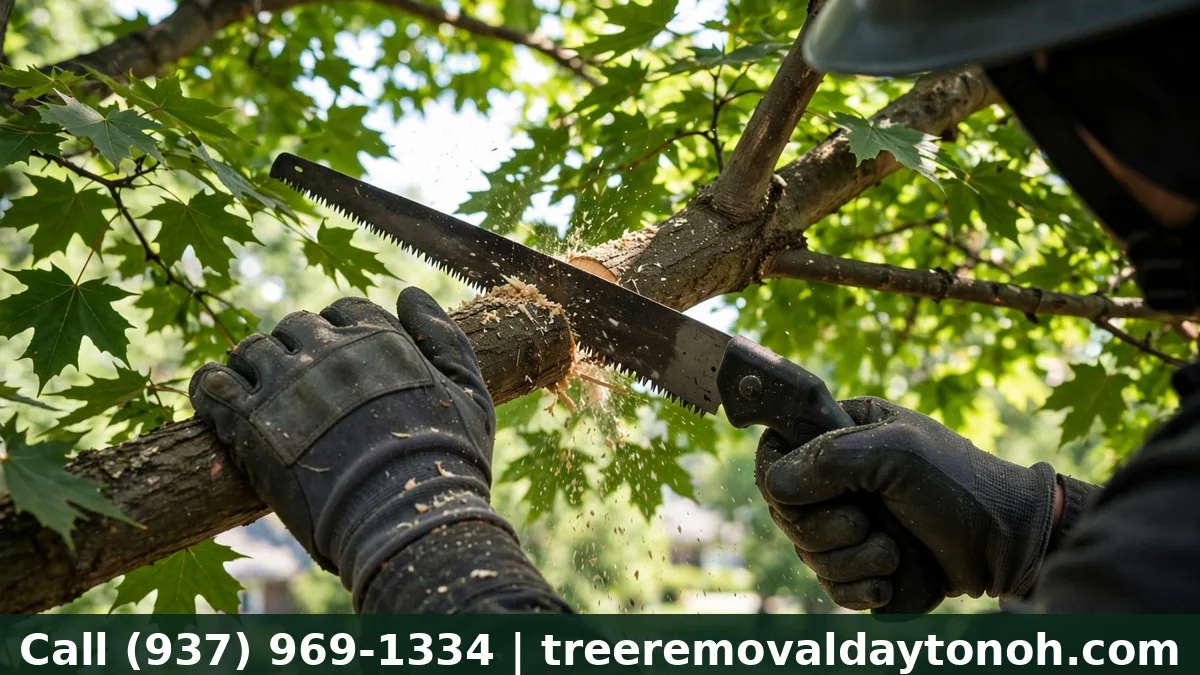
You look at the tree and you can tell something needs to happen, but you cannot tell what. It is not an emergency, the tree is not on the house, but it is not right either. Do you spend money trimming it, or do you admit it is time for removal?
This is the most common question we get on estimates that are not emergencies, and it is the one with the highest cost of getting wrong. Trim a tree that should have been removed and you have spent a few hundred dollars to delay the inevitable. Remove a tree that could have been trimmed and you have lost decades of shade, privacy, and property value for no reason.
Here is how we actually decide on every job in Dayton: what trimming fixes, what only removal fixes, the five factors we weigh, and what each option costs. By the end you will know where your tree falls.
Torn between trimming and removal? Call (937) 969-1334. We give you an honest recommendation, even when the answer is the cheaper one.
The Short Answer
Trimming solves canopy problems: dead limbs, crossing branches, low hanging limbs over the driveway, storm damage limited to the outer crown. Removal solves tree problems: a failing trunk, a dead or dying root system, severe lean, decay through the heartwood, or a tree in the wrong place where no amount of pruning makes it safe.
Think of it this way. Trimming fixes what is wrong with the branches. Removal is for what is wrong with the tree. If the problem is confined to the canopy and the trunk and roots are sound, trimming almost always wins. If the trunk or roots are compromised, trimming is cosmetic and removal is the real answer.
Our hazard tree assessment guide explains what an arborist actually checks when a tree’s health is in question.
When Trimming Is the Right Call
Trimming is right when the tree has good bones and fixable canopy problems. These are the cases where we recommend a prune and send the homeowner on their way:
- Deadwood in an otherwise healthy tree. Dead branches are normal, even in vigorous trees. Removing them is routine maintenance, not a sign of decline. A deadwood cleanup every few years keeps a healthy tree safe and looking good.
- Low or interfering limbs. Branches rubbing the roof, scraping the siding, hanging over the driveway, or blocking the walkway are pruning jobs. The tree is fine; the clearance is the problem.
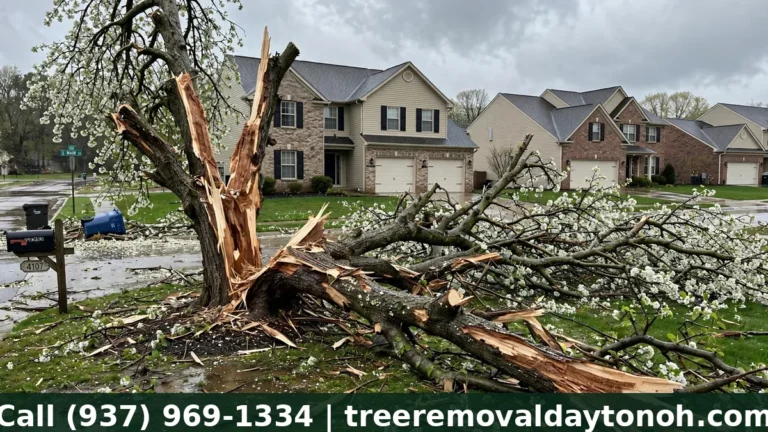
- Storm damage limited to the outer canopy. Broken branch tips and small hangers after a wind event are a cleanup prune, not a removal, as long as the trunk and major scaffold limbs are intact.
- A dense canopy that needs thinning. Thinning lets light and air through, reduces wind resistance, and gives the remaining limbs room to grow strong. This is prevention, and it works.
- Young trees that need structural pruning. A few well placed cuts in the first ten years of a tree’s life prevent weak branch unions that cause failures decades later. This is the highest value trimming there is.
The common thread: the trunk is solid, the root system is intact, the tree is the right species in the right spot, and the problems are limited to the canopy. Trimming cost for these jobs in Dayton typically runs from a few hundred dollars for a small tree to around $1,200 for a large mature tree. See our tree trimming cost guide for what moves the price.
When Removal Is the Right Call
Removal is right when pruning would be pretending. These are the cases where we tell the homeowner the hard truth:
- More than half the tree is dead or dying. A canopy that is mostly bare or mostly dead limbs is not coming back. No amount of pruning restores a tree past this point.
- The trunk is compromised. Deep cracks, large cavities, severe decay, or a split through the heartwood mean the structure itself is failing. Pruning the top does nothing for a failing trunk.
- The lean is new and getting worse. A tree that developed a lean and is still moving is a root failure in progress. Pruning weight off the top can buy a little time but does not fix the roots.
- The tree is the wrong tree in the wrong spot. A silver maple planted four feet from the foundation, a fast growing cottonwood under the power lines, a tree whose roots are lifting the driveway. No pruning regimen fixes a species mismatch.
- It is a hazard you cannot prune away. Our guide to dangerous tree signs lists what to look for. When several of those signs stack up on one tree, removal is the responsible call.
Suspect your tree is past saving? Call (937) 969-1334. We will confirm it honestly and give you a removal price on the spot. Our tree removal timeline guide tells you what to expect once you say yes.
The Five Factors We Actually Weigh
When the answer is not obvious, we run through these five factors in order. They are the same factors you can use yourself:
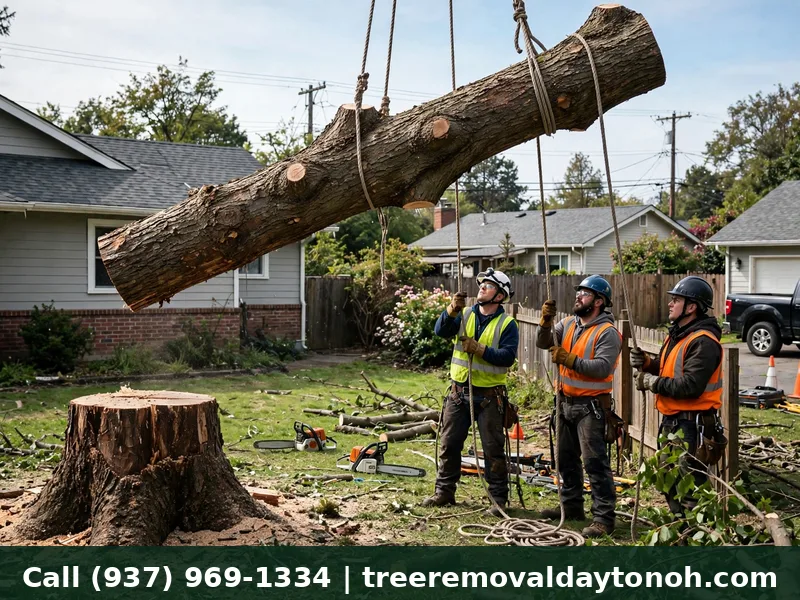
1. Overall health
How much of the canopy is alive and vigorous? A tree with a full healthy crown and a localized problem is a trimming candidate. A tree in general decline, with thinning foliage year after year, is telling you the whole organism is failing, not just the branches.
2. Structural soundness
Trunk integrity, branch union strength, root condition. This is the factor that overrides everything else. A healthy looking canopy on a tree with a cracked trunk or lifting root plate is a removal. Structure first, appearance second, always.
3. Species and age
Some species respond beautifully to pruning and live for decades more. Others, like silver maples with their weak wood, tend to fail again and again no matter how well you prune. Our silver maple guide explains why this particular species is so often a removal rather than a trim. Age matters too: a young tree with problems is worth investing in, because structural pruning can redirect decades of growth. An old tree with the same problems is harder to turn around.
4. Targets underneath
What would the tree hit if it failed? A borderline tree in an open field is a watch and wait. The same tree over the kid’s bedroom is a different calculation. Higher targets push the decision toward removal, because the cost of being wrong is so much greater.
5. Three year cost
Add up what trimming will cost now, what it will cost again when the same tree needs work in two or three years, and what removal will eventually cost anyway. A $900 trim on a declining tree that needs a $2,500 removal in two years is a $3,400 tree. Removing it today is $2,500. Do the three year math honestly and the answer is usually clear.
Trim vs Remove: Side by Side
| Factor | Trimming fits when | Removal fits when |
|---|---|---|
| Tree health | Mostly healthy, localized canopy issues | More than half dead, general decline |
| Trunk and roots | Sound structure | Cracks, cavities, root failure |
| Problem type | Deadwood, clearance, density, minor storm damage | Structural defects, species mismatch, hazard |
| Long term result | Tree thrives for years | Risk eliminated, site freed for a better tree |
| Typical Dayton cost | A few hundred to about $1,200 | $800 to $3,500 or more |
| When to decide | Before small problems grow | Before the tree fails on its own schedule |
Still weighing it? Call (937) 969-1334. A free on site look settles trim versus remove in minutes, and the visit costs you nothing either way.
What About Just Topping It?
Some homeowners ask for a middle option: just top the tree to make it smaller and safer. This is not a middle option. Topping is the worst thing you can do to a tree. It triggers a flush of weak, fast growing sprouts that are more likely to fail than the branches they replaced, opens massive wounds to decay, and often kills the tree slowly over several years.
If a tree is too big for its location, the honest choices are a proper crown reduction by an arborist, which is a real and skilled pruning technique, or removal. Topping is never the answer. We refuse topping work, and any company that offers it is telling you something about their standards.
Timing: When to Schedule Each
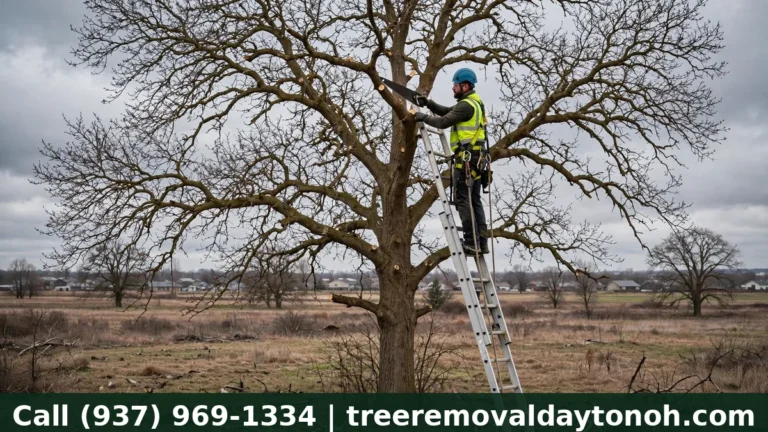
For most Dayton trees, trimming is best done in the dormant season, late fall through early spring, when the tree is not actively growing and the structure is easy to see. Our Ohio pruning calendar lays out the month by month timing, including the one big exception: never trim oaks between April and July because of oak wilt risk.
Removal can happen any time of year, but winter removals are often cheaper and easier: the ground is firm, the canopy is light without leaves, and schedules are more open. Emergency removals, of course, happen whenever the tree decides. Our dead tree removal guide covers how long you can safely wait when removal is the answer but the tree is not an emergency.
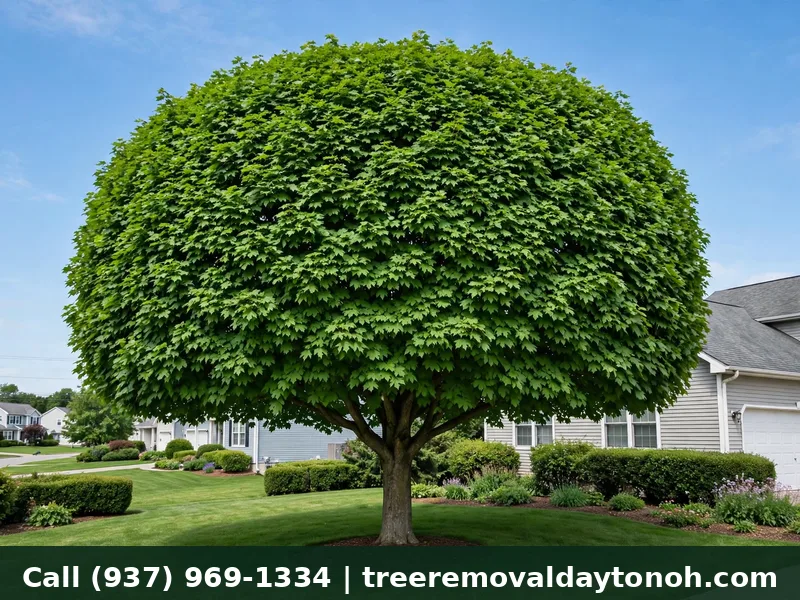
Important Considerations
- The cheapest option today is not always the cheapest option. A trim on a tree headed for removal is money spent twice. Run the three year cost before you choose.
- Get the assessment before the estimate. A company that quotes trimming without evaluating the trunk and roots is selling you a service, not a solution. The diagnosis comes first.
- Consider what replaces the tree. Removal is not just loss. It is an opening for a species that fits the site, planted in the right spot, that will thrive for fifty years. We help homeowners pick the replacement too.
- Permits and neighbors matter. Some situations involve property lines or city trees. Our Dayton tree removal permit guide explains when paperwork is required.
- Do not DIY the close calls. If the decision between trimming and removal is genuinely hard, that is exactly when you need a professional set of eyes on the tree, not a ladder and a chainsaw. Call (937) 969-1334 for a free assessment.
FAQs
How do I know if my tree needs trimming or removal?
Check the trunk and roots first. If they are sound and the problems are in the canopy, trimming is usually right. If the trunk is cracked or hollow, the roots are failing, or more than half the tree is dead, removal is the answer.
Is it cheaper to trim a tree than to remove it?
Up front, yes. Trimming in Dayton typically runs a few hundred to about $1,200, while removal runs $800 to $3,500 or more. But trimming a tree that will need removal anyway is the expensive mistake. Run the three year total before deciding.
Can a half dead tree be saved by trimming?
Usually not. Removing dead limbs does not restore a declining tree, and a tree that is mostly dead will keep declining. Trimming works on healthy trees with fixable problems, not on trees in general decline.
What is the difference between trimming and topping?
Trimming is selective, skilled pruning that keeps the tree’s natural structure and health. Topping is cutting all the branches back to stubs, which destroys the tree’s structure and causes weak, dangerous regrowth. We never top trees.
Should I remove a tree that is too close to my house?
It depends on the species, the distance, and what is happening with the roots and foundation. Some situations are fixed with pruning and root management, others genuinely need removal. Our tree too close to the house guide walks through the decision.
Can tree removal wait until winter?
If the tree is stable and not an immediate hazard, yes. Winter is often the best time for planned removals in Dayton: firm ground, light canopy, and open schedules. If the tree is a hazard, do not wait. See our emergency tree removal guide for the urgent cases.
Will my tree look bad after a proper trimming?
No. A proper trim by an arborist looks natural, almost as if nothing was done except that the tree looks healthier and more open. If a trimming job leaves a tree looking butchered, it was done wrong.
Trim or remove, we will give you the honest answer. Call (937) 969-1334. Tree Removal Dayton Ohio provides free assessments across Dayton, and we will tell you which option actually serves your tree and your wallet.