
Why Dayton Ohio Trees Fail in Summer: Heat, Drought and What to Watch For
TL;DR: Why Dayton Trees Fail in Summer
- Summer tree failures in Dayton come from three main causes: drought stress that weakens the tree over weeks, heat related decline in mature trees, and summer storms hitting trees that were already weakened.
- The early warning signs are wilting and browning leaf edges, leaves dropping in July and August, bark cracking on the sunny side of the trunk, and branches dying back from the tips.
- Most summer decline is reversible if you act early: deep watering, a proper mulch ring, and no pruning during the heat.
- Summer is also the worst time to ignore a tree with structural problems, because the next storm does not wait for fall. Call (937) 969-1334 if your tree looks worse every week.
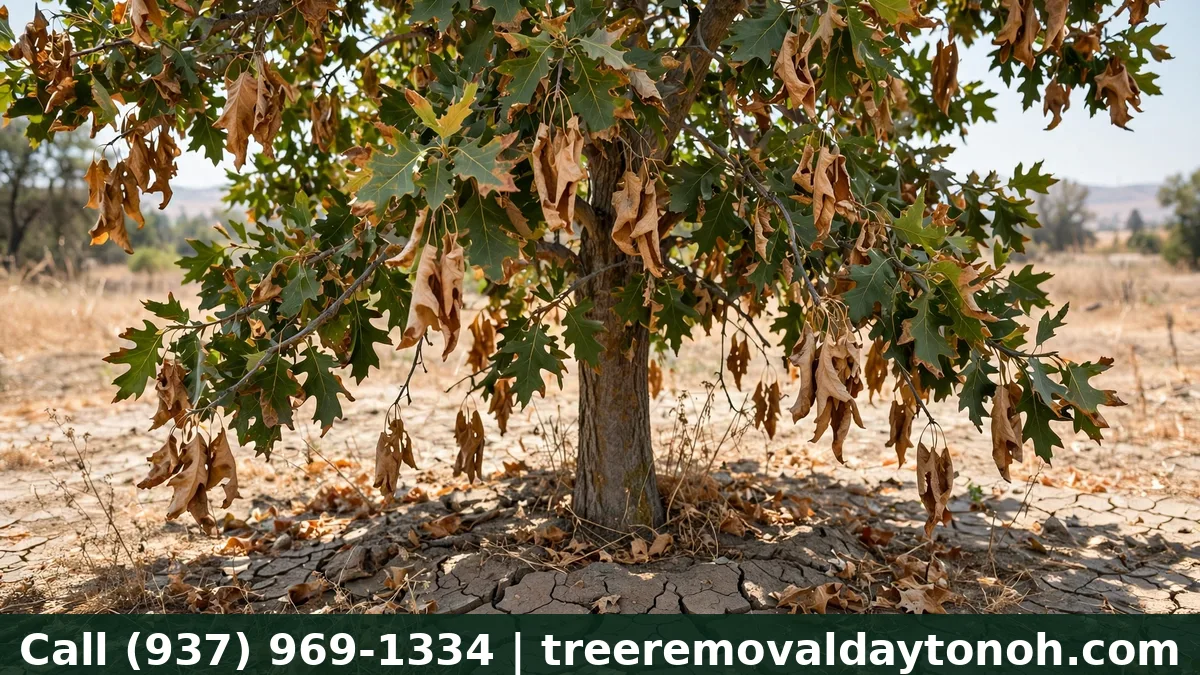
July in Dayton is when the phone starts ringing with a particular kind of worry. The tree looked fine in May, a little tired in June, and now it is dropping leaves like it is October. The homeowner is convinced the tree is dying, and sometimes they are right. Sometimes it is just thirsty.
Summer is the most misunderstood season for tree health. Trees do not usually fail in summer from one hot day. They fail from a slow build: weeks of heat and low water, compacted urban soil that holds no moisture, and root systems that quietly shut down while the canopy looks more or less alive. By the time the symptoms are obvious, the stress has been building for a month.
This guide covers what actually goes wrong for Dayton trees in summer, how to tell drought stress from real decline, what to do right now, and when a summer problem means the tree needs to come out.
Tree looking rough this summer? Call (937) 969-1334. We will tell you whether it needs water, care, or removal, and the assessment is free.
The Short Answer: Thirsty, Stressed, or Dying?
Most summer tree problems in Dayton fall into three buckets, and the response for each is completely different:
- Drought stress. The tree is alive and healthy but short on water. Leaves wilt, edges brown, some early leaf drop. Fixable with deep watering, and the tree usually recovers fully.
- Heat related decline. A mature or already weakened tree slides into decline during a hot summer: dieback from the branch tips, thinning canopy, bark issues. Partially reversible if you intervene, but some trees do not bounce back.
- Structural failure waiting for a storm. The heat did not cause this one, but summer reveals it. Trees with weak unions, decay, or root problems are most likely to fail in summer thunderstorms, which hit with full leaf canopies catching maximum wind.
Your first job is figuring out which bucket your tree is in. Water will not fix a structural defect, and removal is overkill for a thirsty tree. The sections below give you the diagnostic details for each.
Drought Stress: What It Looks Like
Drought stress is the most common summer tree problem in Dayton and the most fixable. The symptoms follow a predictable sequence:
- Wilting and curling leaves, especially in the afternoon, recovering a bit overnight. This is the earliest sign.
- Browning leaf edges and tips, called leaf scorch. The damage starts at the edges and moves inward. Once leaf tissue is brown, that part is dead, but the tree itself is usually fine.
- Early leaf drop in July or August. The tree is cutting its losses, shedding leaves it cannot support. Alarming to see, but a survival strategy, not death.
- Smaller than normal leaves on new growth, and sometimes a second flush of weak growth late in summer that never hardens off.
The critical distinction: drought stress affects the whole canopy fairly evenly and follows the heat. If the whole tree is wilting in a dry spell, it needs water. If only one section is browning while the rest looks fine, suspect something else: a girdling root, construction damage, or a pest problem.
Not sure if it is drought or something worse? Call (937) 969-1334. We diagnose summer tree problems across Dayton every day, and we will not sell you a removal for a thirsty tree.
Heat Decline in Mature Trees
Young trees mostly suffer in summer from lack of water. Mature trees suffer from the accumulated weight of years. A big old tree in a Dayton yard has likely endured construction compaction, grade changes, sidewalk installation, and decades of mowing damage around its roots. A hot dry summer is the season when all of that catches up.
Watch for dieback that starts at the top and the outer branch tips and works inward and down. This pattern, called crown dieback, is the classic sign of a root system that can no longer support the canopy. The roots are the engine and the canopy is the load; in a hot summer, the engine cannot keep up.
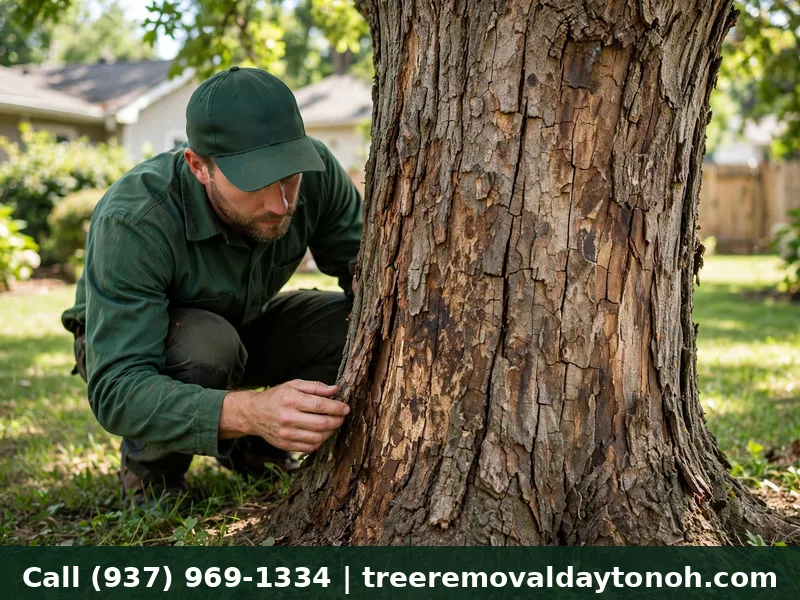
Also watch the trunk, especially the southwest facing side. Sunscald, long vertical cracks in the bark on the afternoon sun side, opens the tree to decay and insects. Thin barked species suffer most. A tree with significant new bark cracking plus crown dieback is in real trouble, not just thirsty.
Some decline is a one season event the tree recovers from with help. Decline that repeats for two or three summers is a trajectory. A tree that gets a little worse every summer is on a path to removal, and the honest move is to plan for it rather than pay for years of rescue attempts. Our guide to dangerous tree signs lists the structural red flags to check alongside the summer symptoms.
Which Dayton Species Struggle Most in Summer
Not all trees handle Miami Valley summers equally. Knowing your species tells you how worried to be:
- Silver maples. Shallow roots, brittle wood, and a habit of dropping limbs in summer storms. They are also heavy water users, so drought hits them fast. Our silver maple guide explains why this common Dayton tree is so often a summer problem.
- River birches and other birches. Birches love water and hate heat. In a dry Dayton summer they go into stress early, and stressed birches attract bronze birch borer, which can finish them.
- Bradford and Callery pears. Structurally weak to begin with, and summer storms are their peak failure season. A pear that survived spring is not out of the woods.
- Newly planted trees of any species. A tree planted this spring or last fall has a small root system and almost no drought tolerance. First and second summer watering is not optional; it is the difference between establishment and replacement.
- Oaks. Generally tough, but remember the one hard summer rule: never prune oaks in the hot months. Oak wilt spreads through fresh wounds and beetle activity from April through July. See our oak wilt guide for why this matters so much.
The Summer Storm Factor
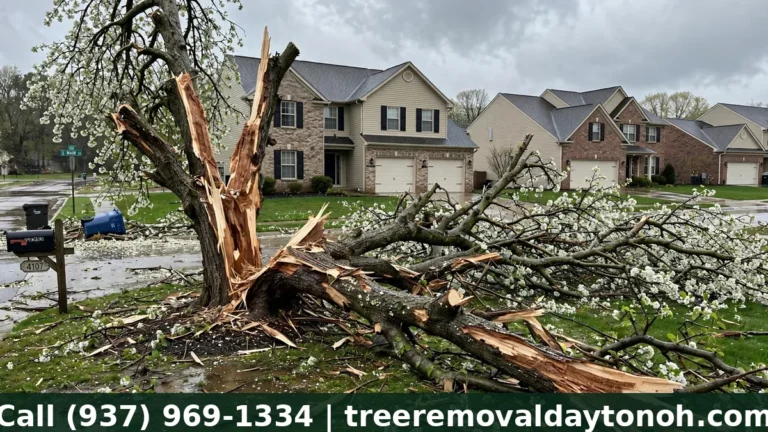
Here is the part of summer tree failure that has nothing to do with heat or water. Summer thunderstorms hit trees at their most vulnerable structurally: full canopies catching maximum wind, saturated soil loosening root anchoring, and lightning strikes that split trunks in an instant.
The trees that fail in summer storms are usually the trees that were already compromised. Weak branch unions, internal decay, root damage from construction, a lean that developed over the years. The storm is just the final exam. This is why a summer walk around your trees matters: you are looking for the structural problems that the next storm will find.
Check for the same warning signs we cover in our hazard tree assessment guide: new or worsening lean, lifted soil at the base, large dead limbs overhead, cracks in the trunk, fungal growth on the bark. Any of these on a tree near your house deserves a professional look before storm season peaks, not after.
Big tree near the house with a questionable lean? Call (937) 969-1334. Summer is exactly when you do not want to gamble on a borderline tree.
What to Do Right Now
If your tree is showing summer stress, here is the response plan, in order:
- Water deeply, not often. A slow deep soak once or twice a week beats a daily sprinkle. You want water reaching 12 to 18 inches down, where the roots actually are. A soaker hose run for several hours is ideal. Newly planted trees need this without exception.
- Mulch properly. A 3 to 4 inch ring of mulch out to the drip line, kept away from the trunk itself, holds moisture and cools the soil. No volcano mulching piled against the bark; that causes its own problems.
- Do not prune during the heat. Pruning in summer stresses the tree further and opens wounds when insects and disease are most active. Wait for the dormant season, with the oak exception noted above.
- Do not fertilize a stressed tree. Fertilizer pushes new growth the compromised root system cannot support. It is like making a sick person run. Feed healthy trees in fall, not struggling trees in August.
- Keep equipment off the root zone. Dry compacted soil is already hard on roots. Mowers, vehicles, and material piles make it worse.

Then watch. A drought stressed tree that gets water should stop getting worse within a week or two and push normal growth the following spring. A tree that keeps declining despite proper watering has a deeper problem, and that is when the assessment matters.
When a Summer Problem Means Removal
Sometimes the honest answer is that the tree is done. Use this table to sort it out:
| What you see | What it means | Next step |
|---|---|---|
| Whole canopy wilting in a dry spell, recovers at night | Drought stress | Deep water, mulch, monitor |
| Brown leaf edges, some early leaf drop, rest of tree fine | Leaf scorch | Water and wait, damage is cosmetic |
| Dieback from branch tips progressing inward, two summers running | Root system failing | Arborist assessment, removal likely |
| New bark cracks on the sunny side plus thinning canopy | Structural decline | Professional evaluation soon |
| One section browning while the rest is healthy | Root, pest, or vascular problem | Diagnose before treating |
| Large dead limbs, lean, or cracks, regardless of season | Hazard | Removal, do not wait for fall |
The hardest call is the slow decliner: the tree that is a little worse every summer but not dangerous yet. Our advice is to plan the removal on your schedule rather than the tree’s. Planned winter removal is cheaper, safer, and lets you pick the replacement species. Emergency summer removal after a failure is none of those things. Our dead tree removal guide covers how long you can reasonably wait.
Important Considerations
- Watering is the highest value tree care there is. A soaker hose and a few hours a week in a dry summer will do more for your trees than any other single thing you can do yourself.
- Do not judge a tree by one bad August. Deciduous trees are remarkably resilient. A tree that looked terrible in a drought summer often leafs out normally the next spring. Give it one full growing season before declaring it dead.
- Summer is for diagnosis, fall and winter are for action. Identify the problems now, schedule the pruning and removals for the dormant season when the tree handles the work best and the prices are better.
- New plantings need a watering commitment. If you are planting a replacement tree, budget for two full summers of deep watering. A tree without that commitment is a tree you will replace.
- When in doubt, get eyes on it. Summer decline that keeps progressing despite water is a professional diagnosis situation, not a wait and hope situation. Call (937) 969-1334 for a free assessment.
FAQs
Why is my tree losing leaves in summer?
Most often drought stress: the tree sheds leaves it cannot support. It can also signal root problems, pests, or disease if only part of the tree is affected. Even canopy wide drop in a dry spell is usually just thirst.
How often should I water my trees in a Dayton summer?
Deeply once or twice a week during dry spells, enough to soak 12 to 18 inches down. Newly planted trees need this consistently through their first two summers. Mature established trees need it only during real drought.
Can a drought stressed tree recover?
Yes, usually fully. Drought stress is reversible as long as the tree has not crossed into severe dieback. Water deeply, mulch, and give it time. Most trees that looked rough in August leaf out normally the following spring.
Should I prune dead branches in summer?
Small dead branches can be removed any time, but save major pruning for the dormant season. Never prune oaks between April and July due to oak wilt risk, and avoid heavy pruning during extreme heat.
What does heat stress look like versus disease?
Heat and drought stress hit the whole canopy evenly and follow the weather. Disease and pests usually start in one area and spread, or show distinctive signs like spots, cankers, or boring holes. Uneven symptoms deserve a professional diagnosis.
Is summer a bad time to remove a tree?
Removal can be done any time, but planned removals are easier and often cheaper in winter. The exception is a hazardous tree: if it is a danger to people or property, remove it now regardless of season. See our tree removal cost guide for pricing.
My tree looked fine in spring but terrible now. What happened?
Spring growth is fueled by stored energy from last year, so problems stay hidden. Summer heat reveals what the roots cannot support. This pattern, fine in May and rough in August, is the signature of drought stress or a declining root system.
Summer stress, storm worry, or a tree in steady decline, we handle all of it. Call (937) 969-1334. Tree Removal Dayton Ohio gives free honest assessments across Dayton, and we will tell you whether your tree needs water, work, or removal.